"No asset rises forever": Warning to investors gripped by volatility to change strategy
- Input
- 2026-06-11 10:46:08
- Updated
- 2026-06-11 10:46:08
[Financial News] As volatility in domestic and overseas stock markets widens, experts are advising investors to rebuild their portfolios around growth stocks to secure asset stability.
Recommended index ETFs for office workers and novice investors
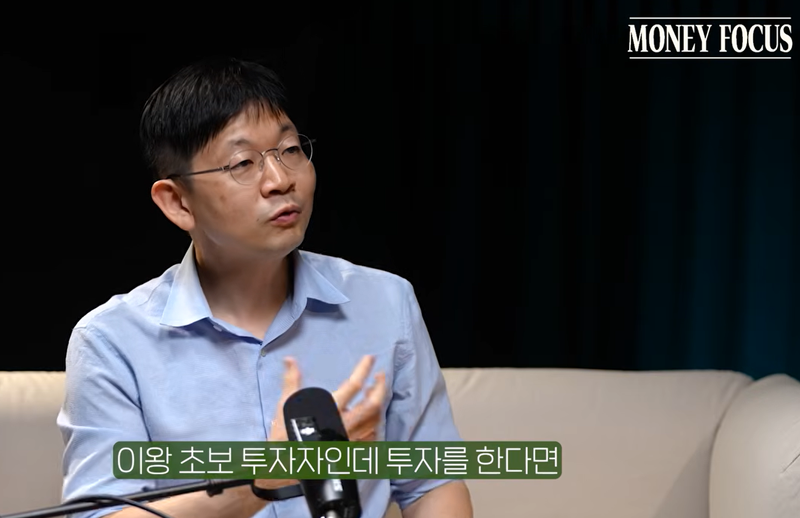
Oh Geon-young, Premier Pathfinder Division Head at Shinhan Bank, who appeared on YouTube channel 'Money Inside' on the 9th, said, "To avoid being swayed by market volatility, investors need to let go of impatience and invest with discipline." He outlined tailored asset-allocation strategies for beginners and existing profit-seeking investors.
Oh said that as the KOSPI (Korea Composite Stock Price Index) has been in a strong rally recently, large-cap stocks such as Samsung Electronics and SK hynix have led the market. He described the shift in investment flows from traditional safe assets to stocks as a "money move," and expressed concern about the impatience felt by investors who entered earlier and are now seeing large gains, as well as those experiencing FOMO (fear of missing out).
Emphasizing that "no asset rises forever," Oh explained that when a particular stock or asset overheats beyond its fundamentals, psychological impatience often combines with corporate earnings to drive the move. Citing the Chinese stock market bubble in 2006-2007 and again in 2015 as examples, he stressed that investors should be wary of putting too much weight on overly rosy expectations for the future.
He also recommended index Exchange-Traded Funds (ETFs) rather than individual stock trading for office workers with full-time jobs and for beginner investors. Oh said, "Index assets such as the S&P 500 Index automatically replace companies within the market, so they provide a natural diversification effect." He added, "Rather than driving a foreign luxury car from the start, it is better to buy a used car and learn by getting a few scratches. In the same way, experiencing various ETFs with small amounts and learning the characteristics of each asset will be much more beneficial in the long run."
From low rates to high rates... "Energy stocks instead of tech stocks"
Oh explained that if high inflation, high oil prices and high interest rates become the new normal, portfolio strategies must also change. He said this would mark a different trend from the past 10 to 15 years, when tech stocks outperformed energy stocks in a low-growth, low-inflation and low-rate environment.
He advised that investors should broaden their view beyond tech-stock-heavy portfolios and maintain flexibility by allocating at least 20% of their portfolios to assets that can hedge inflation, such as energy-related assets or foreign currencies. Citing cases in which the won–dollar exchange rate surged during geopolitical crises, he added, "If you have made substantial profits, you should move part of those gains, about 20% to 30%, into safe assets such as US dollar-denominated bonds that move opposite to the stock market, or into cash-flow assets that generate regular interest income."
[email protected] Kim Hee-sun Reporter