Xi Jinping Erases North Korea's Denuclearization, While the United States Reaffirms It
- Input
- 2026-06-11 15:01:11
- Updated
- 2026-06-11 15:01:11
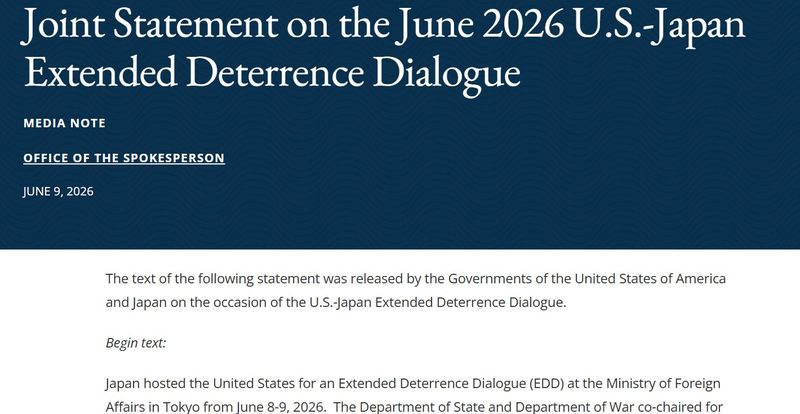
According to the U.S. Department of State on the 10th local time, the U.S. Department of State, the U.S. Department of Defense, Japan's Ministry of Foreign Affairs, and the Ministry of Defense of Japan held the Extended Deterrence Dialogue (EDD) in Tokyo on the 8th and 9th.
In a statement released after the EDD concluded, the two sides said that "the two delegations discussed China's opaque and rapid buildup of nuclear weapons and rejected Russia's claim that 'North Korea's pursuit of nuclear weapons is a closed matter.'" They added that "both sides reaffirmed their commitment to North Korea's complete denuclearization."
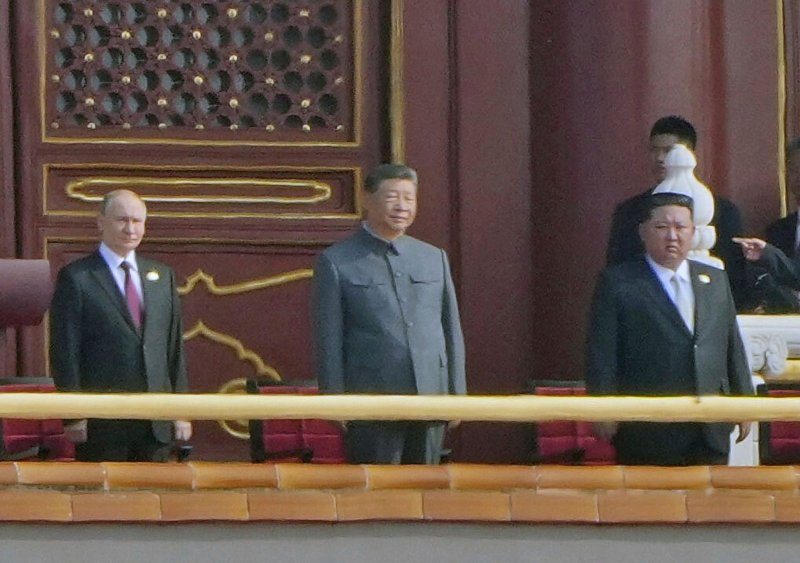
The State Department's statement in particular included language dismissing Russia's position, which effectively recognizes North Korea's nuclear arsenal. That has led to interpretations that Washington was sending a warning in response to closer alignment among North Korea, China, and Russia. By issuing the statement together with Japan, a key regional ally, the United States was effectively throwing down a challenge.
Howard Solomon, acting U.S. representative to the international organizations in Vienna, said that "North Korea continues to pursue weapons of mass destruction and ballistic missile programs" and added that "claims that these programs are a 'closed matter' are unacceptable and undermine the nonproliferation regime."
He added, "We are working closely with South Korea, Japan and others to deter North Korean provocations, and we remain committed to North Korea's complete denuclearization." He also said, "We support the IAEA's efforts to maintain an enhanced state of readiness so that inspections and verification can be carried out in North Korea."
[email protected] Hong Chaewan Reporter