[Editorial] If semiconductors are relocated, the final decision should still rest with companies, even under balanced regional development policies
- Input
- 2026-06-10 19:09:18
- Updated
- 2026-06-10 19:09:18
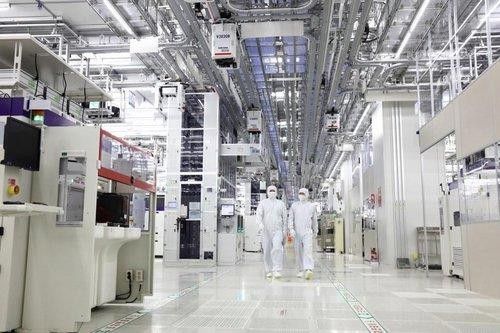
According to industry sources, Samsung Electronics and SK hynix are planning to build new semiconductor plants or expand existing ones in response to surging chip demand, and are reviewing candidate sites such as Gwangju Metropolitan City, Jangseong County, South Jeolla Province, and Onyang, Asan. There are also specific expectations that Samsung Electronics may establish an advanced packaging back-end plant in Gwangju Metropolitan City, while SK hynix could build some back-end facilities, including packaging, in Honam.
These plans by the two chipmakers are closely tied to the government’s balanced regional development agenda. Under the so-called Five Mega-Regions and Three Special Self-Governing Provinces Strategy, the government is pushing a regional development plan aimed at easing the concentration in the Seoul metropolitan area and reviving local economies threatened by population decline. In that sense, semiconductor companies moving to Honam and other regions has a clear rationale.
Honam has abundant power generation from solar and offshore wind energy, and land prices are relatively low, making it easier to secure sites. In Haenam Solaseado, a 250 billion won National AI Computing Center is already being promoted under Samsung’s leadership, which could also create synergies.
If semiconductor plants are built in Honam, where industrial facilities are relatively scarce compared with the Seoul metropolitan area and the Yeongnam region, they could serve as a growth engine for regional development. Hyundai Motor Group is also reportedly reviewing Saemangeum as a future industrial hub that would include an AI data center, robot manufacturing facilities, and hydrogen infrastructure.
That said, these discussions should not be led by the government. Companies must be given the primary decision-making authority. From a business standpoint, it is more efficient when plants and suppliers are clustered in nearby areas or in one location, as that makes decision-making and overall operations easier. There should be no cases in which companies are forced to relocate against their will because a site is poor. The final judgment should be left to the companies.
Balanced regional development is necessary, but local areas still have disadvantages in securing talent, communicating with suppliers, and transportation. Although concentration in the Seoul metropolitan area is a problem, companies prefer it because they know it offers advantages in these respects.
Another issue is possible discrimination against the Yeongnam region. The fact that both of the country’s two leading semiconductor giants are considering Honam as a new investment destination could raise suspicions that political considerations are at work. Some ruling party figures recently sparked controversy by arguing that the Yongin Semiconductor Cluster should be moved to Honam, including Saemangeum.
Of course, it is true that Honam lacks sufficient industrial facilities, but one-sided support for only certain regions also runs counter to balanced development. The government presented a strategy late last year to build a Southern Semiconductor Innovation Belt, which includes a materials and components complex in Gumi, North Gyeongsang Province. Although unrelated to this discussion, Choo Kyung-ho, who was elected Mayor of Daegu, won in the local election after making the attraction of Samsung Electronics and SK hynix semiconductor fabs one of his key campaign pledges.
Balanced regional development is a national task, but it must be pursued with all of these complex factors in mind. Industrial site decisions should not be made unilaterally on political grounds while ignoring the efficiency of corporate operations. The same applies to the other regions covered by the Five Mega-Regions and Three Special Self-Governing Provinces Strategy. As the plan moves forward, the government should choose industries suited to each region and respect corporate views.