Fairness and Trust Come Before Turnout: It Is Time to Change the Election Paradigm
- Input
- 2026-06-10 18:59:52
- Updated
- 2026-06-10 18:59:52
■ An election disaster that undermined citizens’ right to vote
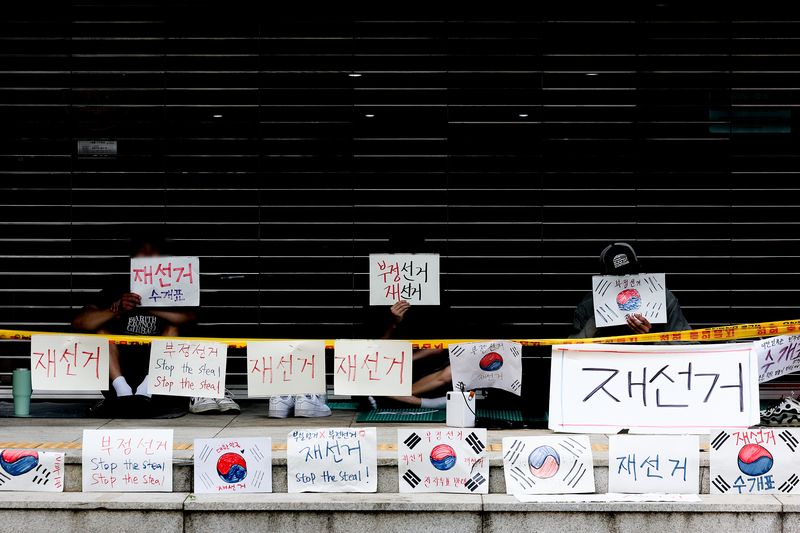
The 2026 South Korean local elections were marred by an unprecedented shortage of ballots, leaving a deep scar on pride in K-democracy. The shortage that occurred on election day at polling stations across the country, including in Songpa District, Seoul, was not simply a case of poor management. It was a disaster caused by structural flaws and misjudgment at the National Election Commission (NEC). Although the NEC received a budget more than 110% higher than the previous year, it lowered the minimum threshold for printing election-day ballots to 50% of eligible voters. The rationale was to reduce the cost of discarding unused ballots and to control the risk of theft or loss during storage. There was also likely an effort to prevent leftover ballots from being exploited by conspiracy theories about election fraud. But this was desk-bound administration that failed to respond flexibly to turnout changes in battleground districts and specific regions.
The voting rights of not only those who could not vote, but also those who voted after exit polls were announced, were seriously infringed. The incident also poured fuel on the embers of election-fraud claims. Although NEC Chair Rho Tae-ak, Secretary-General Heo Cheol-hoon, and others resigned and a Truth and Reconciliation Commission was launched, trust in the collapsed election administration will be difficult to restore. The fact that a shortage of ballots could deprive citizens of sovereignty shows the current state of election management in the Republic of Korea in stark terms.
■ The constitutional value of election administration, seen through the history of the NEC
The Constitution of the Republic of Korea made the NEC an independent constitutional body because of painful historical experience. In the early years of the state, election administration fell under the Ministry of Home Affairs and was inevitably vulnerable to political power. The result of power seizing control of the electoral process was the March 15, 1960 fraudulent election. At the time, the regime carried out fraud through the mobilization of civil servants, manipulation of early voting, and ballot-box swapping. It ultimately led to public resistance in the April 19 Revolution and the collapse of the regime. The creation of independent bodies such as the Election Commission under the Third Constitutional Amendment and the NEC under the Fifth Amendment to the Constitution of the Republic of Korea was grounded in those bloody lessons. The current Constitution also defines the NEC in Chapter 7 as an independent collegial constitutional body.
Election administration is the most essential infrastructure for realizing popular sovereignty and sustaining a democratic republic. Just as a power outage plunges everything into darkness, the collapse of election administration erases the very legitimacy of a democratic state. The NEC’s independence is not a privilege that allows it to rest without checks. It is a stern constitutional command to provide voters with a fair and transparent electoral environment, free from outside pressure.
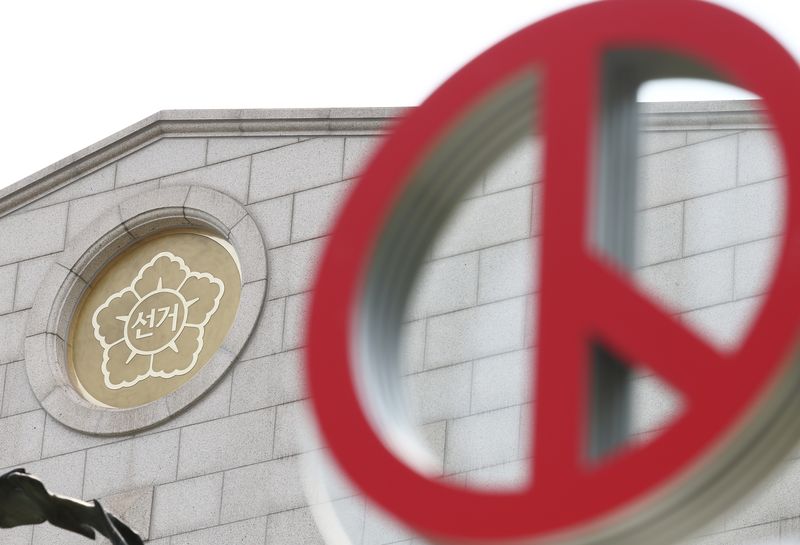
Today, the NEC can hardly escape criticism that it has become a closed bureaucracy that hides behind the shield of “political neutrality and independence” while refusing outside scrutiny. At the root of this crisis lies the moral hazard and complacency typical of an organization that is not properly checked. In May, ahead of the local elections, 176 NEC employees were on leave. In June, the number rose to 181. That was the second-highest level after 2022, when both the presidential and local elections were held and more than 200 employees were on leave. In February 2021, when there were no elections, the number was 84. Large-scale leave during election season, when employees should be focused on their core duties, can only be seen as deliberate avoidance. The ballot shortage, the controversy over basket voting, and poor management of early voting were all predictable outcomes.
The structure in which “leave gaps” lead to “preferential hiring” has also become routine. Election-season absences created an opening for abuse of the NEC’s internal “experienced hire” system. The chain runs like this: mass leave during election season, staffing shortages at local election offices, nonpublic or nominally public recruitment of experienced hires, and then “parental privilege” hires involving children of senior officials.
According to the Board of Audit and Inspection (BAI), organizational favoritism was widespread at the NEC. Examples included hiding internal job postings to hire employees’ children, issuing tailored recruitment notices, and staffing interview panels with colleagues. The organization effectively colluded with leave gaps and personnel authority to preserve a “golden workplace” for the few. The level of privilege and moral hazard among NEC members is so serious that people easily say, “The NEC is a family company.”
The root causes of the NEC’s problems are often identified as “closedness without outside oversight” and a “part-time chair system.” Because it is a constitutionally independent body, the NEC has rejected external checks from institutions such as the BAI, enabling nepotism and a family-company culture. The chair of the NEC is a Supreme Court justice, and the chairs of lower-level election commissions are often local court chiefs. Since they have their main judicial duties, the organizational control and accountability of part-time chairs are inevitably limited. Meanwhile, a secretary-general promoted from within can wield sweeping authority, creating a league of insiders.
The public’s demand for NEC reform is clear. The chairs of all levels of election commissions should become full-time positions, external audits should be accepted, and reform legislation should be enacted at a level that effectively dismantles the current structure. The Public Official Election Act and the Board of Audit and Inspection Act should be revised so that the BAI can immediately audit administrative areas that do not compromise neutrality.
■ Structural flaws in early voting and the crisis of trust
One of the main causes of the ballot shortage was the failure to allocate resources properly and to predict demand between early voting and election-day voting. Introduced in 2013, the early voting system has positive aspects, such as increasing turnout and improving convenience for voters. But year after year, it has also been blamed as a major source of distrust in election administration. The current early voting system is based on an Integrated Voter Register that allows people to vote anywhere without prior registration. This creates side effects that make it harder to predict voter movement and voting demand at specific polling stations on election day.
A more serious problem is the social distrust surrounding the management of early voting. The process of storing and transporting ballot boxes to separate locations after early voting has repeatedly fed conspiracy theories about election fraud. The current extreme turmoil is also an expression of accumulated distrust in early voting and the NEC. If elections, the most important festival of democracy, become a source of distrust and conflict, then the system should be reconsidered from the ground up.
In this election, there was a five-day gap between the first day of early voting on the 29th of last month and June 3. Public opinion can shift, candidates’ qualifications and problems may emerge late, and circumstances such as withdrawals can change. Because early voting raises the risk of violating the principle that voters’ intentions should be consolidated at the same point in time, abolishing it would be preferable.
According to a 2025 Penn & Poll survey, 44.9% supported “abolishing early voting,” while 49.2% said it should be maintained. A Media Defense poll found 44.6% for “abolition” and 50.1% for “retention.” Although support for keeping the system is slightly higher, distrust of a system that has been in place for more than 10 years is close to half the public. The myth that a high turnout benefits one political camp is no longer true. This election also saw a relatively high turnout for local elections, but it did not work to the advantage or disadvantage of any particular camp.
■ Lessons from election administration abroad
Advanced democracies place greater value on the rigor and transparency of the electoral process than on turnout alone. France, in order to block the possibility of election manipulation and the opacity of ballot transport, generally prohibits early voting and mail voting. Voters who cannot cast a ballot on election day may use a strict proxy voting system, in which a trusted representative votes on their behalf after notarization in advance. It is a decision to secure the legitimacy and reliability of elections at 100%, even at the expense of convenience.
Taiwan follows the principle of voting and counting on the same day. Although it is a global leader in Information Technology (IT), Taiwan does not allow early voting in order to block any possibility of improper interference. Voters may cast ballots only at the polling station assigned to their registered address on election day. As soon as voting ends, polling stations are converted into counting centers. Ballots are lifted one by one on site, the results are announced aloud, and tally marks are drawn on a board in a full manual count. Because there is no transport process, there is no opening for conspiracy theories such as ballot swapping.
In Germany, when confusion arose in some Berlin districts in the past because of ballot distribution errors and voting continued after the official closing time, the Federal Constitutional Court ordered a rerun in those areas. The court judged that voters’ equality and the fairness of the election had been compromised. It is a clear example showing that the integrity of the electoral process is an absolute standard by which democracy succeeds or fails.
■ Abolishing early voting and a forward-looking alternative of multiple election days
Statistical and practical evidence has shown that the current early voting system has more drawbacks than benefits. We must now move beyond blind faith in convenience. We should consider alternatives that can strengthen fairness and trust in elections rather than simply increasing turnout.
A promising alternative is to abolish early voting and introduce multiple election days. Instead of early voting, one option is to designate two consecutive main voting days, such as Friday and Saturday or Sunday and Monday. Voters would cast their ballots at the polling station assigned to their address on one of those days, without the uncertainty of early voting. Another option worth considering is not transporting ballot boxes at all and instead converting polling stations into counting centers.
Under such a system, the voter register and ballot supply for each polling station would be fixed with precision. This would fundamentally prevent the disaster of voters being turned away because the NEC miscalculated the number of ballots. There would be no need to store ballot boxes at another location for days after voting ends. Ballots could be counted immediately on site after polls close, or moved the same day under fully controlled conditions, cutting off the roots of conspiracy theories. With enough voting time secured, voters’ right to participate could still be guaranteed at the current level.
■ Conclusion
Elections are not merely an administrative service. They are a sacred contract through which the people grant legitimacy to power. The ballot shortage in the 2026 South Korean local elections is a warning to the NEC’s monopolistic bureaucracy and to an election system that has pursued convenience above all else. Whether there was election fraud must be determined through investigations and a parliamentary inquiry. What matters most is placing the NEC, which has become a privileged organization, under the scalpel and abolishing early voting, which has become a breeding ground for distrust, in order to restore the constitutional value of elections. Beyond factional logic and partisan advantage, this is the most urgent reform task facing the Republic of Korea today.