Retail investors bet on debt-fueled investing as KOSPI plunges; margin loan balances jump by 600 billion won in two days
- Input
- 2026-06-10 06:03:39
- Updated
- 2026-06-10 06:03:39
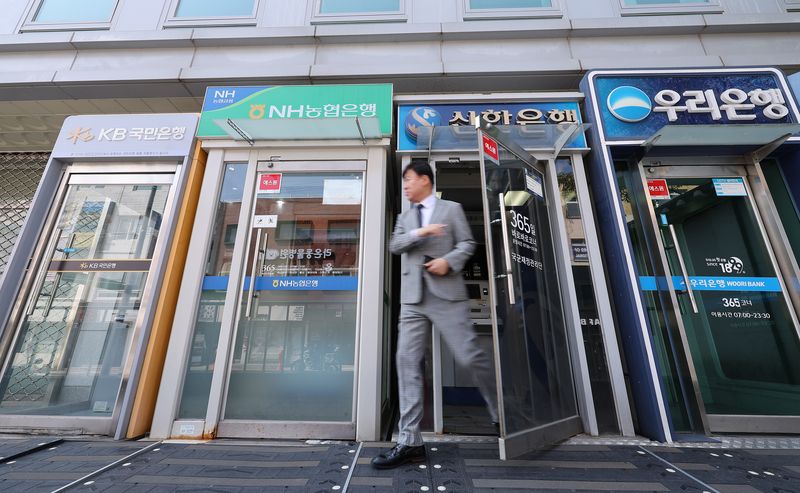
[Financial News] As the KOSPI (Korea Composite Stock Price Index) suffered a sharp correction due to negative developments from the United States and a steep drop in semiconductor stocks, individual investors turned to debt-fueled investing in hopes of a rebound. Over the two days of the market slump, margin loan balances at major commercial banks surged by more than 600 billion won.
According to Yonhap News Agency on the 10th, the outstanding balance of personal overdraft loans at the five major commercial banks — KB Kookmin Bank, Shinhan Bank, Hana Bank, Woori Bank and Nonghyup Bank — stood at 42.9516 trillion won as of the 8th. This figure reflects the amount actually borrowed, not the approved credit limit.
That level is the highest in about three years and seven months, since late November 2022, when it reached 43.1063 trillion won.
The balance has been rising sharply in recent months. It increased from 39.7877 trillion won at the end of April to 41.5324 trillion won at the end of May, then climbed by 1.4191 trillion won in just five business days in June.
In particular, the balance rose by 608.5 billion won over just two days, on the 5th and 8th, when the KOSPI posted steep declines. It increased by 136.7 billion won on the 5th and by another 471.9 billion won in a single day on the 8th.
The move is seen as the result of individual investors aggressively using overdraft loans to raise funds after viewing the sharp selloff as a buying opportunity.
The KOSPI had extended its rally, briefly surpassing the 8,000-point mark for the first time during trading on the 15th of last month. But on the 5th, it fell 5.54% amid a surge in the won–dollar exchange rate and weakness in semiconductor stocks. On the 8th, it dropped to as low as the 7,442 level intraday before closing down 8.29%. A circuit breaker mechanism was triggered early in the session, intensifying market anxiety.
The banking sector believes that the pattern of retail investors buying on dips, which tends to repeat during stock market corrections, appeared again this time as well.
A commercial bank official told Yonhap News Agency, "Whenever the domestic stock market undergoes a short-term correction, retail buying strengthens and the balance of overdraft loans rises along with it."
Another bank official said, "With investor sentiment having improved significantly on the back of the recent stock market rally, more investors saw the correction as a buying opportunity." The official added, "Demand for funding investments through overdraft loans is expanding."
Market watchers expect demand for debt-fueled investing among individual investors to continue for the time being as volatility remains high.
One banking industry source said, "Given that the KOSPI jumped 8.18% on the 9th, marking its biggest-ever daily gain, there may also have been additional inflows of funds."
[email protected] Seo Yoon-kyung Reporter