[Editorial] Incentives for Companies That Hire Young People: We Need a Fundamental Solution
- Input
- 2026-06-09 19:02:35
- Updated
- 2026-06-09 19:02:35
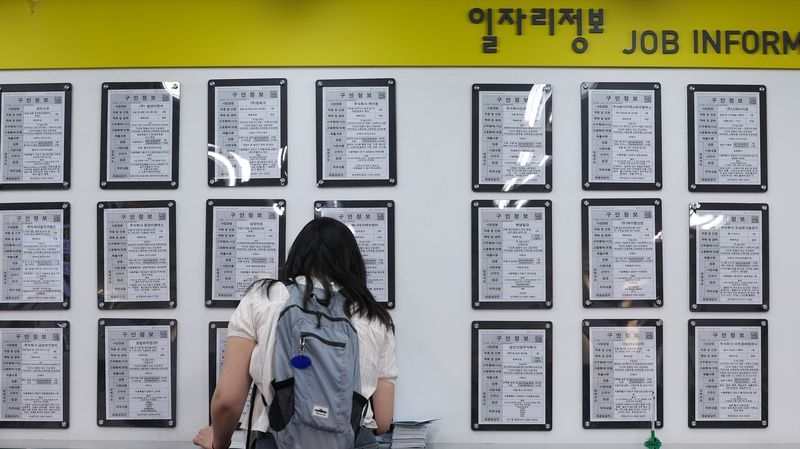
As AI spreads, concerns about growth without jobs are rising by the day. The government's plan may help ease employment difficulties to some extent. It aims to address youth unemployment and regional hollowing-out through corporate incentives, and it is a worthwhile attempt. Youth employment problems in our society have already become a chronic illness. As of April, the youth employment rate had fallen for 24 consecutive months, the longest decline since the financial crisis. The number of young people pushed out of the labor market continues to rise, and the number of idle young people who say they are "just resting" has reached 400,000.
The AI transition could make youth employment problems even worse. AI first replaces entry-level on-the-job tasks. Data research, document drafting, coding assistance, customer service, and simple analysis are its main targets. In fact, the Stanford Digital Economy Lab found that employment declines were especially pronounced among early-career workers aged 22 to 25 in AI-exposed occupations such as software development and customer support.
Youth employment difficulties are also directly tied to regional hollowing-out. Young people who cannot find good jobs in the provinces leave for the Seoul metropolitan area, and companies in regions where young people have disappeared hold back investment because of labor shortages. The lack of youth jobs accelerates regional extinction. The government's plan to offer larger incentives to companies that relocate to the provinces or hire local talent appears to reflect a determination to break this vicious cycle.
The problem is that the measure seems far from a fundamental remedy. What is urgently needed now is a breakthrough policy that goes beyond simple employment subsidies or hiring incentives. Youth employment problems can only be resolved if the gaps between large and small companies, between the Seoul metropolitan area and the provinces, and between regular and non-regular workers are narrowed.
The reality that young people are willing to endure long periods of unemployment while focusing only on large companies cannot be dismissed as a simple job mismatch. The gaps among companies in wages, welfare, career development, and job security are far too wide. Youth employment policy has clear limits if it only amounts to giving out more subsidies.
The government must also carry out structural reform so that small and mid-sized companies become attractive workplaces for young people. That means improving productivity, wage-paying capacity, job training, and welfare infrastructure at the same time. Support for AI transformation should not stop at simply introducing equipment or consulting. It must be designed so that small businesses can actually change the way they work and young talent can grow within them. Programs that connect young AI talent to the workplace must also be backed by careful performance management and follow-up support.
It goes without saying that the selfish labor tactics of large company unions, which seek to let current workers take all the company profits, will harm future generations. They also create a serious sense of unfairness among workers at other workplaces during the same period. The more the closed structure of high-wage regular jobs hardens, the more young people will become powerless surplus labor standing before a narrow gate. Reasonable cooperation and responses from the government, companies, and unions can solve the youth employment problem.