"You Can Repay It Until Age 147" ... It Was Revealed That Approval Was Granted for an 88-Year Repayment Period for Small Business Debt
- Input
- 2026-06-09 09:45:27
- Updated
- 2026-06-09 09:45:27
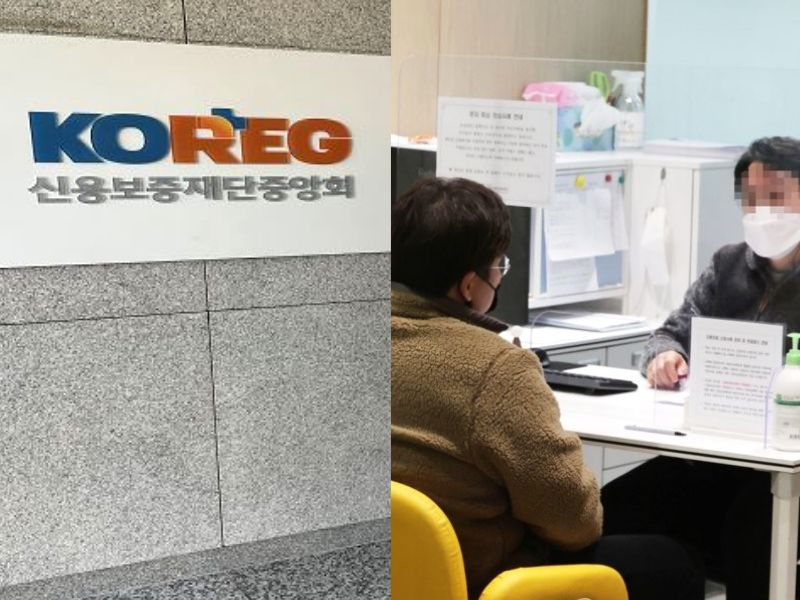
[Financial News] A government audit has found that the Regional Credit Guarantee Foundation had been signing preferential agreements that allowed small business owners to repay their debts until they turned 147.
Such perks were frequent, amounting to little more than debt forgiveness in practice.
According to Newsis News Agency on the 9th, an audit report on the Regional Credit Guarantee Foundation and the Korea Federation of Credit Guarantee Foundations prepared by the Ministry of SMEs and Startups found 113 cases of violations of the allowed installment repayment period at five regional foundations nationwide, involving about 3.4 billion won.
The ministry began collecting and analyzing written materials on the 17 regional foundations nationwide and the federation in June last year, and finalized the audit results in December.
The regional foundations issue guarantee certificates to small business owners who lack sufficient collateral, while the federation provides re-guarantees and covers the regional foundations if a guarantee defaults. The standards for extending installment repayment periods differ by foundation, and seven foundations, including those in Seoul, have exception clauses that allow the permitted period to be doubled.
The audit results revealed practices that went beyond common sense. In the case of the Gyeonggi Credit Guarantee Foundation, it signed an installment repayment agreement with debtor A for a debt of about 100 million won, then approved a repayment period of 88 years, which is 72 years longer than the maximum contract period of 16 years. Under that agreement, A would have to keep repaying the debt until age 147. In effect, it was an abnormal privilege amounting to lifetime debt relief.
The Gyeonggi Credit Guarantee Foundation reportedly explained that it had long imposed no limit on the permitted period in order to help debtors get back on their feet, and that exceptional cases were handled with approval from a higher-level decision maker. However, the ministry's audit office concluded that it was difficult to accept that claim because the foundation could not explain why an extension of up to 88 years was necessary.
In addition, a number of bizarre contracts were found in which debts had to be repaid until age 106 in Gangwon Province, and until age 106 and 121 in South Chungcheong Province and Ulsan, respectively, far exceeding the average life expectancy of Koreans, which stands at 83.7 years.
Guarantees for loans that had already been repaid were also left on the books ... totaling 2.5 trillion won
It was also revealed that guarantees that should have been removed from the books because small business owners had already repaid their loans were left unclosed. The amount of these unclosed guarantees reached 2.5 trillion won. As of 2024, the federation had independently identified 615.5 billion won in unclosed guarantees, but the audit office found more than 1.9 trillion won in additional amounts after reviewing the actual books.
There are suspicions that a tactic known as "securing more budget" was behind the regional foundations' deliberate or negligent underreporting of unclosed guarantees. By failing to close guarantees and making it appear on the books that they lacked financial capacity, they could receive larger re-guarantee limits and more budget allocations from the federation.
The damage from this was borne entirely by local small business owners. Due to the distortion in budget allocation, the excess re-guarantee limit for the Seoul metropolitan area regional foundations reached 754.6 billion won as of 2024, creating a severe imbalance in which more than 78 percent of the total was concentrated in the metropolitan area alone.
The ministry's audit office pointed to poor automatic notification systems at some banks and lax work practices at the regional foundations as the causes. Due to a banking system error, only about 1.3 million of roughly 1.4 million accounts subject to termination notices were actually notified, and the regional foundations were also found not to have fulfilled their duty to check the cases directly.
In the process, 14 regional foundations were also found to have incorrectly calculated refund guarantee fees that small business owners should have received back, leaving more than 500 million won unreturned to 3,971 guaranteed borrowers.
The ministry issued cautions and warnings to 54 related employees and disciplinary action against four employees whose misconduct was deemed serious. It also took administrative measures against the institutions, including 30 corrective orders, two improvement orders, and 14 notifications.
A federation official said, "We have completed the improper extension measures by distributing standardized rules and revising internal regulations," adding, "We will continue improving the management system so as to enhance the reliability and transparency of the small business finance system."
[email protected] Sung Min-seo Reporter