Trump Warns Israel It Could Be Left Alone, Urges Halt to Iran Attacks
- Input
- 2026-06-09 08:52:04
- Updated
- 2026-06-09 08:52:04
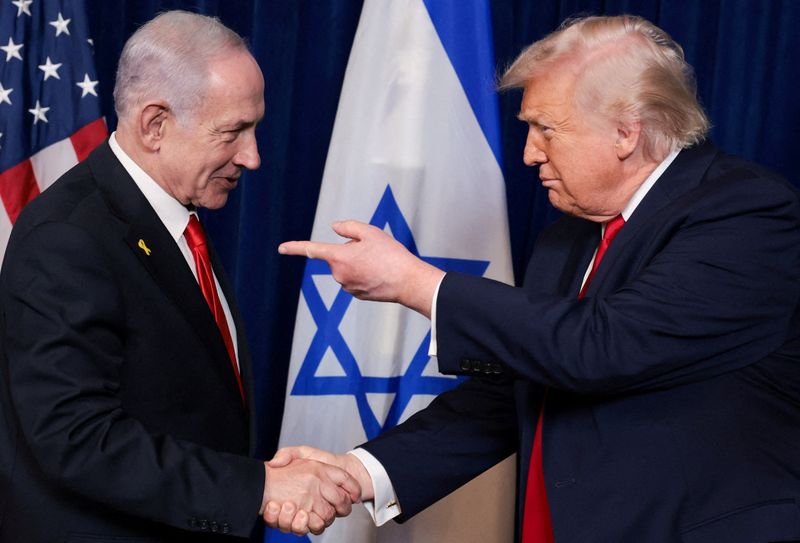
[Financial News] President Donald Trump of the United States, who had been facing the risk of a collapse in the ceasefire with Iran amid the intense back-and-forth between Iran and Israel, warned Israeli Prime Minister Benjamin Netanyahu to exercise restraint. Trump told Netanyahu that if Israel resumed the war with Iran, it would have to fight alone.
In a phone interview with the U.S. political outlet Axios on the 8th, Trump discussed the back-channel diplomacy that took place in the Middle East between the 7th and 8th.
Trump said, "I received calls from five countries in the Middle East asking me to rein in Netanyahu." He added, "These countries were very concerned. They really like the agreement we have been negotiating." Trump also claimed that Iran sent a message saying it would stop attacking if Israel did the same. "They called us and said they would no longer attack, so we should tell Israel to do the same," he said.
Trump then said he called Netanyahu on the 7th and told him, "Bibi, you'd better be careful. Otherwise, you may soon find yourself alone."
Israel, which had attacked Iran together with the United States in February, joined the ceasefire when the United States entered a truce with Iran on April 8. However, Israel continued military operations against Hezbollah, the pro-Iranian armed group in Lebanon, and Iran demanded a ceasefire in Lebanon as a condition for ending the conflict. Iran's negotiating delegation announced on the 1st that it was suspending talks with the United States over the Lebanon issue. In a report on the 1st, Axios cited a source as claiming that Trump became very angry during a call with Netanyahu and even used profanity.
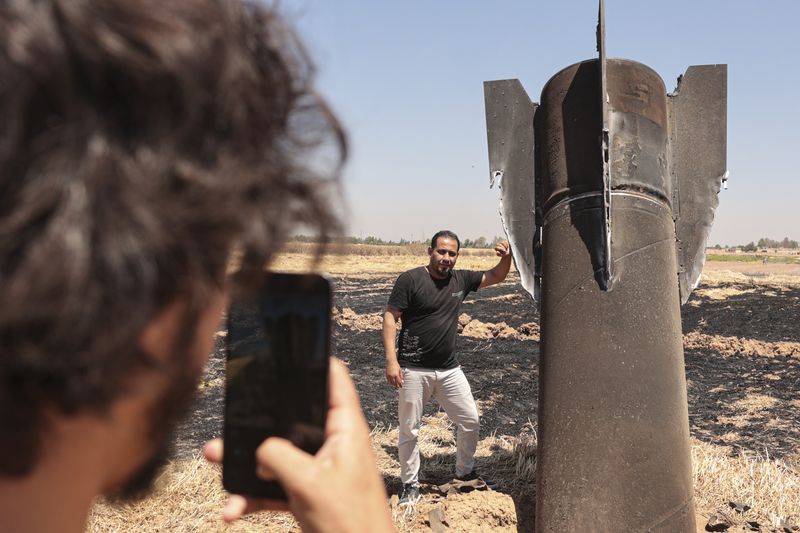
Despite U.S. efforts to dissuade it, Israel carried out airstrikes on the southern outskirts of Beirut, the Lebanese capital, on the 7th, while Iran fired 11 missiles at northern Israel for the first time since the April ceasefire. The two sides exchanged long-range strikes through the 8th before halting the fighting later that day.
According to Axios, Trump took a much calmer tone in his call with Netanyahu on the 7th and urged him to stop the fighting. U.S. officials expected Netanyahu to back down, but Netanyahu understood Trump to be opposed to the attack without explicitly saying not to proceed. An Israeli official said Israel had planned to strike dozens of sensitive targets in Iran on the 8th, and the scale of the air raid was expected to be the largest since April.
When Iran and Israel were still not stopping the fighting on the morning of the 8th, Trump called Netanyahu again within hours and pressed him to halt attacks on Iran. Netanyahu then canceled further strikes on Iran. According to an Israeli official, Trump told Netanyahu, "If a deal is reached in the next few days, there will be no need for additional attacks. If the talks fail, the United States could lead direct strikes on Iran." Netanyahu countered that failing to respond to Iran's attacks would signal that Iran held the military advantage, which would not be good for negotiations.
Meanwhile, through Axios on the 8th, Trump claimed that if a ceasefire agreement with Iran is reached, "this deal will prevent Iran from obtaining nuclear weapons and will stop uranium enrichment." He added, "It is a tremendous deal, and we got everything we wanted."
[email protected] Park Jong-won Reporter