Iran Warns of Building a "Resistance Security Belt" from the Strait of Hormuz to the Red Sea After U.S. Attacks on Ships
- Input
- 2026-06-09 07:34:06
- Updated
- 2026-06-09 07:34:06
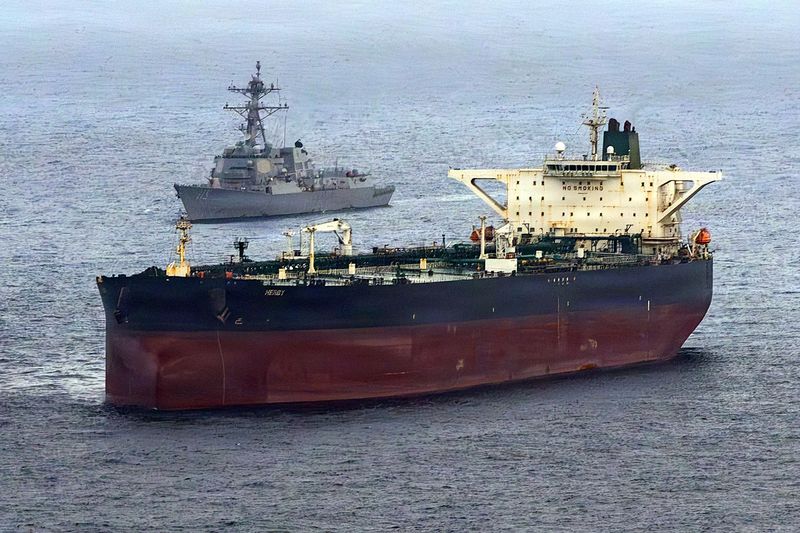
[Financial News] The United States, which has been struggling to reach a ceasefire agreement with Iran over the Israel issue, has once again attacked a vessel bound for Iran near the Strait of Hormuz. Iran said the situation in the Strait of Hormuz amounts to a war crime and warned that it would build a "resistance security belt" spanning the Red Sea and the Strait of Hormuz in coordination with Yemen's Houthi rebels.
U.S. Central Command, which is in charge of U.S. operations against Iran, said in a post on social media platform X on the 8th local time that it had "disabled the Palauan-flagged M/T Marivex, which was heading to Iran through international waters in the Gulf of Oman outside the Strait of Hormuz."
USCENTCOM added that when the vessel's crew failed to follow U.S. instructions, F/A-18 Super Hornet fighter jets from the aircraft carrier USS Abraham Lincoln (CVN-72) fired precision-guided munitions at the ship's engine room and bridge. "The Marivex is no longer sailing toward Iran," it said.
The New York Times reported the same day, citing maritime data intelligence firm Windward, that the vessel is now anchored off the coast of Oman and that a fire broke out, forcing all crew members to evacuate.
Since February, the United States has joined Israel in attacking Iran. After Iran blocked the Strait of Hormuz, Washington began preventing Iran-linked vessels from entering and leaving the strait and nearby Iranian ports from April 13, despite the ceasefire announced on April 7. In a statement on the 8th, USCENTCOM said it had turned back 134 merchant ships so far and allowed 42 humanitarian aid vessels to pass. The number of civilian merchant ships disabled by the U.S. military has risen to seven.
Over the past month, the two sides have repeatedly clashed militarily over shipping in the Strait of Hormuz, despite the ceasefire. Each time the United States attacked a vessel bound for Iran, Iran struck U.S. military bases in pro-U.S. countries near the Persian Gulf.
According to Tasnim News Agency, Mohammad Bagher Ghalibaf, the Speaker of the Parliament of Iran who leads the ceasefire negotiating delegation, said on the same day that U.S. control of the strait would be met with "a comprehensive plan to turn the maritime blockade, which is a war crime and part of the enemy's plot, into another defeat for the enemy." He added, "Our goal is to end the war and secure stable security," and said, "We have no trust in the other side, the United States."
On the same day, Esmail Qaani, commander of the Quds Force under the Islamic Revolutionary Guard Corps (IRGC), referred on social media to a "resistance security belt" linking the Persian Gulf and the Red Sea. The Strait of Hormuz, which connects the Persian Gulf and the Indian Ocean, carried about 25% of the world's maritime oil shipments before the Iran war. The Bab el Mandeb Strait, which links the Red Sea and the Indian Ocean, is also a key logistics chokepoint through which about 10% of maritime oil shipments pass.
Since the outbreak of the Iran war, Yemen's Houthi rebels have repeatedly warned that they could block the Bab el Mandeb Strait in retaliation against the United States and Israel. Referring to the Houthi rebels' recent ban on Israeli ships transiting the Red Sea, Qaani said, "Yemen's brave and timely action shows the wisdom of the resistance front," and added, "If necessary, other forces will join as well." He warned, "A new resistance security belt will be built from the Strait of Hormuz to the Bab el Mandeb Strait and from the Persian Gulf to the Red Sea," adding that "provocations by the Zionist regime, Israel, and the United States in this region will trigger a response from the united resistance front."
[email protected] Reporter Park Jong-won Reporter