No investment warning despite sharp gains in Samsung Electronics and SK hynix stocks... controversy over the 'top 100 market cap exception'
- Input
- 2026-06-09 06:00:00
- Updated
- 2026-06-09 06:00:00
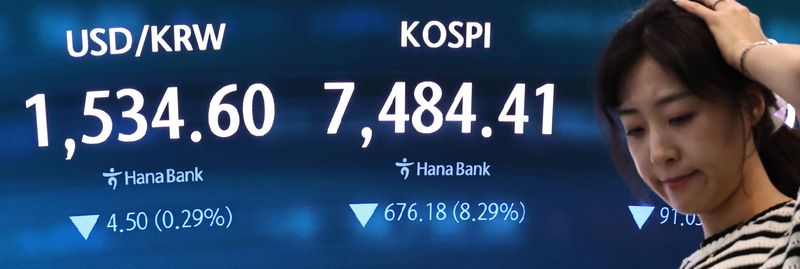
[Financial News] More than 65 trillion won in individual funds have flowed into Samsung Electronics and SK hynix so far this year, yet neither stock has received a single investment warning. As Korea Exchange (KRX) expanded the exception for investment warnings on the top 100 stocks by market capitalization, questions are being raised over whether the market alert system has weakened its investor protection function.
According to the financial investment industry on the 9th, KRX revised its designation system for investment-warning stocks at the end of last year and excluded the top 100 stocks by combined market capitalization on the Korea Exchange Main Board Market and the KOSDAQ market from the "long-term rise and improper trading pattern" investment-warning category.
At the time, the exchange explained the revision by saying, "As the overall stock market has recently been on an upward trend, large-cap stocks with a low likelihood of unfair trading were being designated as investment-warning stocks under the long-term rise and improper trading criteria." It added, "We changed the relevant designation requirements to improve the system's effectiveness."
As a result, large-cap stocks ranked in the top 100 by market capitalization were excluded from the long-term rise and improper trading pattern investment-warning category. Then, on May 26 this year, the exception was expanded so that the top 100 stocks by market capitalization could also be excluded from both investment-warning designation and advance notice of designation.
A KRX official explained, "The exception rule related to the top 100 stocks by market capitalization was introduced at the end of last year, and the May revision this year was reflected during the process of reorganizing the existing rules."
As the timing of the expanded exception overlapped with the semiconductor rally, some in the market are questioning whether the current market alert system is adequately fulfilling its investor protection role.
So far this year through the 8th, Samsung Electronics shares have risen 146.46%, while SK hynix has climbed 193.55%. As of the 2nd, just before the market plunge, the gains had reached 200.67% and 262.52%, respectively. Compared with June 4 last year, immediately after Lee Jae Myung took office as President, Samsung Electronics has surged 534.68% and SK hynix 1,037.35%.
Buying by individual investors was also explosive. From the start of this year through the 8th, individuals net bought 3.66569 trillion won of Samsung Electronics and 2.85155 trillion won of SK hynix. In total, 6.51724 trillion won flowed into the two stocks alone.
The semiconductor frenzy has also spread to leveraged products. The 16 single-stock leveraged exchange-traded funds (ETFs) and inverse ETFs tied to Samsung Electronics and SK hynix, which were listed on the 27th of last month, recorded trading volume of about 2.78 trillion won over the first three trading days after listing. Individual investors net bought the related products for eight consecutive trading days after listing, and even on the 5th, when the KOSPI plunged, they poured in more than 100 billion won. On the previous day, when the market tumbled in what was called "Black Monday," more than 540 billion won in net individual buying flowed into 14 related products.
At the time of the revision, KRX said it had changed the rules to improve the system's effectiveness, explaining that "large-cap stocks with a low likelihood of unfair trading were being designated as investment-warning stocks." It also said that market surveillance for unfair trading would continue even for stocks exempted from designation.
However, the market says investment warnings are more than just a market surveillance tool. They also serve as a de facto warning light for investors about overheating risk. Whether a stock is designated as investment caution or investment warning is immediately displayed on Home Trading System (HTS) and Mobile Trading System (MTS) platforms, so it can have a significant impact on investment decisions.
One official in the financial investment industry said, "I understand that the investment-warning system was originally intended to prevent unfair trading, but from an investor's perspective, it also serves as a kind of risk signal." The official added, "As stocks like semiconductor names that attract heavy individual buying remain outside the investment-warning system, criticism may emerge that investor protection has weakened."
There are also concerns that, as the scope of the investment-warning exception expands, the market alert system may be operating differently for large-cap stocks and smaller companies.
Another official in the securities industry said, "In periods like the current one, when funds are concentrated in specific industries and stocks, investor risk can rise regardless of market capitalization." The official added, "We need discussion on how to find a balance between the purpose of the market alert system and its investor protection function."
[email protected] Reporter Choi Du-seon Reporter