Task force launch imminent over ballot shortages; how far will responsibility be pursued at the NEC?
- Input
- 2026-06-08 15:20:25
- Updated
- 2026-06-08 15:20:25
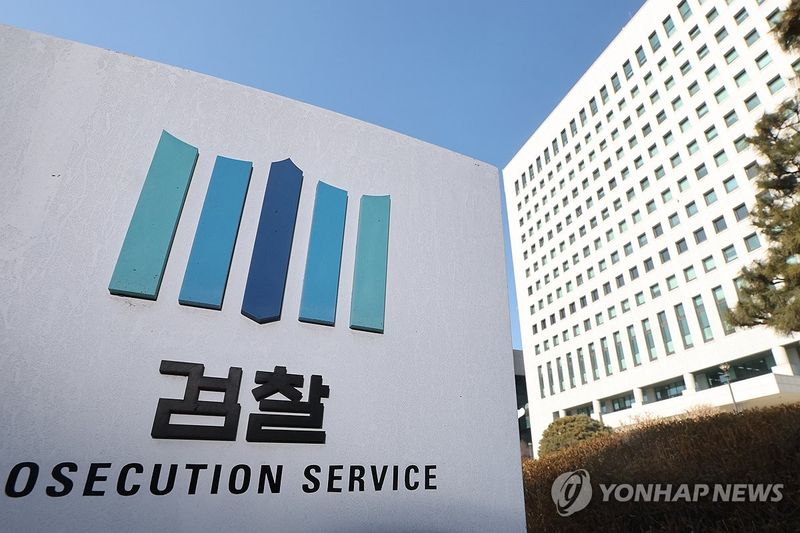
[Financial News] The formation of a Joint Prosecutor-Police Investigation Task Force over the ballot shortage that occurred during the June 3 local elections is now moving into full swing. Investigators are expected to move quickly to examine the National Election Commission's overall election management process, its decision-making structure, and where responsibility lies. However, some say it will be difficult to hold anyone criminally liable based only on the dereliction-of-duty allegations that have been raised so far.
According to the Supreme Prosecutors' Office of the Republic of Korea (SPO) and police sources on the 8th, the SPO said the previous day that it would form a joint task force with the police to thoroughly uncover public concerns surrounding the case. The SPO is discussing the task force's size and command structure with the police, centering on its Public Investigation Division, which handles election cases. The task force could launch as early as later today. President Lee Jae-myung also said the previous day that "this incident is a serious matter that undermines the foundation of popular sovereignty," and ordered investigators to fully determine responsibility and the full facts of the case through the task force.
The investigation is expected to focus on how the NEC drew up its ballot supply plan, its decision-making structure, and how it responded at the scene. A lawyer with extensive experience in election investigations said, "The first question is whether the ballot shortage was simply an administrative mistake or an act intended to produce a result favorable to a particular candidate." The lawyer added, "Given the high early voting turnout in this election, the NEC should probably have prepared more ballots as a precaution."
At this point, however, it appears more likely that the NEC followed its comprehensive election management guidelines after the June 1, 2022 local elections, rather than intentionally causing the shortage. At the time, criticism grew that collecting, storing, and disposing of leftover ballots wasted budget resources, and that missing, stolen, or leaked ballots could be used for election fraud. As a result, the printing ratio for local election ballots was reduced from 60% to 50% starting with this election.
The communication process among NEC officials may also come under scrutiny. In particular, investigators are expected to trace how the response plan was decided after the shortage was first reported. Compulsory measures such as searches and seizures are also being discussed. The lawyer said, "To verify the number of voters who were unable to cast ballots, the distribution of waiting tickets, and CCTV footage around polling stations, compulsory investigation measures may be necessary."
Another issue is whether the process of supplying additional ballots was lawful. Articles 150 and 151 of the Public Official Election Act require ballots to be sent to local NEC offices by the day before the election and kept in storage, and also require serial numbers to be printed on the ballots. There is concern that the additional ballots supplied on election day may not have followed those procedures. Kwak Joon-ho of Cheong Law Firm said, "It is essential to confirm where the additional ballots were prepared, through what procedures, and whether the relevant rules were followed."
Still, many remain cautious about the possibility of criminal punishment. One legal source said, "Based on what has been revealed so far, it is not even clear what crime, if any, could be established."
There are also concerns that applying dereliction-of-duty charges will not be easy. A former chief judge-turned-lawyer said, "For dereliction of duty, it must be proven that the person intentionally neglected or abandoned their duties." He added, "This case appears to be more about a failure to predict demand, so it seems unlikely to lead to criminal punishment." Kwak also explained, "Dereliction of duty requires not doing the work at all, but this case could be seen as something that happened while the work was being carried out."
In fact, the Supreme Court of Korea in 2011 upheld the acquittal of an NEC official who had been indicted for failing to block a DDoS attack on the NEC website during the Seoul mayoral by-election. The court acknowledged that the response had been inadequate, but ruled that it was difficult to say the official had consciously neglected or abandoned his duties.
Amid discussions in political and legal circles, reform measures for the independent NEC are also being considered. Independent lawmaker Han Dong-hoon said he plans to introduce a bill that would change the NEC chairperson from the current part-time post, held concurrently by a Supreme Court Justice, into a full-time, accountable position, and would allow the Board of Audit and Inspection (BAI) to inspect the NEC's duties.
Kim Jong-min, a former prosecutor and chief attorney at MK Law Firm, said, "The NEC chairperson is a Supreme Court Justice, and local election commission chairs are also judges, so the structure leaves election crime judgments in the hands of judges." He argued that the NEC system should be restructured to resolve issues related to part-time concurrent appointments and to improve fairness and neutrality.scottchoi15@fnnews.com Choi Eun-sol, Jeong Kyung-soo, Lee Hwan-joo Reporter