Iran and Israel Trade Missile Barrages Despite Trump's Pleas. Has the Ceasefire Collapsed?
- Input
- 2026-06-08 15:01:42
- Updated
- 2026-06-08 15:01:42

[Financial News] The Islamic Republic of Iran and Israel exchanged long-range attacks for the first time since the April ceasefire, despite U.S. efforts to dissuade them. The United States said it had no involvement in the clash.
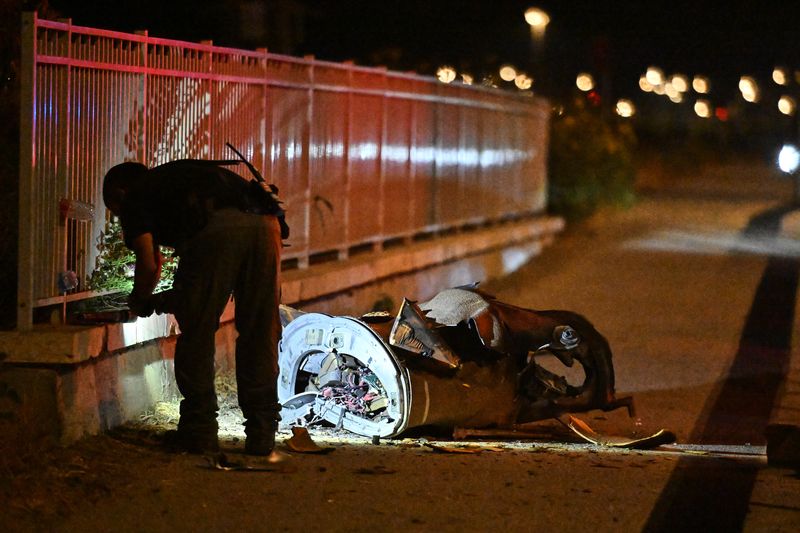
According to Al Jazeera, the Israel Defense Forces (IDF) bombed sites in central and western Iran, including Tehran, Tabriz, and Isfahan, on the 8th local time. Airspace near Imam Khomeini International Airport in Tehran was closed that day, and loud explosions were also reported in Karaj and other areas. On the same day, the Islamic Revolutionary Guard Corps (IRGC) claimed that "Israel attacked targets inside our territory with air-launched ballistic missiles." Tehran's fire department said, "Two explosions were heard at 4:43 a.m. and 4:45 a.m., and the city center was not the target."
Iran quickly retaliated. According to The Times of Israel (TOI), missile attack alerts were issued at around 8 a.m. in central Israel, including Jerusalem and Tel Aviv. Channel 12 reported that "Israeli airspace was temporarily closed." The IDF said it intercepted all of the missiles, claiming they were launched from Yemen. TOI reported that after the IDF dealt with the missile fired from Yemen, additional missiles were launched from the direction of Iran. In a statement issued after intercepting the Iranian missiles, the IDF said it also struck the Mahshahr Petrochemical Complex in Khuzestan Province in southwestern Iran that day. The facility is a key industrial hub in Iran, producing plastics, fertilizers, and other goods.
A U.S. Department of Defense official who spoke to Axios emphasized that "the U.S. military was not involved in this Israeli strike on Iran." He added that "the strike was relatively limited in scale."
Israel, which attacked Iran together with the United States in February, joined the ceasefire after the United States entered a truce with Iran on April 8. However, Israel continued military operations against Hezbollah, the pro-Iranian armed group in Lebanon, while Iran demanded a Lebanon ceasefire as a condition for ending the conflict. On the 7th, Israel carried out airstrikes on the southern outskirts of Beirut, Lebanon's capital, despite U.S. objections. In response, Iran fired 11 missiles at northern Israel that same day. The IDF said it intercepted all of them and warned that it would strike Iran immediately if ordered by the government.
This latest clash is the first official exchange between Iran and Israel since the April ceasefire. Donald Trump, who wants the ceasefire with Iran to hold, referred to Israeli Prime Minister Benjamin Netanyahu in an interview with the Financial Times (FT) on the 7th. In remarks made shortly after Iran attacked Israel on the 7th, Trump said Netanyahu would not retaliate against Iran. "He won't have a choice," Trump said. "I make the decisions. I make all the decisions." He added, "He doesn't have the authority to decide."
Trump said of Iran's missile attack, "We'll have to see what the result is, but depending on how you look at it, it's just one of those things that has been going on for 3,000 years or 47 years," and added that "this attack will have no impact on the negotiations." In earlier interviews with U.S. media, he also stressed that "no one was hurt in the Iran attack" and claimed, "I will call Netanyahu right now and tell him not to retaliate."
[email protected] Park Jong-won Reporter