Macro Variables Trigger 'Crypto Winter'... Can 'Policy Momentum' Spark a Rebound? [Crypto Briefing]
- Input
- 2026-06-08 13:26:49
- Updated
- 2026-06-08 13:26:49
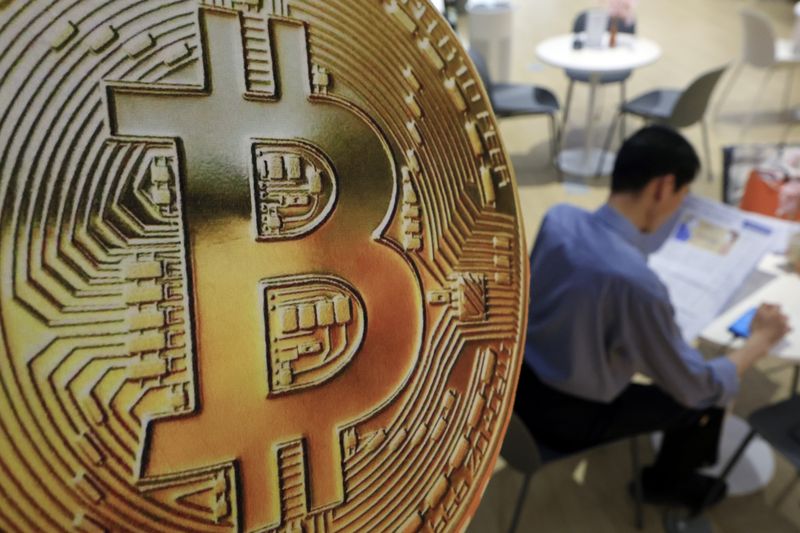
[Financial News] Since tensions in the Middle East erupted, the crypto market has remained stuck in a prolonged slump as macroeconomic variables have expanded. Experts are focusing on policy momentum in the second half of the year, saying the pace of legislation will determine when a rebound begins.
According to Investing.com on the 8th, Bitcoin had fallen 27.7% from the start of the year through the 7th. It had held in the $70,000 to $80,000 range last month, but after plunging to the $60,000 level earlier this month, it has failed to recover. Over the same period, Ethereum and XRP also fell 43.11% and 37.25%, respectively.
As the broader crypto market weakened, trading volume also froze. Last month, trading value across South Korea's five major won markets — Upbit, Bithumb, Coinone, Korbit, and GOPAX — fell to $47.25849 billion, the lowest level this year. Related stocks have also been declining. From the 1st of last month through the 5th, Circle, the issuer of the dollar stablecoin USD Coin (USDC), and global crypto exchange Coinbase fell 11.66% and 18.84%, respectively.
The move is being attributed to growing expectations that the Federal Reserve System (the Fed) may raise its benchmark interest rate later this year. Since the Middle East crisis, international oil prices have surged and inflation concerns have intensified. In a rate-hike environment, investors typically become more cautious about risk assets such as crypto.
Shim Subin, a researcher at KIWOOM Securities Co., Ltd., said, "Bitcoin is a high-risk, highly liquid asset, so it is sensitive to changes in liquidity, including the Fed's monetary policy stance." She added, "In April, U.S. inflation data came in higher than expected, highlighting uncertainty over the Fed's monetary policy. In addition, capital outflows through U.S. spot Bitcoin exchange-traded funds (ETFs) have continued recently."
The market sees clearer crypto policy in the second half of the year as a potential catalyst for a rebound. In particular, global regulatory legislation is expected to have a major impact. Last July, when the GENIUS Act, which sets rules for stablecoin issuance and oversight, was passed, Bitcoin briefly surged to the $123,000 range and set a new all-time high.
In the second half of this year, the CLARITY Act, a U.S. crypto market structure bill, is drawing attention. Last month, the United States Senate Committee on Banking, Housing, and Urban Affairs advanced the bill to the Senate plenary session, and on the 1st local time, it was added to the Senate plenary legislative schedule. No exact vote date has been set, but some are raising the possibility that it could pass as early as July.
Lee Jun-ho, a researcher at Hana Securities, explained, "The CLARITY Act is awaiting a full Senate vote, and bipartisan legislation is needed because at least seven Democratic votes are required." He added, "The White House and crypto-related companies are urging swift action, but the bill is facing resistance from the banking sector."
Meanwhile, domestic legislative discussions are also expected to resume in the second half of the year. The second-stage crypto bill, the General Act on Digital Assets, has not been discussed since February. However, political circles plan to speed up legislation once the leadership structure of the second half of the 22nd National Assembly is completed.
Lee said, "Discussion on the General Act on Digital Assets is highly likely to resume in mid-month." He added, "The roles of traditional financial firms and crypto exchanges that recently made equity investments are expected to become clearer."
[email protected] Im Sang-hyeok Reporter