Will the government take a breather on real estate and prosecution reform? Stock support and personnel shake-up may accelerate [What is Lee Jae-myung's second-year state agenda?]
- Input
- 2026-06-07 18:28:33
- Updated
- 2026-06-07 18:28:33
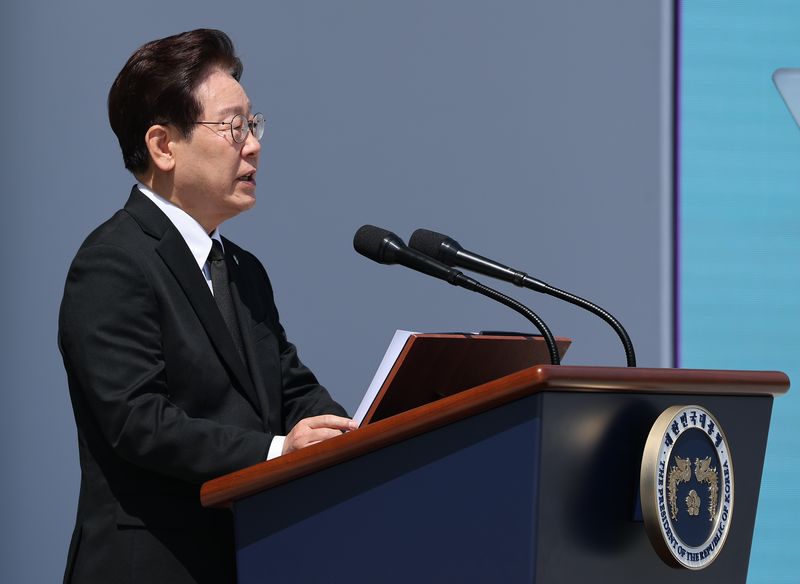
At the start of the press conference, Lee is expected to deliver an anniversary address, reflecting on the past year and presenting his vision and four key goals for the second year of his administration. About 160 domestic and foreign reporters will attend. The event will proceed without a preset script, with reporters asking questions freely at the direction of the moderator and the president. Two student journalists from university media outlets will also ask questions about the concerns and challenges facing younger generations.
The biggest focus is real estate. Lee has repeatedly raised concerns about unearned gains from property, speculation and tax evasion, signaling his intent to reform the system. As the June 3 local elections have concluded, discussions on real estate measures, including tax reform, expanded housing supply and anti-speculation policies, are likely to gain momentum. However, the defeat in the Seoul mayoral election remains a variable. The Democratic Party of Korea secured a number of metropolitan and provincial governorships in the June 3 local elections, including reclaiming Busan, but lost the Seoul mayoral race, the biggest battleground. Since real estate was one of the key issues among Seoul voters, a major question is how Lee will explain the principles of real estate reform and measures to ease market instability at the press conference.
The government is expected to maintain its stance of stabilizing housing prices and protecting end users, while also seeking ways to minimize market disruption. Stronger holding taxes and a review of tax rules for multi-home owners are in line with Lee's existing concerns. Still, after the Seoul mayoral election, it has become more important to address concerns over the burden on the middle class and single-home owners.
Reform legislation is another major test in the second year of the administration. There is growing pressure to push legislative efforts centered on economic and livelihood issues rather than contentious items such as prosecution reform. The first area drawing attention is capital market legislation aimed at supporting the KOSPI's strong rally. The Democratic Party of Korea, which has led three revisions to the Commercial Act, says the long-standing "Korea Discount" in the domestic stock market has been largely eased. It is also expected to move ahead with additional safeguards to address practices by some companies that harm minority retail shareholders.
One example is the so-called "anti-stock suppression law." The revision to the Inheritance Tax and Gift Tax Act, proposed by Democratic Party lawmaker Soyoung Lee, would require that for listed companies with a price-to-book ratio below 0.8, inheritance and gift tax assessments reflect asset and earnings value rather than stock price.
Calls from the business community to abolish breach of trust charges may also grow again. Critics have long argued that the current law can treat losses resulting from legitimate management judgments as criminal acts. In response, the government and the ruling party have been reviewing both the abolition of the offense and alternative measures to prevent legal loopholes.
Relaxing regulations on early-morning delivery by large discount stores is also emerging as a key livelihood and distribution issue. As large online retailers such as Coupang have effectively dominated the market, concerns have grown over side effects. Discussions are expected to continue on expanding the role of large discount stores in online distribution, boosting competition in the retail sector and protecting consumer choice.
A personnel shake-up has already begun. Lee nominated Han Seong-sook, the minister of SMEs and startups, as his new prime minister candidate on the same day. Prime Minister Kim Min-seok said he would step down and return to the Democratic Party of Korea, adding that he would go back to the party to support the Lee administration. A reshuffle of the presidential staff is also drawing attention. In a personnel briefing, Chief of Staff to the President Kang Hoon-sik said, regarding whether the Blue House would be reorganized, "We are now reviewing everything to determine what is needed, centered on the national task of a great leap forward, beyond recovery and normalization."
In foreign affairs and security, the ROK-U.S. Alliance and the management of relations with North Korea and China are seen as major tasks. Moves toward closer China–North Korea ties, including a planned visit to North Korea by Xi Jinping, are adding pressure to efforts to manage the situation on the Korean Peninsula. Attention is also focused on what principles Lee will present at the press conference regarding inter-Korean relations and diplomacy with neighboring countries.
[email protected] Sung Seok-woo Kim Hyeong-gu Reporter