Exchange Rate Breaks Through 1,560 Won... 1,624 Won at Airports
- Input
- 2026-06-07 18:25:24
- Updated
- 2026-06-07 18:25:24
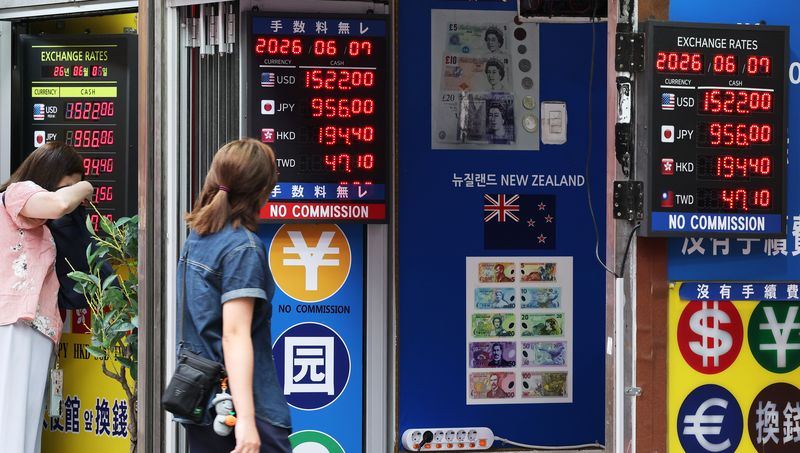
According to the Bank of Korea's Economic Statistics System on the 7th, the average exchange rate so far in the second quarter, based on weekly closing prices, stood at 1,490.98 won through the 5th. That is the highest level since the first quarter of 1998, immediately after the foreign exchange crisis, when it averaged 1,596.88 won. The average exchange rate for this year also stands at 1,477.06 won, far above last year's annual average of 1,420.97 won, which was the highest on record. The cash selling rate for dollars at airport exchange counters also rose above the 1,600-won level, reaching 1,624.00 won at Hana Bank's airport branch as of the 6th.
Large-scale selling of domestic stocks by foreign investors is seen as a key factor driving the exchange rate higher. So far this year, foreign investors have posted net sales of more than 118 trillion won in the KOSPI market. Foreign investors, who sold heavily in February and March amid heightened tensions in the Middle East, turned to net buying in April but returned to net selling in May, offloading more than 44 trillion won. In the four trading days so far this month, they have also sold more than 18 trillion won worth of domestic stocks. Analysts say the selling pressure has expanded as profit-taking demand grew with the KOSPI approaching the 9,000 level, while portfolio rebalancing needs added to the trend. Meanwhile, the dollar has remained strong as inflation pressures in the United States and solid employment data have raised expectations of additional rate hikes by the Federal Reserve System (Fed).
The authorities moved quickly to contain the situation. Deputy Prime Minister and Minister of Economy and Finance Koo Yun-cheol held an emergency market situation review meeting on the day with Bank of Korea Governor Shin Hyun-song, Financial Services Commission Chairman Lee Eok-won, and Financial Supervisory Service Governor Lee Chan-jin, saying, "We will not tolerate excessive volatility or one-sided moves." The government said South Korea's external soundness remains solid, citing improvements in key industries such as semiconductors and a widening current account surplus. It also said exchange-rate volatility is being amplified by changes in global financial conditions, supply-demand factors, and some speculative trading. In particular, it pointed to one-sided moves in offshore transactions such as forward exchange contracts and NDFs, and said it will consider measures to improve market transparency and absorb flows into the domestic market if necessary.
[email protected] Hong Ye-ji Reporter