Ebola fear spreads worldwide as South Korea fully activates its quarantine network
- Input
- 2026-06-07 18:09:22
- Updated
- 2026-06-07 18:09:22
According to the medical community on the 7th, Ebola is an acute and severe infectious disease transmitted through direct contact with an infected person's blood or bodily fluids, or with contaminated items. The incubation period is 2 to 21 days, and early symptoms include high fever, headache, muscle pain and fatigue, similar to the flu. It can later cause vomiting, diarrhea and abdominal pain, and in severe cases may lead to bleeding and organ failure.
The current outbreak is spreading mainly in the Democratic Republic of the Congo and Uganda. Concern is growing internationally because there is no approved vaccine or treatment.
The impact of the Ebola outbreak has also reached the international sports world. The city of La Línea de la Concepción in southern Spain canceled a scheduled friendly match between the national teams of the Democratic Republic of the Congo and Chile, which had been set for the 9th, as a preventive measure.
Experts, however, say Ebola does not need to be feared at the same level as COVID-19. That is because it is not spread through the air and most infections occur only through direct contact with an infected person's bodily fluids.
No confirmed Ebola cases have ever been reported in South Korea. During the 2014 West Africa outbreak and afterward, there were suspected cases that underwent testing, but all were confirmed negative.
Even so, quarantine authorities are taking preemptive action. Immediately after the WHO declared the emergency, the KDCA formed a task force and designated five countries — the Democratic Republic of the Congo, Uganda, South Sudan, Ethiopia and Rwanda — as priority quarantine management areas.
In particular, all arrivals from Ethiopia, which has direct flights to South Korea, are required to submit health declarations. Separate quarantine screening is also being carried out for travelers entering through third countries from outbreak areas. If a suspected case is identified, a 24-hour response system linking the central government, local governments and medical institutions is activated immediately.
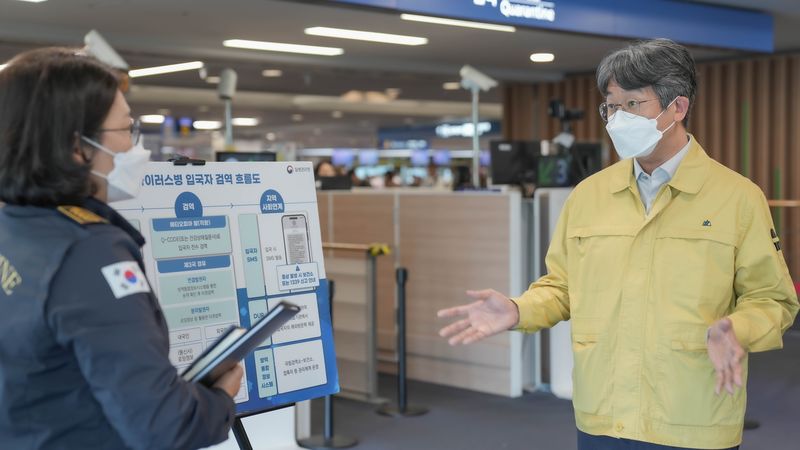
On the 4th, KDCA Commissioner Im Seung-kwan visited the Incheon International Airport Quarantine Station to inspect the Ebola response situation firsthand. The KDCA said it is closely monitoring overseas infectious disease trends and making every effort to prevent the virus from entering the country.
Experts said the risk of Ebola entering South Korea is not high at present, but stressed that continued monitoring is necessary given the rise in overseas travel and expanding international exchange. A medical official advised, "The possibility of a large-scale Ebola outbreak in South Korea is extremely low, but early detection, rapid isolation and thorough quarantine are more important than anything else." The official added, "In particular, if symptoms such as fever, vomiting or diarrhea appear within 21 days after visiting an outbreak area, it is important to report to quarantine authorities first before visiting a medical institution."
[email protected] Jung Sang-hee Reporter