Supreme Court of Korea Rules "Sexual Violence Treatment Order Possible If Guilty Verdict Is Finalized" for Soldier Who Sexually Assaulted Junior's Wife
- Input
- 2026-06-07 13:10:07
- Updated
- 2026-06-07 13:10:07
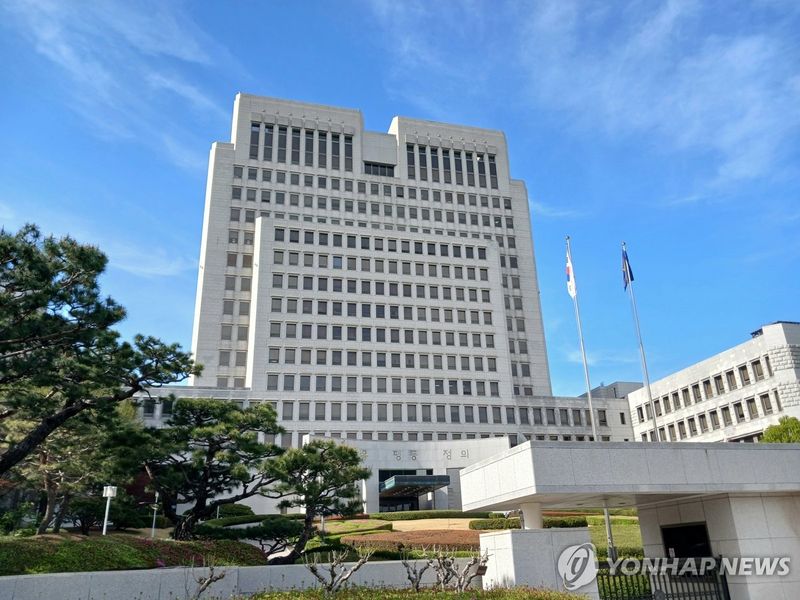
According to legal circles on the 7th, the Supreme Court's First Division (presiding Justice Cheon Dae-yeop) recently overturned the lower court's ruling, which had sentenced active-duty non-commissioned officer A to a fine of only 8 million won for forced sexual assault, and remanded the case to the Seoul High Court. A was brought to trial on charges of forcibly sexually assaulting B, the wife of a junior soldier, while drinking with the junior soldier and other military colleagues at the junior soldier's home in 2020.
Although A denied the charges, the first and second trials found him guilty of forced sexual assault, acknowledging the credibility of the victim's testimony. The key issue was whether an order to complete a sexual violence treatment program could also be imposed on A.
The Special Act on the Punishment, etc. of Sexual Crimes stipulates that when a guilty verdict is handed down for a sexual crime, an order to attend classes for the prevention of recidivism or an order to complete a sexual violence treatment program within a range of 500 hours shall be imposed concurrently, unless there are special circumstances.
However, the same The law applies the Probation Act mutatis mutandis regarding completion orders, but the Probation Act provides special provisions exempting those subject to military law, such as active-duty soldiers, from probation, community service, and course attendance orders. This provision takes into account the practical difficulties of guaranteeing military command authority and enforcing it.
Consequently, the appellate court sentenced Mr. A to a fine of 8 million won but did not impose a completion order.
It determined that a completion order cannot be issued to an active-duty soldier under the Act on the Punishment of Sexual Violence Crimes. However, the Supreme Court reached a different conclusion.
According to the Military Personnel Act at the time applied to Mr. A, if a fine of 1 million won or more is finalized for a sexual violence crime, one loses their status as an active-duty soldier.
This means that if the 8 million won fine imposed on Mr.
A is finalized, he will no longer be subject to military law.
The Supreme Court stated, "If the original judgment sentencing him to an 8 million won fine for the crime of forced indecent assault is finalized, the defendant will naturally lose his status as an active-duty soldier," adding, "The fact that he was subject to military law at the time of the original sentencing cannot be considered a special circumstance preventing the imposition of a completion order under the Act on Punishment of Sexual Violence.
" Ultimately, the Supreme Court ruled that if the loss of military status is scheduled to occur simultaneously with the finalization of the judgment, a completion order can be imposed even if the defendant is an active-duty soldier at the time of sentencing.
The Supreme Court overturned the original judgment in its entirety, stating that "the completion order, which should have been issued simultaneously with the original judgment, was omitted," and remanded the case to the Seoul High Court for retrial and judgment.
However, the Supreme Court has ruled that, exceptionally, such an order may be imposed if a soldier loses their military status due to a finalized conviction for a sex crime. The intent is that military status should be considered not only at the time of sentencing but also after the judgment has become final.
However, the Supreme Court has ruled that, exceptionally, such an order may be imposed if a soldier loses their military status due to a finalized conviction for a sex crime. The intent is that military status should be considered not only at the time of sentencing but also after the judgment has become final.
[email protected] Lee Hwan-ju Reporter