Israel Pounds Southern Lebanon a Day After Hezbollah Rejects Ceasefire Proposal
- Input
- 2026-06-06 09:54:25
- Updated
- 2026-06-06 09:54:25
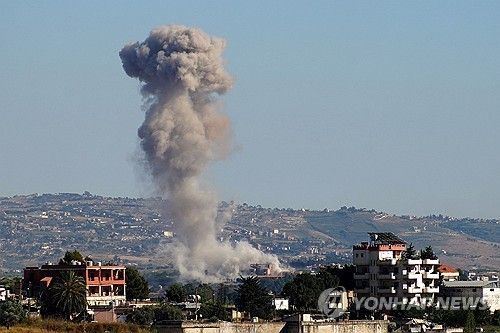
[Financial News] As the U.S.-brokered ceasefire proposal between Israel and Lebanon comes under strain from Hezbollah's backlash, Israel has expanded its military operations in southern Lebanon.
According to The Guardian and other foreign media outlets on the 5th local time, the IDF issued forced evacuation orders for nine villages in southern Lebanon and then carried out a large-scale air campaign. At least six people were killed in the strikes, and thousands of residents were reported to have fled.
The IDF said it has struck more than 650 Hezbollah targets in Lebanon over the past week. Using Beaufort Castle, which it seized late last month in southern Lebanon, as a foothold, the military is expanding its operation toward Nabatieh, a key city in the south.
The latest strikes came shortly after Hezbollah Secretary-General Naim Qassem publicly rejected the U.S.-mediated ceasefire proposal. Qassem criticized the plan as "a humiliating attempt to force Lebanon into submission and, in effect, a document of surrender."
The ceasefire proposal, agreed on the 3rd by Israel and the Lebanese government through U.S. mediation, centers on Hezbollah halting attacks first and withdrawing from the Israel-Lebanon border front. Hezbollah, however, is pushing back, saying the terms are one-sided because they do not include an Israeli withdrawal from occupied areas.
Nabih Berri, speaker of the Parliament of Lebanon and an ally of Hezbollah, also opposed the proposal. He called the agreement "a trap made up of one-sided conditions" and said he would support only an unconditional, simultaneous withdrawal.
As the fighting intensifies, civilian casualties are also mounting. Foreign media reported that airstrikes reached even the mountain village of Ankun, where at least 2,500 displaced people had been sheltering. Roads leading to nearby major cities were jammed with evacuee vehicles, causing severe traffic congestion. The number of displaced people in Lebanon has already surpassed 1 million since the start of the war.
Hezbollah has also continued launching rockets and drones at Israel from southern Lebanon. More than 125 Hezbollah members are believed to have been killed in the clashes.
As the Lebanon front heats up again, ceasefire talks between the United States and Iran are also under pressure. The Lebanon crisis has emerged as a key variable in the broader negotiations, alongside the opening of the Strait of Hormuz and the handling of Iran's highly enriched uranium.
The Iranian government is warning that it could suspend the ceasefire talks if Israel does not stop its attacks on Lebanon. Joseph Aoun, President of Lebanon, criticized Tehran, saying, "Iran is using us as a bargaining chip in its talks with the United States," and added, "This is unacceptable." Benjamin Netanyahu, Prime Minister of Israel, is also reportedly unwilling to approve the agreement while Hezbollah remains opposed.
[email protected] Choi Seung-han Reporter