"KOSPI 8000 Is Not a Bubble... Lee Jae Myung Administration Is Easing the Korea Discount" [fn Insight]
- Input
- 2026-06-08 09:25:52
- Updated
- 2026-06-08 09:25:52
[Financial News] The hottest issue during the first year of the Lee Jae Myung administration was the KOSPI (Korea Composite Stock Price Index). The index, which stood at 2,698.97 when the administration took office, surged 202.36% to 8,160.59 on the 5th. Once dismissed as a stagnant market, the KOSPI became the world’s best-performing market in just one year. Its sharp rise has also fueled bubble concerns in some corners of the securities industry. But one expert who has watched the market for nearly 30 years saw it differently.
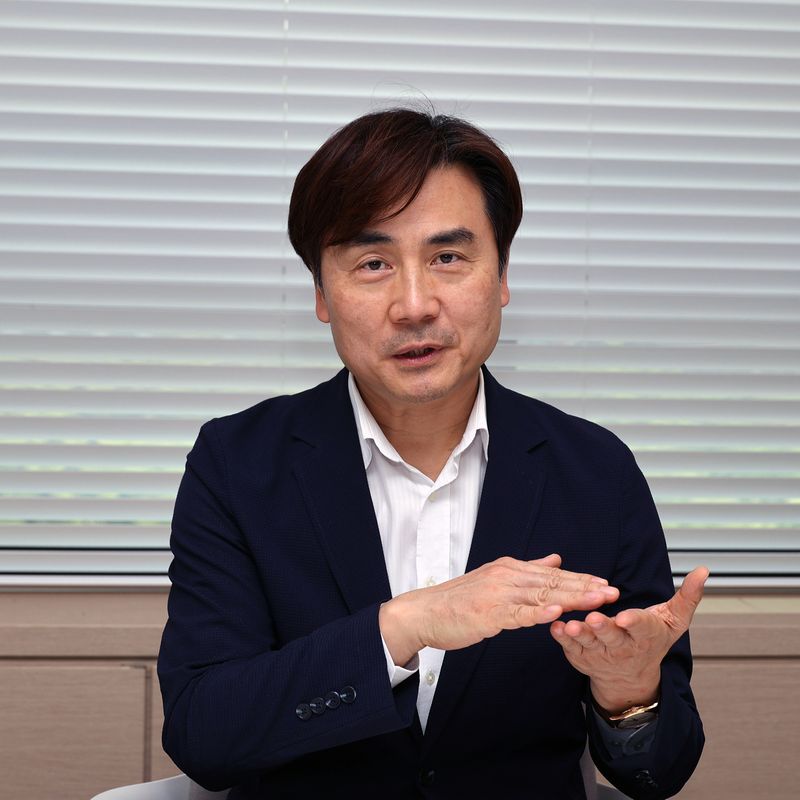
Park Se-ik, whom Financial News met on the 7th, said the KOSPI’s strength over the past year was "not a bubble so far, because the rally has been accompanied by earnings growth." He said the once-most-pessimistic Korean market has changed its structure into a developed-market style market through three shifts: institutional reform, earnings improvement, and a better perception of the market.■ "A bull market born out of pessimism"... a rally driven by earningsPark recalled that just 18 months ago, the Korean market was so pessimistic that people said, "Leaving the domestic market is the smartest move." But he said the most pessimistic market has turned into the most promising one, and that a powerful bull market emerged from that pessimism.
He stressed that the recent rally has been supported by earnings. "Last year, operating profit for KOSPI-listed companies was around 290 trillion won, but this year people are talking about 800 trillion to 900 trillion won," he said. "If profits triple, then a market that was at 2,500 would naturally move to around 7,500." He added, "This is not a market that rose on a story alone. It rose with earnings growth."
On claims that the semiconductor rally is a bubble, he said, "So far, it is absolutely not a bubble." He explained, "A bubble would mean a company with an intrinsic value of 30 trillion won trading at 100 trillion to 200 trillion won. But recently, semiconductors have posted surprise results every earnings season, and share prices have followed value upward." He called this "earnings per share (EPS) tracking."
Still, Park noted that many sectors have been left behind even in this bull market. "The index has moved above 8,000, but some clients’ returns have actually fallen compared with February this year," he said. "High interest rates and high oil prices have reduced disposable income, hurting discretionary consumer goods such as cosmetics and automobiles, while biotech firms that struggle to raise funds are also under pressure." He advised that "just as umbrellas do not sell when the sun is shining, consumer stocks have become cheap now. Unless you are a very quick trader, you can buy quality stocks in stages and hold them for about two years, and you may expect annual returns of more than 30%."■ "The Commercial Act revision has resolved 80% of the Korea Discount"Park said the Lee Jae Myung administration’s institutional reforms over the past year have provided real momentum for the KOSPI rally.
He said, "Without the revision of the Commercial Act, share prices would still have risen on semiconductor earnings, but the index would probably have been around the 6,500 level." He added, "The 8,500 figure, and the confidence that supports the market on the downside, were both created by institutional reform." He continued, "Semiconductors are a cyclical industry, so profits would eventually recover after one or two years anyway. But now there is a belief that those profits will return to shareholders." He said that belief creates downside rigidity when stock prices fall.
Park defined the core of the Commercial Act revision as allowing minority shareholders, who had long been sidelined by major shareholders, to fully share in corporate value growth. "People invest in stocks to earn returns higher than inflation when deposits yield 3%," he said. "But for a long time, the Korean market was a strange place where it was acceptable for major shareholders to ignore or even take away the value of minority shareholders."
He also highlighted changes in treasury shares. "Until now, companies held treasury shares to defend management control, and some small and mid-sized firms bought back shares when prices fell and sold them when prices rose to make a profit," he said. "Recently, however, there have been talks about boldly canceling treasury shares, which shows that companies are beginning to think about the value of minority shareholders."
He said the Korea Discount has "disappeared by 80%, with 20% still remaining." He added, "Trust takes at least three years to build, so about 20% of the market still has doubts."
Park said the key to fully eliminating the Korea Discount is raising shareholder returns. "The dividend payout ratio, which has been around 29%, needs to be lifted to 50% to 60% or higher," he said. "If that happens, it will not be the Korea Discount anymore. It will be the era of a true Korea premium."

[email protected] Han Young-joon Reporter