Trump Bets on Coal Revival: New Power Plant for the First Time in a Decade
- Input
- 2026-06-05 06:25:49
- Updated
- 2026-06-05 06:25:49
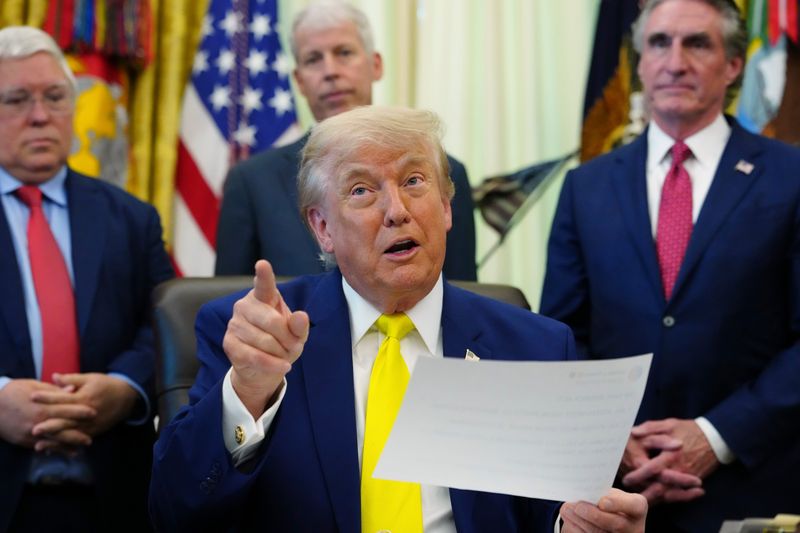
On the 4th local time, Trump announced at the White House that the federal government would provide $700 million in support for the U.S. coal industry.
The most notable part of the plan is the construction of new coal-fired power plants. The Trump administration plans to provide $185 million to build one coal plant each in Alaska and West Virginia. It will be the first large-scale coal plant built in the United States since 2013. The administration also plans to spend $425 million to upgrade equipment at 13 coal plants facing closure and extend their operating lives.
Trump said, "We will lower energy prices and ease the burden of living costs for Americans with the power of clean and beautiful coal," adding that it was "a historic step toward American energy independence."
To do so, he invoked the Defense Production Act of 1950, which was enacted during the Korean War. The law gives the president emergency authority to support industries essential to national security.
Over the past several months, the Trump administration has ordered five aging coal plants that were scheduled to shut down to keep operating, and it has also directed the Ministry of National Defense to purchase additional coal-generated electricity to supply military facilities.
The push to revive the coal industry is driven by a sharp surge in power demand from AI data centers.
The planned Terra Energy Center in Alaska aims to supply electricity not only to an existing gold mine but also to future data centers. As AI companies such as OpenAI, Google, Meta Platforms, and Anthropic race to build massive data centers, U.S. electricity demand is rising at its fastest pace in decades.
The Trump administration believes solar and wind power alone cannot meet the surging demand, and it is pursuing a strategy to expand coal, natural gas, and nuclear power at the same time.
Meanwhile, coal's share of U.S. electricity generation has plunged from more than 50% in 1990 to around 17% last year. Since 2010, 330 coal plants have closed, and another 60 are expected to shut down by 2031. The number of workers in the coal industry has also fallen from 173,000 in 1985 to about 40,000 today.
[email protected] Reporter Lee Byung-chul Reporter