Ruling Party Fails to Retake Seoul, Shifts National Agenda Toward Cooperation [Aftermath of Local Elections]
- Input
- 2026-06-04 18:39:28
- Updated
- 2026-06-04 18:39:28
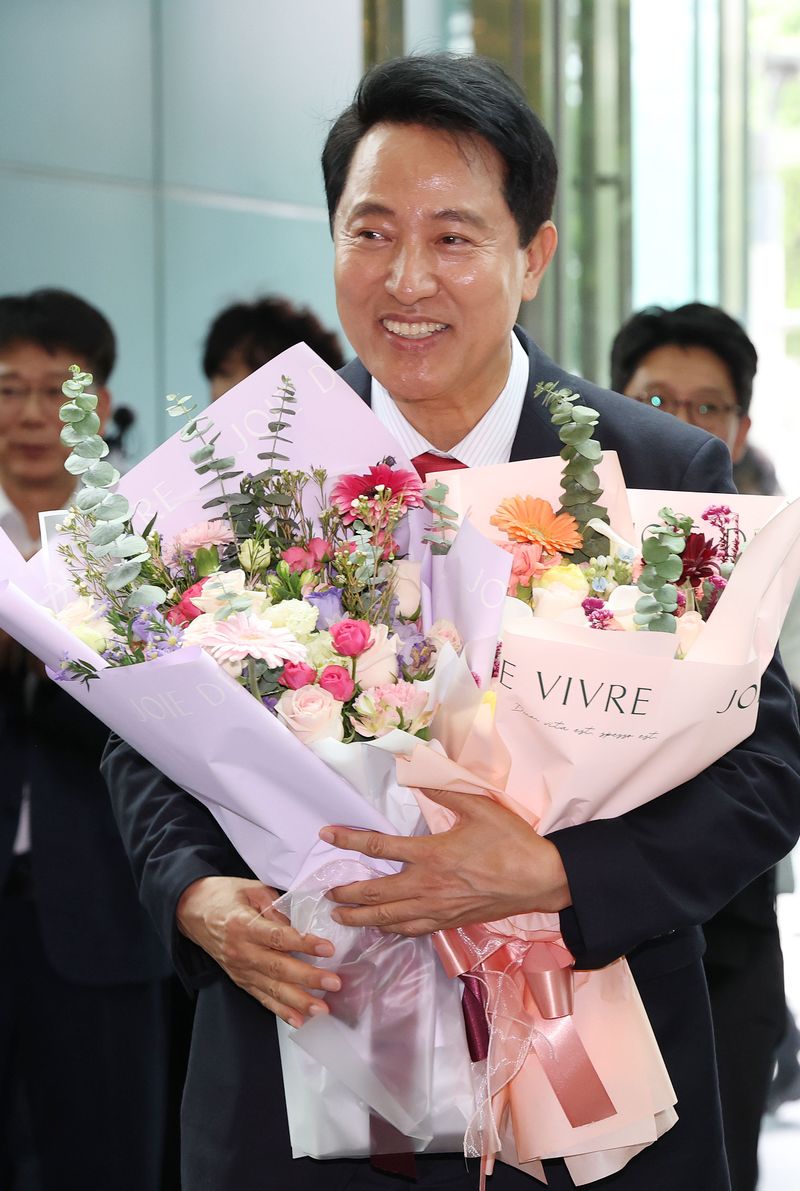
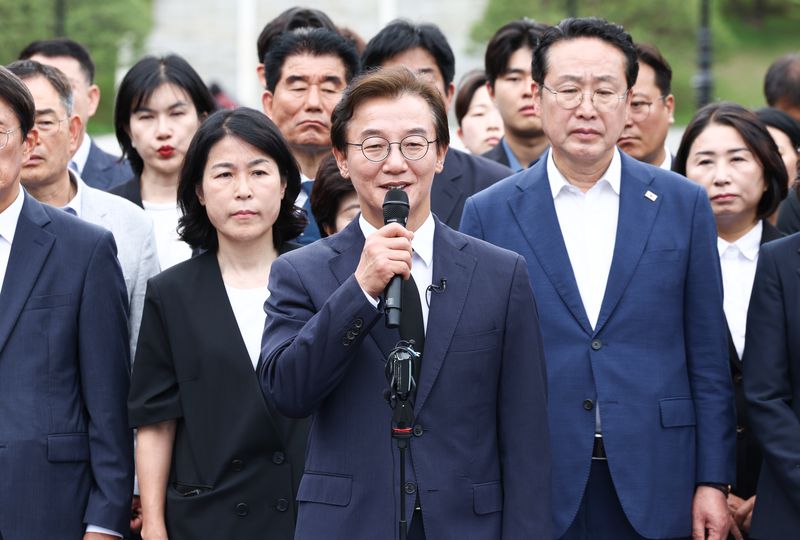
That was the message President Lee Jae-myung delivered on the 4th, the first anniversary of his inauguration and the day the results of the June 3 local elections became clear, as he chaired a senior aides meeting. Wearing a tie in red and blue, he struck a more restrained tone after the ruling DPK won most local government races but lost the key Seoul mayoral contest.
The DPK swept 12 of the 16 metropolitan mayoral and provincial governor races, and won 119 of the 227 local district head races, more than half. It also secured 9 of the 14 parliamentary by-elections. It was a landslide by any measure, but President Lee remained low-key, and the mood inside the DPK was bitter. That was because the party lost the comeback victory in the Seoul mayoral race, often described as the country's "de facto vice president" post.
The Seoul mayor is a member of the State Council of South Korea. Each time President Lee chairs a meeting, he will now face Oh Se-hoon, a potential presidential contender from the opposition. Beyond the need for Seoul's cooperation in running the country, the mere prospect of clashing at every State Council meeting could become a thorn in his side. If Oh chooses, he could use the meetings to turn not only economic policy, including real estate, loans, and regulation, but also social policy such as judicial reform, into a national debate. That is why President Lee made a conciliatory gesture by saying he would "actively cooperate with local governments regardless of party affiliation." At the same time, the defeat in the Seoul mayoral race also confirmed a strong public desire to check the ruling party, making one-sided dominance difficult.
Earlier, in an interview with Financial News, Oh had previewed the remarks he planned to make at his first State Council meeting after taking office.
The impact of Oh's comeback victory will also be felt in the National Assembly of the Republic of Korea. Because the election is seen as a barometer of public sentiment ahead of the 2028 general election, the DPK will find it harder to push ahead with unilateral lawmaking, while the People Power Party will face a shift in which reform-minded figures led by Oh take center stage. The outcome is expected to affect immediate issues such as the current party leaders' bids for re-election and the race for the next party leadership. DPK leader Jung Chung-rae, despite winning, will face calls to take responsibility, while People Power Party leader Jang Dong-hyeok will come under pressure from reformists with whom he is at odds.
Even as the election results reflected support for the stability of the Lee Jae-myung administration, they also showed a desire to keep the ruling party in check. As a result, the two parties are expected to clash sharply in the regular session of the National Assembly in the second half of the year over the ruling party's push to accelerate reform legislation. DPK lawmaker Cho Jung-sik, the party's candidate for National Assembly Speaker in the latter half of the term, has already said that he would "quickly complete the 88 bills that were not handled in the first half."
Meanwhile, on the first anniversary of his inauguration, President Lee told aides that "all public officials should once again tighten their shoelaces and devote all their efforts to accelerating the pace of state affairs." He stressed the need for faster governance.
[email protected] Kim Yun-ho Reporter