K-Bio Turns to China Instead of the High Bar in the United States
- Input
- 2026-06-04 18:34:15
- Updated
- 2026-06-04 18:34:15
According to industry sources on the 4th, domestic biotech companies have recently been posting a series of results in the Chinese market, especially in the medical aesthetics segment.
Huons BioPharma entered the commercialization phase earlier this year after securing Chinese approval for its botulinum toxin product Hutox and completing its first shipment. Hugel Inc., a pioneer in opening up the Chinese market, is also expanding local sales with its toxin product Letybo. Jetema recently obtained approval for the clinical study report for the Chinese Phase 3 trial of its botulinum toxin JTM201 and is preparing to apply for product approval. CKD Bio Corp. is also known to have completed Phase 3 trials in China and is moving forward with the approval process.
In the treatment sector, Helixmith's gene therapy Engensis (VM202) strengthened its chances of filing for approval after demonstrating efficacy in a Phase 3 trial in China. Biosolution also secured a foothold in the regenerative medicine market by entering the Boao Lecheng International Medical Tourism Pilot Zone in Hainan, China, with its cartilage cell therapy CartiLife.
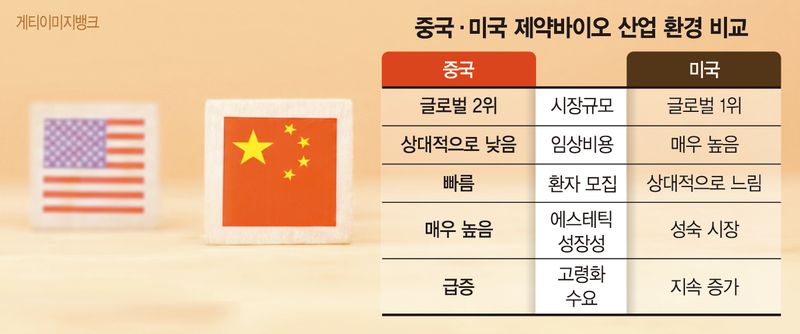
The biggest reason the industry is focusing on China is its overwhelming market size. IQVIA, a global healthcare data company, ranks China as the world's second-largest pharmaceutical market after the United States. IQVIA expects the Chinese pharmaceutical market to keep growing over the next several years and to approach $300 billion by 2028.
By contrast, the barrier to entering the United States market is getting higher. According to the biotech industry, Phase 3 trials in the United States can cost hundreds of billions of won. Development timelines often stretch beyond 10 years.
China, by comparison, has relatively lower clinical costs and faster patient recruitment. As the National Medical Products Administration (NMPA) has recently aligned its regulatory system with international standards, the credibility of approval data has also improved. That means clinical data obtained in China is now far more valuable than it was in the past.
An industry official said, "In the past, business in China was mainly meaningful as a technology export deal, but now more cases are leading to actual approvals and revenue." The official added, "If additional approvals follow over the next two to three years, China is likely to establish itself as a key overseas market for domestic biotech companies, alongside the United States."
wonder@fnnews.com Jung Sang-hee Reporter