Despite a 12-4 Result, Jung Chung-rae Faces Re-election Headwinds, While Jang Dong-hyeok Is Expected to Keep Party Leadership
- Input
- 2026-06-04 16:07:16
- Updated
- 2026-06-04 16:07:16
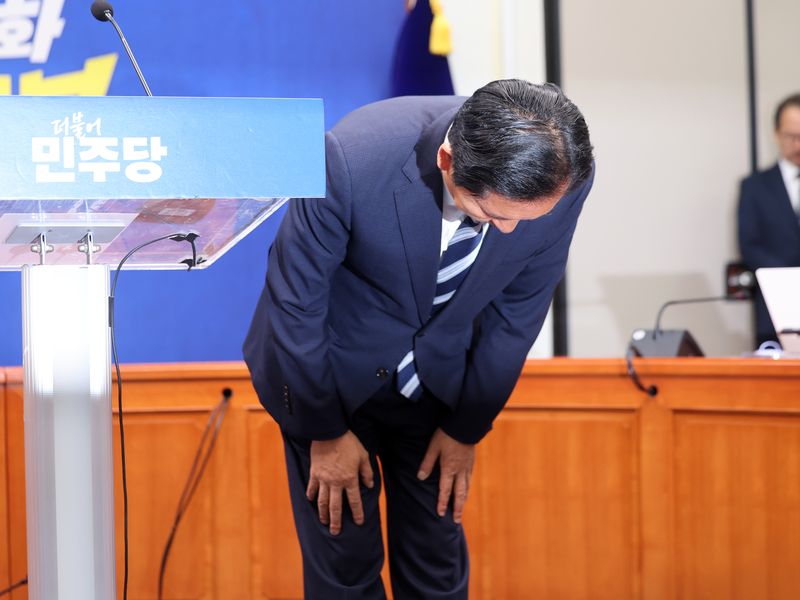
[Financial News] Both the Democratic Party of Korea (DPK) and the People Power Party received June 3 local election results that left them dissatisfied. The DPK won in 12 of the 16 metropolitan and provincial races, but it lost the Seoul mayoral race and the by-elections for the National Assembly seats in Pyeongtaek-eul, Gyeonggi and Busan Buk-gu-gap. The People Power Party managed to win only four races, but it held on to the key Seoul mayoral post. As both parties are now facing growing questions of responsibility over the outcome, attention is turning to how the result will affect Jung Chung-rae’s bid for re-election and Jang Dong-hyeok’s political future.
According to ruling bloc sources on the 4th, red flags have been raised over Jung Chung-rae’s path to another term as DPK leader.
The most painful result was the loss in the Seoul mayoral race. The election for the mayor of the capital is regarded as the crown jewel of local elections, and its outcome has long shaped how each party’s overall performance is judged. That is why the DPK’s result is being described as only a half victory, despite winning 12 metropolitan and provincial governorships.
Its eastward push into the Yeongnam region also ultimately stalled. The DPK succeeded in retaking Busan and Ulsan Metropolitan City, but Kim Boo-kyum, who ran in the Daegu mayoral race, and Kim Kyoung-soo, who ran for governor of South Gyeongsang Province, both lost after close contests. Analysts say the attempt to reclaim the Yeongnam region fell short of expectations and effectively ended in failure.
The by-elections were no different. All of the DPK-held districts in Pyeongtaek-eul, Gyeonggi, Busan Buk-gap, and Gongju-Buyeo-Cheongyang were taken by the conservative camp. In Pyeongtaek-eul, Yu Eui-dong of the People Power Party won by default after the progressive camp failed to unify behind a single candidate. In Gongju-Buyeo-Cheongyang, People Power Party candidate Yoon Yong-geun won. In Busan Buk-gu-gap, independent candidate Han Dong-hoon won and will enter the National Assembly. In particular, the DPK had fielded Ha Jung-woo, a former presidential office official, as a high-profile candidate in Busan Buk-gu-gap, but he was defeated.
For Jung, the most important region in this local election was North Jeolla Province. If Kim Kwan-young, who ran as an independent after being expelled from the DPK over allegations of cash distribution, had won, it would have dealt a major blow to Jung’s bid for another term. Instead, Lee Won-taek, who is seen as aligned with Jung, defeated Kim, allowing Jung to avoid the worst-case scenario.
Even so, criticism of Jung is mounting as the party’s performance fell short of initial expectations. Song Young-gil, who won the Incheon Yeonsu A by-election and has emerged as a potential contender for the next party leadership, said on SBS Radio’s "Kim Tae-hyun's Political Show" that "I think the leadership of Jung Chung-rae's camp will be evaluated calmly and coolly" and added that "since a party convention is coming up soon anyway, this leadership will be judged there." His remarks added momentum to calls for Jung to take responsibility.
Of course, Jung is unlikely to abandon his bid for another term despite the criticism. That has raised questions over whether Prime Minister Kim Min-seok and Song will run in the party convention and try to block Jung’s re-election. Kim’s candidacy is widely seen as all but certain. Song is also considered highly likely to enter the race.
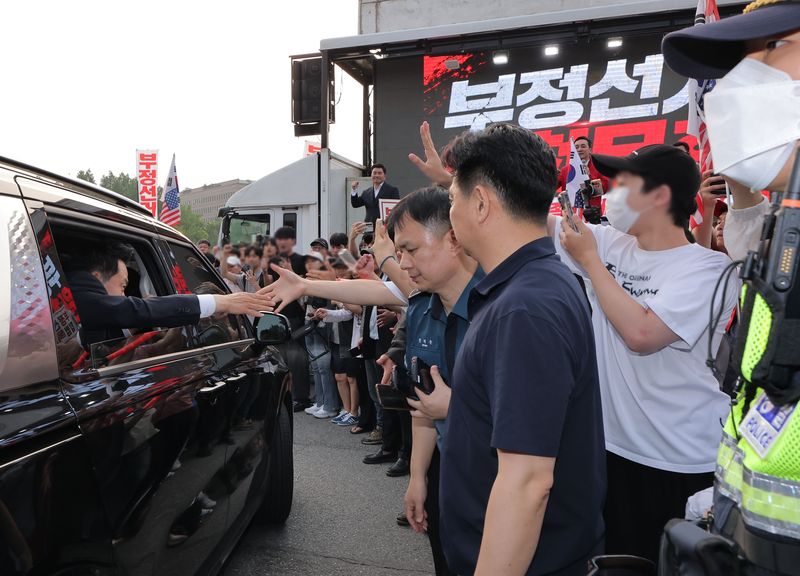
The People Power Party said the result reflected voters’ desire to check the government and the ruling bloc. Floor leader Song Eon-seok said, "The people did not side with either the president or any one of the ruling and opposition parties," adding that "they sent a stern message that politics must restore checks and balances across the board." The party believes its anti-incumbent message resonated to some extent.
Still, because the election was clearly a defeat, voices are emerging that Jang should take responsibility. In particular, as Han Dong-hoon won a seat in Busan Buk-gu-gap by breaking through a three-way race, criticism of Jang is surfacing within the pro-Han faction. Oh Se-hoon’s dramatic victory is also being attributed to his distancing himself from Jang, with some saying Jang had no role in the win.
Ahn Sang-hoon said, "Han Dong-hoon, whom Jang Dong-hyeok's leadership absurdly expelled, has entered the National Assembly. Oh Se-hoon, who kept Seoul by distancing himself from Jang Dong-hyeok's leadership. This is the starting signal for rebuilding a rational conservatism," adding that "the party leadership should decide its future quickly." Park Jeong-hoon also said, "I think the leadership will carefully consider what judgment to make, but if our party is to be reborn as a party loved by the public, this local election must become a turning point." It is also reported that senior lawmakers from the old pro-Yoon, non-leadership camp are sending messages pressuring Jang’s leadership to clarify its future.
Jang, however, drew a line against calls for his resignation. After the election results came in, he said, "I will not turn away from the heavy responsibility entrusted to me, and together with party members I will seek a new path forward." Another party leadership official told Financial News, "We increased our National Assembly seat count by three and won about 40% of the heads of basic local governments, so the result is much better than in 2018. There is no reason to resign," adding that "rather than demanding an immediate statement on his future, we should take time to analyze the election results."
[email protected] Lee Hae-ram Kim Hyeong-gu Reporter