"Ballot Shortage" Crisis Raises Legal Questions...Candidates Could Face Lawsuits and Damages Claims
- Input
- 2026-06-04 15:25:44
- Updated
- 2026-06-04 15:25:44
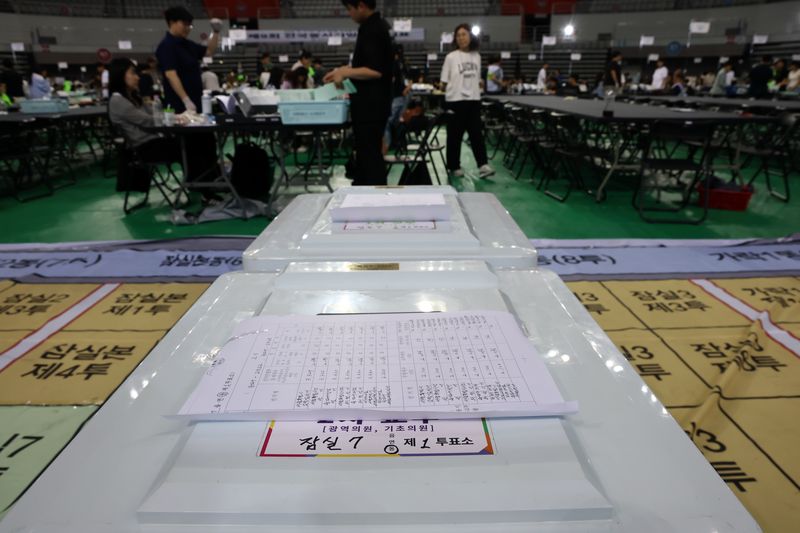
[Financial News] The fallout from the unprecedented ballot shortage during the June 3 local elections is spreading. In some close races, election lawsuits or lawsuits challenging election victories are being discussed, and voters who were unable to cast ballots may also seek state compensation. President Lee Jae Myung criticized the NEC, saying, "The responsibility for election management must be held accountable," while the political community is also preparing an Investigation of State Administration.
According to the legal community on the 4th, voting was temporarily suspended during the main voting process the previous day at 14 polling places in Seoul, including Jamsil 7-dong Polling Place No. 2 in Songpa District, because of a shortage of ballots. Although the NEC extended polling-place operating hours and the election was completed that day, the standoff over removing ballot boxes continued into the next day. Despite on-site apologies and explanations from officials at the Seoul Metropolitan City Election Commission, the transfer of ballot boxes was repeatedly blocked by strong public opposition. Citizens mainly shouted "nullify the election" and "rerun the election."
However, the NEC says the situation does not meet the legal grounds for postponing or rerunning an election under the Public Official Election Act. Legal experts offer a similar view. The act allows a revote only in the relevant voting district if voting could not be conducted because of a natural disaster or other unavoidable circumstances, or if a ballot box was lost. Still, legal experts say a revote would have little practical value if it is unlikely to affect the election result.
Attorney Lee Sabek of Saebyeol Law Firm explained, "Even if the number of people who could not vote is identified, a revote must still be likely to overturn the actual result." In the Seoul mayoral election, the margin between the winner and the runner-up was more than 30,000 votes.
There may, however, be exceptions in areas where the margin is not large, such as elections for heads of basic local governments or local council members. If the number of eligible voters at polling places that ran out of ballots is similar to the final vote margin, whether the shortage affected the outcome could become the key issue. A lawyer specializing in election law said, "In local elections, it is not uncommon for the winner and loser to be separated by only a few hundred votes," adding, "The number of people who went home without voting and the impact on the election result must be examined."
The problem is that it is not easy to identify how many voters actually intended to vote but were unable to do so because of the ballot shortage. Photos showing that they were at the scene or waiting numbers may serve as some evidence, but only in limited cases.
The possibility of lawsuits by losing candidates cannot be ruled out either. Under the election law, if there is an objection to the result of a local election, a complaint may be filed with the relevant election commission within two weeks of Election Day. If that is rejected, a court case may be filed, either an election lawsuit challenging the validity of an election victory or an election lawsuit challenging the validity of the election itself. However, this too would require proof that the ballot shortage actually affected the election result.
Legal action by individual voters is also being discussed. Voters who were unable to cast ballots may seek state compensation on the grounds that their voting rights were violated. A lawyer at a large law firm said, "Because the right to vote is a core fundamental right in a democracy, if voting rights were infringed due to the state's failure to manage the process properly, damages can be claimed." If it is confirmed that the NEC failed to prepare enough ballots, unlike in previous local elections, that could also be used as evidence of negligence.
As for damages for emotional distress, the threshold for proof is relatively low, so there is a possibility that such claims could be accepted. A lawyer who previously served as a Presiding Judge said, "There are many cases in which damages are recognized even in personal information leaks," adding, "If it is acknowledged that the right to vote, the foundation of democracy, was violated, there is also a chance that damages will be awarded."
[email protected] Choi Eun-sol, Jung Kyung-soo, Choi Seung-han Reporter