"Naver Got a Rescue Team, But We Didn't": Kakao Shareholders Suffer as Fortunes Diverge
- Input
- 2026-06-04 07:56:00
- Updated
- 2026-06-04 07:56:00
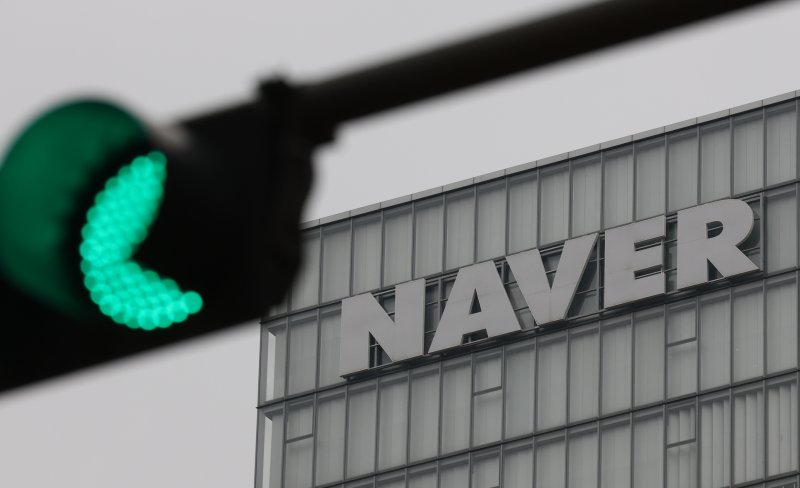
[Financial News] The stock performance of Naver Corporation and Kakao, the two leading names in South Korea's IT industry, is moving in sharply different directions. Naver is on an upward trend as prospects for cooperation with global artificial intelligence company NVIDIA gain attention, while Kakao is facing growing downward pressure amid concerns over the company's first-ever strike.
"Naver's possible cooperation with NVIDIA": Naver surges on Jensen Huang-related tailwinds
According to the Korea Exchange (KRX) on the 4th, Naver's stock price has risen 13.56% so far this year. Over the past month alone, it gained 10.90%, with particularly sharp jumps on the 29th of last month, when news of positive developments related to NVIDIA CEO Jensen Huang emerged, and on the 1st, when the stock rose 14.15% and 16.03%, respectively.
The direct driver behind Naver's rally is the possibility of cooperation with NVIDIA. Lee Hae-jin, chairman of Naver, is expected to attend a meeting on the 5th between Huang and South Korean business leaders. News that Huang is also scheduled to visit Naver 1784 in Seongnam on the 8th sent the stock soaring.
Market watchers believe that, since Lee and Huang agreed last October in Gyeongju to work together on developing an industrial physical AI platform, the two companies are likely to discuss cooperation in a range of areas, including AI infrastructure, sovereign AI, and physical AI.
Given Naver's recent efforts to strengthen its physical AI businesses in AI, cloud, and digital twins, expectations are also rising that the meeting could lead to concrete partnership plans. Investors are also paying close attention to the fact that real revenue and profits from the company's core AI business are beginning to take shape.
Kakao faces first-ever risk of a joint strike, while AI business model profitability remains uncertain
By contrast, Kakao, which is facing the first-ever risk of a joint strike involving its headquarters and affiliates, has continued to see its stock fall even amid the bullish mood in the KOSPI.

According to Newsis News Agency on the 4th, Kakao's stock price fell 11.31% over the past month. It extended losses for three straight trading days from the 26th to the 28th of last month, when labor-management tensions intensified. The stock rebounded on the 29th of last month and on the 1st of this month as bargain hunting emerged, but it closed lower again on the 2nd after news of a possible strike surfaced, increasing volatility.
Earlier, the Kakao branch of the National Chemical, Textile, and Food Industry Labor Union, known as Crew Union, announced plans for a large-scale rally near Pangyo Station on the 10th, involving more than 1,200 members, along with a four-hour partial strike, over issues including performance-based compensation and wage increases. Market concerns are growing that the labor dispute could spread across the group and disrupt key business initiatives.
Brokerage analysts are also increasingly saying that the company's new AI business models, which it is pursuing as a growth engine, are unlikely to translate into profits in the near term. They point out that the expected increase in user engagement from app redesigns and the introduction of agents that Kakao had previously promised has not been clearly confirmed by first-half data. With traffic growth still sluggish for flagship services such as ChatGPT for Kakao and the on-device AI service Kanana in KakaoTalk, it is difficult to predict a rebound in the stock.
Kim Hye-young, a researcher at Daol Investment & Securities, said, "The new service, 'Kanana in KakaoTalk,' will be advanced through links with Kakao's existing ecosystem, including mobility and payments, but it is still in the early stage of refining the AI agent's completeness." She added, "Given the time needed to build external partnerships and the development process, meaningful operational improvement and full-scale AI-related monetization may not be possible until 2027."
[email protected] Kim Hee-sun Reporter