"Concerns Over South Korea's Pro-China, Leftward Shift" Prompt U.S. Secretary of State to Say He Respects Elected Governments
- Input
- 2026-06-04 06:51:07
- Updated
- 2026-06-04 06:51:07
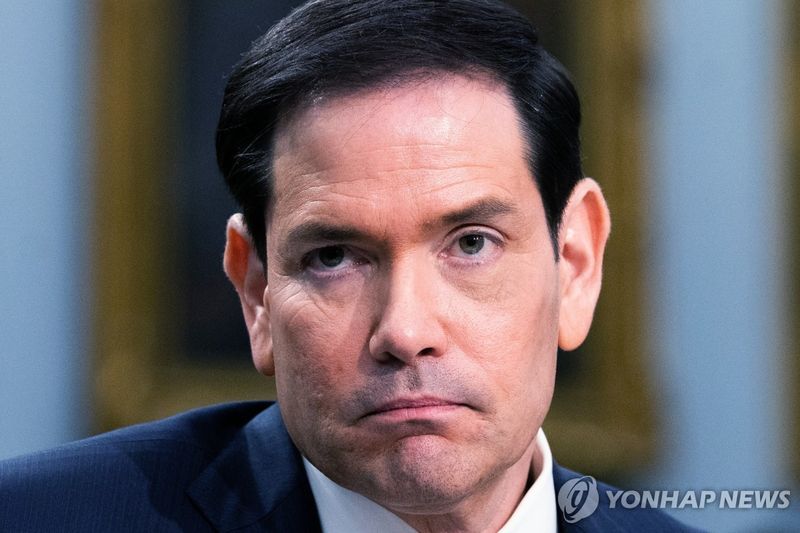
[Financial News] Marco Rubio, the U.S. Secretary of State, said he respects the results chosen through elections in a democratic country in response to concerns raised by some in the U.S. Congress about South Korea's political direction. He also publicly said that regulations and treatment faced by U.S. companies in South Korea had affected trade negotiations between the two countries.
At a hearing before the U.S. House Committee on Foreign Affairs on the 3rd local time, Rubio responded to Republican Rep. Darrell Issa, who suggested that the South Korean government was becoming pro-China and moving left, by saying, "In a democracy, sometimes leaders more favorable to U.S. interests are elected, and sometimes leaders with different views are elected."
He said, "If a leader is elected through a legitimate election, we respect the sovereign choice of that people." He added, "Even if an elected leader takes a position that runs counter to U.S. interests, that does not mean we want to overthrow or remove that government." He continued, "It simply means we need to engage when they take actions that provoke our national interests."
Rubio also raised the issue of regulations affecting U.S. companies in South Korea. When Issa claimed that Coupang and Meta were being discriminated against in South Korea, Rubio said, "Our companies do not face difficulties only in South Korea," but added, "This is one of the factors in our engagement with South Korea."
In particular, he said, "Frankly, I think this affected our ability to reach a trade deal with South Korea," adding that it was due to "some of the attitudes toward U.S. companies."
This was the first time Rubio publicly mentioned the Coupang issue. He is also known to have discussed the matter during a meeting with Foreign Minister Cho Hyun in February.
The remarks drew attention because they came during the implementation process of the KORUS FTA. Last year, the two countries reached a trade agreement through a summit between President Lee Jae Myung and President Donald Trump, lowering the U.S. tariff rate on South Korean goods from 25% to 15% and including South Korea's commitment to invest $350 billion in the United States.
However, amid recent legal disputes in the United States over reciprocal tariffs and the Trump administration's review of new tariff measures over issues such as goods produced with forced labor and overproduction, the possibility of additional tariffs has been raised. In this situation, Rubio's direct linking of South Korea's platform regulations to trade negotiations is being interpreted as a sign that it could become a pressure point for the United States in future trade talks.
Meanwhile, Rubio stressed that the posture of USFK and deterrence against North Korea remain unchanged, saying, "Our posture remains the same" and "We maintain a very strong relationship with South Korea."
Regarding the Trump administration's policy to rebuild the U.S. shipbuilding industry, he said the United States is considering building some of its ships in South Korea and added, "That would help us." This is seen as part of a so-called bridge strategy, under which allied shipyards are used until U.S. shipbuilding capacity is sufficiently secured.
[email protected] Kim Kyung-min Reporter