U.S. House Presses Trump to Withdraw Troops from Iran... Four Republicans Break Ranks
- Input
- 2026-06-04 06:37:11
- Updated
- 2026-06-04 06:37:11
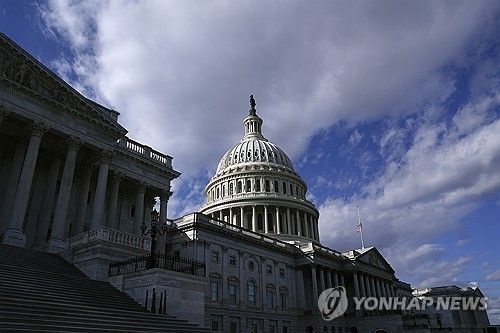
On the 3rd, local time, the House approved the Iran withdrawal resolution under the War Powers Resolution by a vote of 215 to 208. The measure requires President Trump to pull U.S. forces out of Iran or obtain congressional approval if he wants to continue the war.
The vote was significant because it marked an open congressional check on President Trump's handling of the war. Until now, Trump had effectively ignored attempts by Congress to assert its war powers, while Republicans had largely maintained that the president should have broad discretion.
In fact, Republican leadership abruptly postponed the vote on the resolution two weeks ago. It believed the measure would be difficult to block because more opposition votes were expected than anticipated within the party.
But the situation did not change afterward.
As the war dragged on, peace talks made little progress and tensions in the Middle East remained high, fueling skepticism even within the Republican Party. In the end, once Democrats triggered the mandatory review procedure under the War Powers Resolution, Republican leaders could no longer delay the vote.
In this vote as well, four Republican lawmakers broke with party lines and sided with Democrats. They were Tom Barrett of Michigan, Brian Fitzpatrick of the Commonwealth of Pennsylvania, Warren Davidson of Ohio, and Thomas Massie of Kentucky.
Most Republican lawmakers, however, still stood behind President Trump.
They accept the Trump administration's claim that Iran posed an imminent threat to the United States and view the Democratic resolution as a political attack on the president. Democrats, meanwhile, argue that the authority to decide whether to launch and continue military operations abroad rests with Congress.
The resolution now moves to the Senate. Its practical effect, however, may be limited.
President Trump and the White House argue that efforts by Congress to restrict war powers are unconstitutional. In addition, Supreme Court of the United States (U.S. Supreme Court) precedents do not clearly establish whether a congressional resolution alone can force a president to withdraw troops. In the end, legal force would likely require either President Trump's signature or a veto override with support from more than two-thirds of both the Senate and the House of Representatives.
\r\n
\r\n
pride@fnnews.com Reporter Lee Byung-chul Reporter