"Samsung Electronics and SK hynix Are Buying Opportunities"... Goldman Sachs Sees KOSPI at 12,000
- Input
- 2026-06-04 05:21:34
- Updated
- 2026-06-04 05:21:34
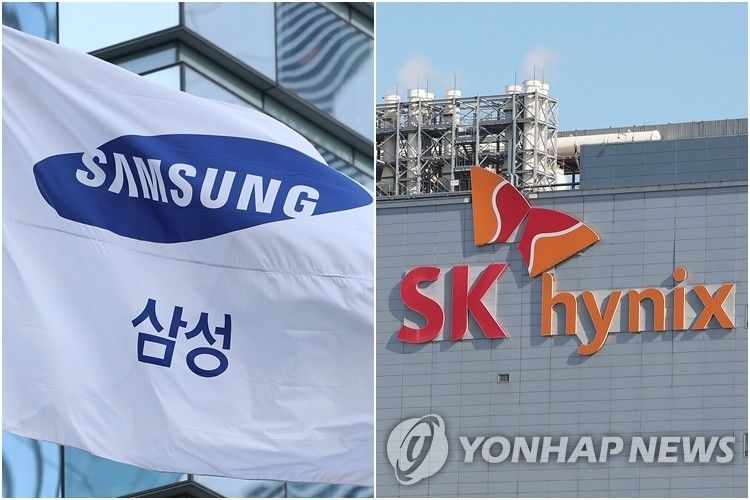
[Financial News] Goldman Sachs, a global investment bank, raised its 12-month target for the KOSPI (Korea Composite Stock Price Index) to 12,000 points, saying it sees strong room for further gains in Korean equities. That is 3,000 points higher than its previous target of 9,000.
On the 3rd, Goldman Sachs released an investment report on the Korean market and upgraded its 12-month KOSPI target from 9,000 to 12,000 points.
Goldman Sachs also maintained its 'overweight' view on Korean stocks. The bank said, "Even though the KOSPI has more than doubled this year, we are keeping our overweight stance," adding, "That view is based on explosive corporate earnings growth and a still-conservative forward price-earnings ratio (PER) of 8 times."
It also pointed to the possibility of a short-term correction. Goldman Sachs said, "Samsung Electronics and SK hynix now account for more than 50% of the market's total market capitalization, and the growing concentration, along with expanded speculative trading by retail investors, could make the market vulnerable to a technical correction." It added, "Our conclusion is that as long as earnings remain supportive, any pullback would instead be a buying opportunity."
Goldman Sachs cited higher corporate earnings estimates, an extended semiconductor memory cycle, attractive valuations, corporate value-up catalysts, and downside support levels identified in past bear-market analysis as reasons for raising its target.
It also pointed to improving earnings among companies outside the semiconductor giants. Goldman Sachs said, "The forecast for earnings growth among KOSPI companies excluding Samsung Electronics and SK hynix has also risen from 20% in January to 57% now, showing that opportunities are broadening beyond semiconductors." It added, "We have further raised our forecast for Korea's earnings growth to 320% this year and 35% next year."
Goldman Sachs also said the memory boom is likely to last longer than the market expects. It argued that demand for Artificial Intelligence computing is rising faster than supply, giving memory makers pricing power and allowing profits to surge through high operating leverage.
Goldman Sachs emphasized, "Current Korean semiconductor stocks trade at a forward PER of just 5 times," adding, "The market expects these high profits to end soon, but we are confident this cycle will last longer than past ones."
The government's corporate value-up policy was also cited as a factor supporting a re-rating of the KOSPI. Goldman Sachs said more than 60% of all KOSPI-listed companies still trade below book value, with a price-to-book ratio (P/B Ratio) of less than 1, leaving room for revaluation.
It also presented an analysis of downside support levels. Goldman Sachs said, "Even if we apply the most severe historical earnings declines and bottom-of-the-cycle valuations to today's market, the KOSPI's theoretical downside support level is calculated at 7,820 points." It added, "That means the downside should remain solid as long as earnings hold up, even if a short-term correction occurs."
[email protected] Han Seung-gon Reporter