Democratic Party Seen Poised to Sweep 'Mini General Election' as Calls for Political Stability Gain Ground
- Input
- 2026-06-03 19:33:24
- Updated
- 2026-06-03 19:33:24
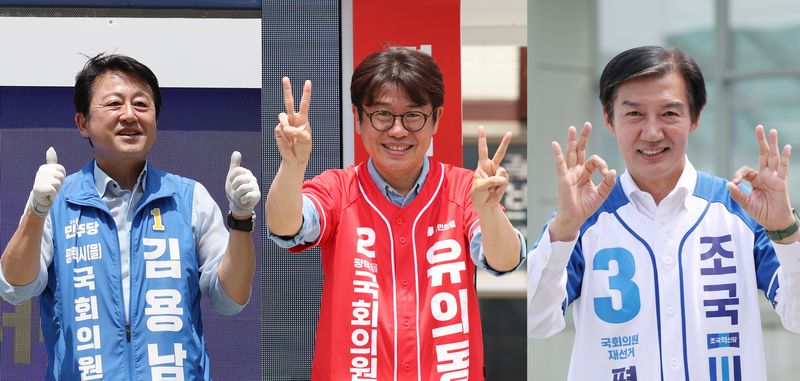
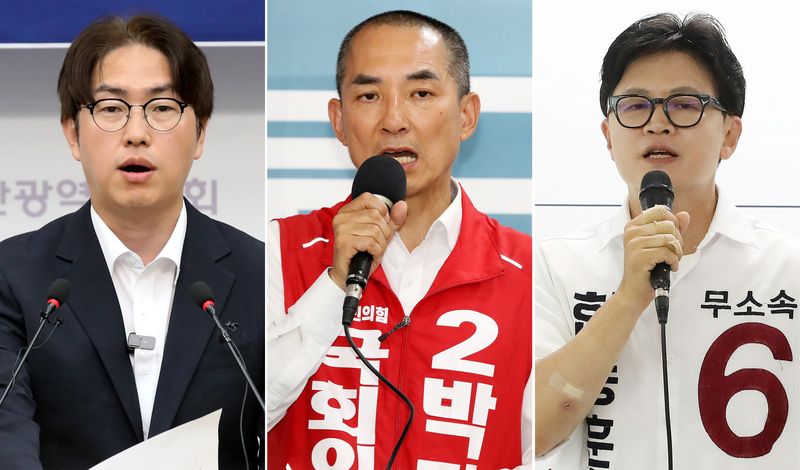
[Financial News] The by-elections for National Assembly seats, held in 14 districts and dubbed a "mini general election," are expected to favor the Democratic Party. In Pyeongtaek-eul, Gyeonggi constituency, and Busan Buk-gu-gap constituency, where multiple candidates from both sides are running, exit polls by KBS, MBC, and SBS pointed to a tight race. Among the 12 districts where no exit poll was conducted, political observers say the DPK is ahead in 11, excluding Ulsan Nam-gu Gap constituency. That view is reinforced by exit poll results from the metropolitan and provincial governor races, which suggest that calls for political stability are prevailing.
According to the three broadcasters' exit polls on the 3rd, the races in Pyeongtaek-eul, Gyeonggi constituency, and Busan Buk-gu-gap constituency were too close to call within the margin of error, at the 95% confidence level and a range of plus or minus 1.7 to 4.1 percentage points.
In Pyeongtaek-eul, where five candidates from the progressive camp and conservative camp are running, Kim Yong-nam of the DPK received 30.3%, Cho Kuk of the Rebuilding Korea Party 31.1%, and Yu Eui-dong of the People Power Party 30.6%, all in the 30% range and close to one another. Kim Jae-yeon of the Progressive Party and Hwang Kyo-ahn of Freedom & Innovation trailed in the single digits.
At first, the prevailing view was that the progressive camp's Kim Yong-nam, Cho Kuk, and Kim Jae-yeon would win comfortably if they unified their candidacies in the Pyeongtaek-eul race. As a result, tensions escalated without compromise, and the effort to unify ultimately collapsed. Allegations that Kim Yong-nam operated a loan-sharking business under another name also deepened the rift between Kim and Cho.
The exit poll results showed that, as political observers had expected, progressive-leaning voters were overwhelmingly dominant. With Kim Yong-nam and Cho Kuk splitting the vote, Yu Eui-dong could benefit and win by default.
If Yu pulls off a narrow victory, it is expected to trigger calls for accountability from DPK leader Jung Chung-rae and weaken Cho Kuk's political standing as the head of the Rebuilding Korea Party. It could also affect future merger talks between the DPK and the Rebuilding Korea Party. If blame is traded over the loss in Pyeongtaek-eul, smooth discussions may become difficult.
In Busan Buk-gu-gap constituency, only Ha Jung-woo of the DPK represented the progressive camp, while Park Min-sik of the People Power Party and Han Dong-hoon, an independent candidate expelled from the People Power Party, ran on the conservative side. Exit polls put Ha and Han in a dead heat at 42.6% and 41.6%, respectively, while Park trailed at 15.8%.
Unlike Pyeongtaek-eul, conservative voters were far ahead of the progressives, but the split between Han Dong-hoon and Park Min-sik created room for Ha Jung-woo to win by default. For that reason, Han had left the door open to a merger from the early stages of the campaign, but Park strongly opposed it, and no talks were held.
If Han wins narrowly and enters the National Assembly, he is expected to have a basis for moving to take control of the People Power Party. More specifically, observers say he may rally reform-minded figures within the party and move toward capturing the next party leadership.
Among the districts where no exit poll was conducted, political observers are divided only on Ulsan Nam-gu Gap constituency, while the outlook is clear in the other 11 districts.
First, in Dalseong County, Daegu, a conservative stronghold, Lee Jin-sook of the People Power Party is widely expected to win. When she previously declared her bid for the Daegu mayoral race, she had strong support in opinion polls, making an upset unlikely.
In addition, 10 districts, including Incheon Yeonsu A, Incheon Gyeyang-eul constituency, Ansan Gap, Hanam-gap, Gyeonggi Province, Gongju-Buyeo-Cheongyang, South Chungcheong, Asan Eul, Gunsan-Gimje-Buan Gap, Gunsan-Gimje-Buan District, Gwangju Gwangsan-eul, and Seogwipo constituency, have long been strongholds of the DPK. Since exit polls for the metropolitan and provincial governor races also showed the DPK ahead, the actual results are unlikely to differ.
In particular, Song Young-gil in Incheon Yeonsu A and Lee Kwang-jae in Hanam-gap, Gyeonggi Province, are heavyweight DPK figures. Kim Nam-jun in Incheon Gyeyang-eul constituency and Jeon Eun-soo in Asan Eul are former aides to the Lee Jae-myung administration, so they are seen as having solid support. Kim Nam-kuk in Ansan Gap and Kim Eui-kyeom in Gunsan-Gimje-Buan Gap are also viewed as having strong political staying power as former lawmakers.
However, in Ulsan Nam-gu Gap constituency, both Jeon Tae-jin of the DPK and Kim Tae-gyu of the People Power Party are political newcomers, and Ulsan voters are seen as increasingly swing-oriented, making the race difficult to predict, according to political observers.
[email protected] Kim Yun-ho Reporter