[Editorial] After the KOSPI 8,800 Rally, Watch for Debt-Fueled Trading and Volatility
- Input
- 2026-06-03 19:08:32
- Updated
- 2026-06-03 19:08:32
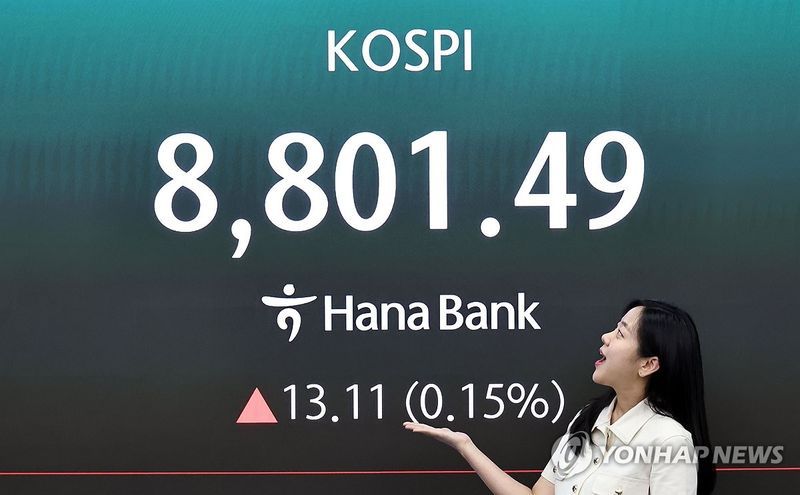
First, sidecar mechanisms were triggered 20 times this year alone on the Korea Exchange Main Board. That means 25% of all such triggers since 2002 occurred within just six months. The annual record during the Global Financial Crisis (GFC), when the financial system was shaken to its core, was 26 cases in 2008. That is only six more than the current pace, which is close to the worst period of financial instability. During this period, buy sidecars were triggered 11 times and sell sidecars nine times. This shows that the market has swung sharply between gains and losses.
Signs of so-called debt-fueled investing are also appearing everywhere. The outstanding balance of overdraft loans at the five major commercial banks exceeded 41 trillion won at the end of last month, reaching 42.77% of the total limit. This ratio, which stood in the 37% range in early 2023, has steadily risen and is now above 40%. An overdraft account can be used easily within the limit when quick cash is needed, and then repaid quickly. That is because the interest rate ranges from 4.8% to 6.5% a year. The recent increase in overdraft balances can be interpreted as evidence that more investors are rapidly pouring borrowed money into the stock market. Margin Loan balances in the South Korean stock market are also surging. There is growing concern that a culture of borrowing from here and there to pile money into stocks is becoming widespread amid the market boom.
To make matters worse, leveraged exchange-traded fund (ETF) products tied to individual stocks such as Samsung Electronics and SK hynix have recently appeared. These products track twice the daily movement of the underlying asset. When stock prices rise, returns double, but when they fall, losses also accumulate at twice the pace. With this type of product, even repeated ups and downs can erode principal.
Of course, investing in a bull market to grow personal wealth and raise corporate value is a positive development. But it is worth asking whether the current rally fully reflects the strength of the real economy. If prices have soared on excessive leverage, it can be seen as a sign of a bubble. In particular, if investors who have raised funds through debt are suddenly hit by a correction, the result could be serious social disruption. In fact, recent expectations for the base rate point more toward a hold or even a hike than a cut. If rates rise, the interest burden on debt-fueled investors will grow heavier. At a time when profit-taking is already being discussed because of the sharp short-term rally, added pressure from higher interest costs could become a major drag on the stock market.
The financial authorities should go beyond simply announcing stronger monitoring and take preemptive action against behavior that fuels overheated speculation. Above all, investors must remember that the responsibility for investing rests entirely with the individual. Since the cost of debt-fueled trading falls squarely on each investor, a more cautious investment atmosphere is needed now.