Japan's Nikkei Index Tops 68,000 for the First Time, with AI Rally Fueling Talk of a 70,000 Year-End Target
- Input
- 2026-06-03 14:15:21
- Updated
- 2026-06-03 14:15:21
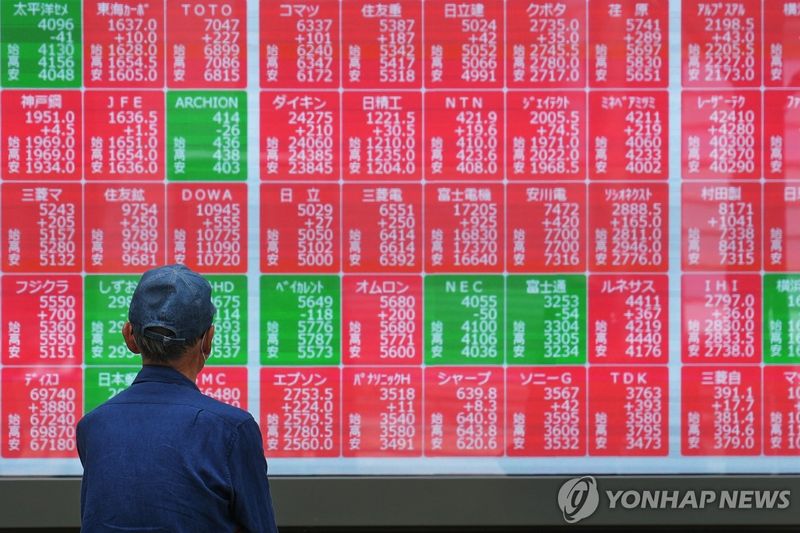
[Financial News, Tokyo = Reporter Seo Hye-jin] Japan's stock market has once again hit an all-time high, powered by the artificial intelligence (AI) boom. As the Nikkei 225 Stock Average broke above 68,000 during trading on the 3rd for the first time, some in the market are even saying a year-end move into the 70,000 range could become reality.
In Tokyo trading that day, the Nikkei Stock Average (Nikkei 225) closed the morning session at 68,452, up more than 1,700 points from the previous trading day. In the afternoon, gains at one point exceeded 2,000 points, pushing the index into the 68,000 range for the first time ever. The TOPIX (Tokyo Stock Price Index) also broke above 4,000 intraday for the first time.
AI and semiconductor-related stocks drove the index higher. KIOXIA Corporation rose more than 7% intraday, repeatedly setting new post-listing highs. At one point, its market capitalization even surpassed Toyota Motor Corporation's, making it the second-largest listed company in Japan.
At an investor briefing the previous day, KIOXIA said it plans to introduce a progressive dividend system that would maintain or increase dividends rather than cut them. The company aims to begin paying dividends as early as the second half of the fiscal year ending March 2027 (April 1, 2026 to March 31, 2027). If realized, it would be the company's first dividend since its December 2024 listing.
It also left open the possibility of share buybacks. KIOXIA said it will consider returning about half of its free cash flow, excluding capital expenditures and R&D spending, to shareholders. If its merger and acquisition plans are delayed, it will also review additional returns of excess cash.
Kazuyoshi Saito, a senior analyst at IwaiCosmo Securities Co., Ltd., said KIOXIA had already attracted buying interest because of its growth potential, but the introduction of a progressive dividend could also draw dividend investors. He added that a strategy of pursuing both growth investment and shareholder returns is likely to be viewed favorably by the market.
Semiconductor-related stocks such as Tokyo Electron Ltd. and Advantest Corporation also posted strong gains. Investor sentiment improved further after NVIDIA CEO Jensen Huang expressed an optimistic outlook for semiconductor demand the previous day, while the World Semiconductor Trade Statistics organization (WSTS) projected that the global semiconductor market would reach $1.5112 trillion this year, up 90% from a year earlier.
Toshiya Matsunami, chief analyst at Nissay Asset Management, said that just two months ago there had been concerns about excessive AI investment, but earnings from major semiconductor companies, including NVIDIA, had dispelled those worries. He added that foreign investors are also highly positive about the competitiveness of Japanese semiconductor equipment makers.
Market observers say stock prices are now rapidly pricing in the possibility of stronger earnings growth among AI-related companies.
Takahisa Odaka, a senior strategist at Nomura Securities, said the current rally reflects the market's anticipation of sharp future earnings growth. He noted that if actual profit growth is confirmed, current stock price levels could be justified.
Still, some warn that volatility could increase after the recent sharp gains. Depending on the earnings and investment plans of AI-related companies, the broader market could swing significantly. Fujikura Ltd. is a representative example, after its share price plunged last month following the release of its medium-term management plan.
Experts acknowledge the possibility of a short-term correction, but they believe the medium- to long-term uptrend will remain intact. Analyst Matsunami said a correction could emerge sometime between mid-June and September, but the downside would likely be limited to around 64,000. He added that any pullback could instead become a buying opportunity for further gains.
Some in the market also expect the Nikkei average could rise into the low 70,000 range by year-end. As AI investment expands and semiconductor demand continues to grow, funds that had been concentrated in semiconductor stocks are also spreading into other sectors such as autos and banks, creating a rotation in the market.
Indeed, Toyota Motor Corporation, Honda, and Mazda shares also rose that day, while bank stocks showed strength as well.
Chief analyst Matsunami said Japanese semiconductor manufacturing equipment makers possess outstanding technology that can compete in the global market, and foreign investors are showing very strong interest. He added that the Nikkei Stock Average could climb into the low 70,000 range by the end of the year.
[email protected] Seo Hye-jin Reporter