The United States and Iran keep trading airstrikes amid ceasefire talks... Trump says, "We are still talking"
- Input
- 2026-06-03 13:53:08
- Updated
- 2026-06-03 13:53:08
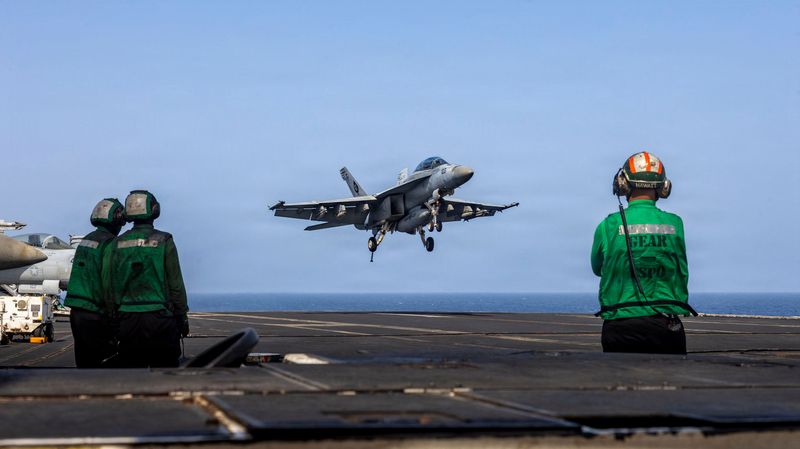
[The Financial News] The United States and the Islamic Republic of Iran, which had been trading airstrikes and retaliation since late last month amid ceasefire talks, exchanged their largest attacks yet in the latest round of clashes. Despite the fighting, the United States said the two sides were still negotiating. It also said denuclearization of Iran is the key issue.
Iran claims it struck the U.S. Fifth Fleet headquarters... the United States says, "All attacks failed."
According to foreign media outlets, including Turkey's Anadolu Agency, the Islamic Revolutionary Guard Corps (IRGC) said in a statement on the 2nd local time that one Iranian tanker was hit by an airborne projectile near the Strait of Hormuz, damaging its engine room. It then claimed to have attacked the U.S. Navy Fifth Fleet headquarters in Bahrain and a U.S. Air Force base in Kuwait with missiles and drones. The IRGC said a communications tower south of Qeshm Island in the Strait of Hormuz was also hit by a U.S. attack, stressing that the operation was justified.United States Central Command, which is in charge of responding to Iranian attacks, posted on X that day and stressed that Iran's claims were "false." It added, "All Iranian attacks targeting U.S. forces have failed." CENTCOM also issued a separate statement the same day, saying, "Iran fired several ballistic missiles toward neighboring countries in the region, but all failed to hit their targets."
It also explained that two Iranian missiles fired at Kuwait fell short of their targets or broke apart in flight, while three missiles fired at Bahrain were immediately intercepted by U.S. and Bahraini air defense units. CENTCOM also said it carried out self-defense airstrikes targeting an Iranian ground control station on Qeshm Island.
In response to Iran's blockade of the Strait of Hormuz, the United States has since April 13 been turning back or detaining Iran-linked vessels entering or leaving the strait and Iranian ports. As of the 30th of last month, CENTCOM said it had disabled five merchant ships near the Strait of Hormuz and rerouted 116 vessels.
The United States and the Islamic Republic of Iran entered a ceasefire on April 8, and it was reported on the 23rd of last month that they had come close to signing a memorandum of understanding to end the war. However, they clashed three times in the final week of that month. CENTCOM carried out airstrikes on military facilities near the Strait of Hormuz on the 25th, 28th, and between the 30th and 31st of last month. Iran claimed it fired missiles and drones at a U.S. Air Force base on the 28th and again on the 31st, without naming the exact target. On the 1st, Iran also claimed it fired "missile attacks on U.S. and Israeli merchant ships" in the Persian Gulf inside the Strait of Hormuz in retaliation for the U.S. blockade of Iranian vessels. However, the ship was reported to be registered in Panama.
On the 1st, the BBC reported, based on its own analysis, that Iran had attacked key facilities across eight Middle Eastern countries since late February, causing millions of dollars in damage to the U.S. military's advanced air-defense missile systems, airborne early warning and control aircraft, radar, and other assets. Some analysts estimated that as many as 28 U.S. military facilities had been hit by Iran.

Trump insists talks are continuing, and Iran's nuclear program is more dangerous than North Korea's
Earlier, Iran's semi-official Tasnim News Agency reported on the 1st that Iran's ceasefire negotiation team had stopped exchanging messages to reach an agreement with the United States in protest against Israel's attack on Lebanon. U.S. President Donald Trump posted on Truth Social on the 2nd, saying, "The fake news reports from a few days ago that Iran and the United States had stopped talking are false and wrong."He added, "Our talks have continued four days ago, three days ago, two days ago, one day ago, and even today." He stressed, "No one knows how the talks will end, but as I told the Iranian side, it is time for you to make a deal in one way or another."
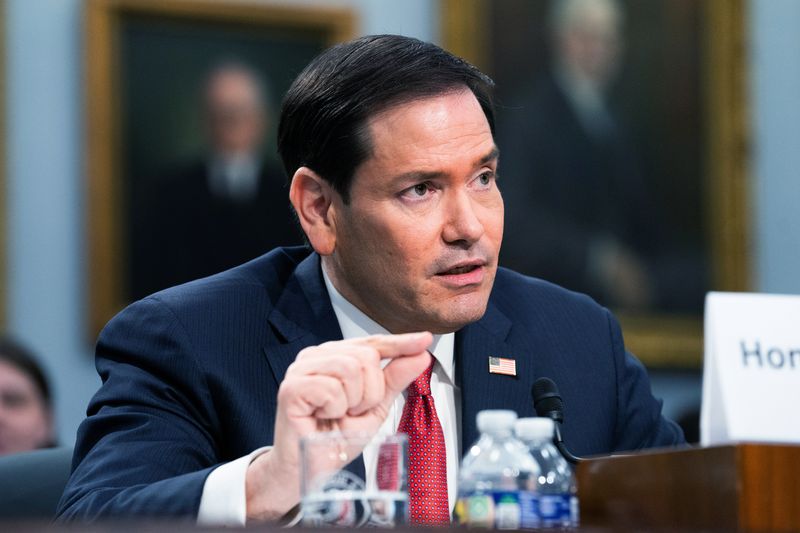
U.S. Secretary of State Marco Rubio also told a hearing of the U.S. Senate Committee on Foreign Relations on the same day, "We have a chance of success. It could happen today, tomorrow, or next week." He said Iran had avoided even mentioning denuclearization a year ago, but recently "agreed to negotiate matters related to its nuclear program."
When asked whether the United States planned to ease sanctions on Iran in exchange for reopening the Strait of Hormuz, Rubio said, "That has not been discussed or proposed." He stressed that "any sanctions relief would be conditional," adding that Iran was sanctioned because of its nuclear development program and that sanctions relief would only be possible if it gave up nuclear weapons development.
Asked whether Iran would become similar to North Korea if it obtained nuclear weapons, he replied, "They would be like North Korea, but worse." Rubio said, "Iran has far more financial resources than North Korea," and added, "They would decide that the Strait of Hormuz belongs to them forever and that every country must pay them tolls."
Rubio predicted that Iran would expand global terrorist activity by supporting the Lebanese armed group Hezbollah and try to drive the United States out of the Middle East to destroy Israel. He then said, "If Iran acquires nuclear weapons, I think there is a very high likelihood they would actually use them, given that their decision-making system is a theocracy."
Meanwhile, Rubio explained that the reason a ceasefire agreement with Iran has been delayed is "that their internal system is somewhat divided," adding that "it takes days to get a response from their system." He said, "Negotiations with Iran are not like negotiations with Switzerland. They are very different. Unfortunately, the use of intermediaries is necessary."
[email protected] Park Jong-won Reporter