"Tokenization of Real-World Assets (RWA) Is an Innovation That Rebuilds the Financial Infrastructure Itself" [Crypto Briefing]
- Input
- 2026-06-08 15:40:50
- Updated
- 2026-06-08 15:40:50
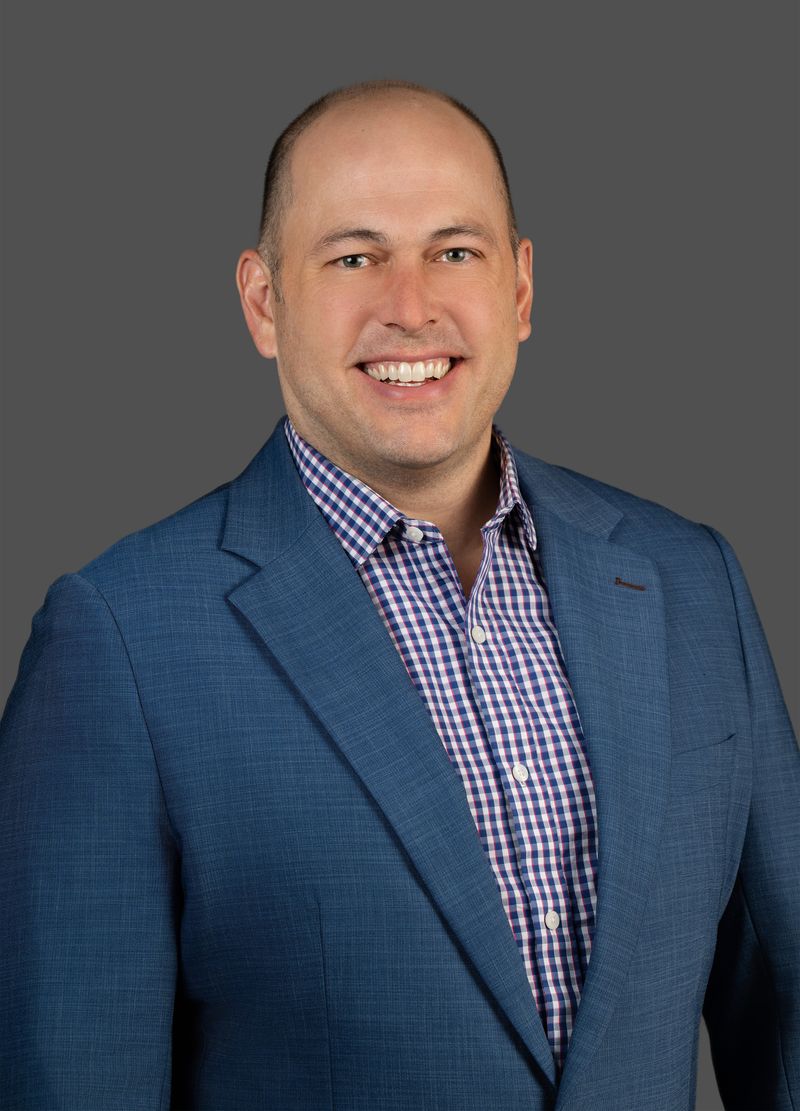
[The Financial News]"Tokenization of Real-World Assets (RWA) is not a marketing tool for distributing traditional financial products to participants in the virtual asset market. It is about rebuilding the existing financial infrastructure from the ground up for a more digital, global, and programmable economy."Christopher Jensen, portfolio manager and director of digital asset research at Franklin Templeton Investments, a global asset manager with $170 billion in assets under management (AUM),photosaid in an interview on the 8th ahead of his keynote at Tokenomy Korea 2026, which will be held on the 11th in Yeouido, Seoul. He said the company had been in close discussions with firms, listened to the industry's concerns, and talked about possible government support measures.
Jensen argued that RWA represents "structural innovation in the market." The programmable economy he described refers to a system in which the issuance, distribution, and settlement of financial products are automatically executed through code on blockchain-based infrastructure.
When trades are executed in the stock market, multiple intermediaries such as securities firms are involved in stages, checking payment, asset transfers, and regulatory compliance. Most of this process is handled by people. In a programmable economy, however, those procedures are automatically carried out by code embedded in the asset. Once the conditions of a transaction are met, asset transfers and settlement take place simultaneously without intermediaries, and compliance is verified according to the code.
In other words, if program trading in the stock market is an automated trading method in which a computer places orders based on strategies written by people, a programmable economy is closer to a new financial infrastructure that moves issuance, settlement, and compliance entirely into code.
He pointed to settlement efficiency and collateral mobility as key advantages that institutional investors should consider in tokenized assets. He also highlighted the importance of coding compliance requirements into assets. This means preprogramming conditions such as investor eligibility, transfer restrictions, and allocation rules into assets or platforms so they can be enforced automatically without manual intervention. Jensen explained, "Tokenized products are not a way to bypass regulation. They are a means of implementing compliance in a more efficient and automated way," adding, "Even conservative institutions have plenty of reason to use them if governance and risk management standards are met."
Franklin Templeton Investments was among the first global asset managers to enter the virtual asset market with products such as a Bitcoin spot exchange-traded product (ETP). The blockchain-based money market fund (MMF) it launched in 2021 with SEC approval, the Franklin OnChain U.S. Government Money Fund (FOBXX), known as Benji, has an AUM of about $2 billion.
Jensen said, "The significance of Benji is not simply that it was an early tokenized product," adding, "It is a technical example that proved a regulated fund can use public blockchain infrastructure to handle ledger records, settlement, and transfers." He continued, "Because MMFs are conservative products widely used by institutional investors for cash and liquidity management, they were the most suitable testbed for demonstrating blockchain transparency and settlement speed within a regulatory framework."
Franklin Templeton Investments' crypto institutionalization strategy does not stop at passive products. Jensen said the recent push to acquire CoinFund's "250 Digital" and the launch of a dedicated unit, "Franklin Crypto," are intended to strengthen active management capabilities.
He stated, "Institutional investors are increasingly looking beyond simple exposure to virtual assets and seeking broader opportunities in complex ecosystems such as infrastructure, decentralized finance (DeFi), and tokenized assets." He added, "Based on traditional fundamental investing and private credit perspectives, we will take an active approach to protocols with unit economics and sustainable revenue models."
Jensen also highlighted the potential of the South Korean market. He said, "South Korea has a sophisticated investor base, advanced IT infrastructure, and an active capital market." He added, "As major jurisdictions such as the United States and Europe are now refining their virtual asset regulatory frameworks, this is the ideal time for South Korea to actively embrace global standards and establish itself as a benchmark for Asia's institutional digital asset market."
[email protected] Kim Mi-hee Reporter