[Editorial] Why Do Repeated Tragedies Keep Happening at a Key K-Defense Company?
- Input
- 2026-06-02 18:25:46
- Updated
- 2026-06-02 18:25:46
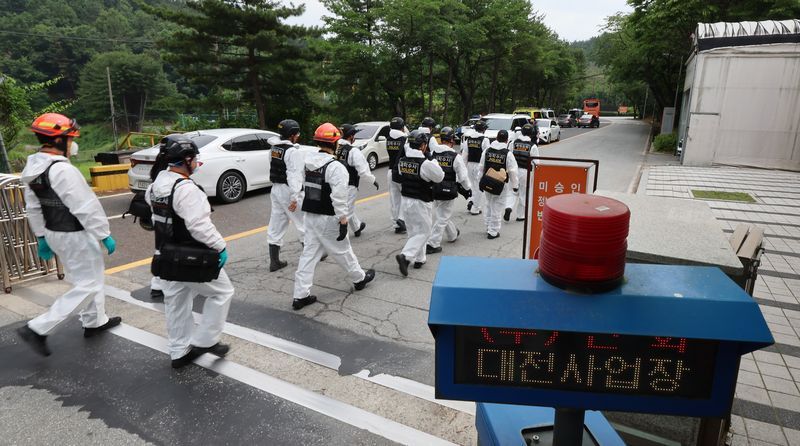
Of course, the previous two accidents occurred in hazardous processes, while this one happened in a washing room where tools used to make propellant components were being cleaned. The company's explanation that this was "a process that had been carried out before and was considered low risk" follows the same line. But accidents can happen in an instant, with only the slightest difference in an unexpected situation. Moreover, nowhere that handles chemicals can be considered safe. A thorough investigation is needed to determine whether the company was even slightly negligent in managing safety at the site.
The Daejeon Plant is a core defense facility that develops and produces missile propulsion systems and tactical guided weapons. The K239 Chunmoo multiple launch rocket system and the Long-range Surface-to-Air Missile (L-SAM) are made here. About 5% of Hanwha Aerospace's sales come from this site. Immediately after the accident, operations on the plant's downstream production line were halted under a work suspension order from the Daejeon labor office. Although the stopped work is said to involve only part of the process for cleaning tools used to inject fuel, it could still affect export delivery schedules. It is regrettable that orders won after fierce competition with overseas rivals could be disrupted by a safety accident. Once again, this underscores that safety management is a crucial part of competitiveness.
The defense industry has emerged as a new growth engine for the Korean economy. Since the Russo-Ukrainian war, countries around the world have been rearming, and the standing of Korean weapons systems such as the K9 Thunder, K239 Chunmoo, guided missiles, and propulsion systems has risen. The defense industry is now more than a simple manufacturing sector; it has become a national strategic industry linking security, exports, and advanced technology.
However, many work processes involve high pressure and high temperatures, and they mainly handle high-risk materials and objects such as explosives, propellants, and precision equipment. It is an environment where the risk of accidents is inevitably higher than in ordinary manufacturing. That is why safety standards must be strict and prevention systems must be thorough. Even if it means conducting a full inspection of defense facilities, similar accidents must never happen again.
Security is also important at defense facilities because they are tied to national security. Civilian oversight and outside access are inevitably limited. But that must not create blind spots in safety management. Technical security should be protected, but safety verification must be even stricter. As demand for advanced components surges in the era of Artificial Intelligence (AI), a new management system and manual are also needed to prepare for accidents involving advanced chemicals.
The workplace has changed, but it is worth asking whether the government's safety measures are still geared toward the industrial sites of the past. The effectiveness of the Serious Accidents Punishment Act, which focuses on post-incident punishment, should also be reconsidered. If accidents cannot be prevented, similar tragedies can happen again at any time.