"Could warships be built in South Korea?" U.S. may spend 2.8 trillion won on Korean shipbuilders
- Input
- 2026-06-02 18:12:07
- Updated
- 2026-06-02 18:12:07
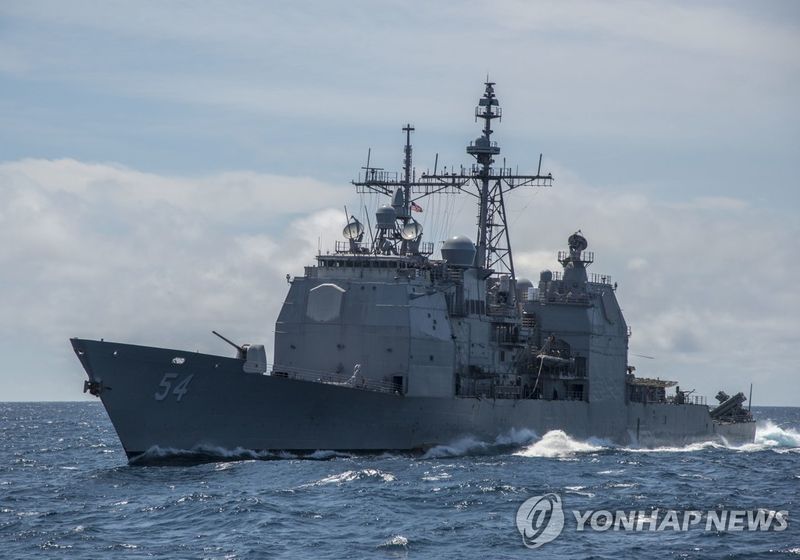
According to The War Zone on Wednesday local time, a White House Office of Management and Budget official said the U.S. Department of Defense's $1.85 billion Navy research and development budget for fiscal 2027 is effectively intended for warship procurement.
“No one spends $1.85 billion on research,” the official said. “For a frigate, that amount could even cover an entire ship, depending on the manufacturer.” The approach under review by the White House would involve building the basic structure of a warship, including the hull, engines and electrical systems, in South Korea or Japan, before a U.S. defense contractor integrates the combat systems.
The OMB official said the administration is reviewing a plan to produce the hull, machinery and electrical systems for up to two warships in South Korea or Japan. Companies under discussion include Hanwha Ocean, HD Hyundai Heavy Industries and Samsung Heavy Industries in South Korea, as well as Mitsubishi Heavy Industries, Kawasaki Heavy Industries and JMU in Japan.
The United States is facing a shortage of warship-building capacity as its naval competition with China intensifies. South Korea, by contrast, has recently expanded into U.S. Navy maintenance, repair and overhaul projects, backed by its world-leading commercial shipbuilding capabilities. Hanwha Ocean won a maintenance contract for a U.S. Navy logistics support ship last year, while HD Hyundai is also seeking to expand shipbuilding cooperation with the United States.
Still, it was made clear that the White House's ultimate goal is not to expand overseas production, but to revive the domestic shipbuilding industry.
“Foreign shipbuilders could receive warships while they invest in the United States,” the OMB official said. “We are considering acquiring and modernizing U.S. shipyards or building new ones.”
This is in line with the so-called bridge strategy included in the White House's U.S. Maritime Action Plan announced earlier this year. Under the model, some initial orders would be built in allied countries such as South Korea and Japan. Once those companies build shipyards in the United States or establish local production systems, later orders would be produced in the United States.
The United States has already applied the same approach to an icebreaker project with Finland. The initial vessel will be built in Finland, and follow-on ships will be produced at a shipyard in Louisiana.
Under current U.S. law, including the Jones Act, warships must in principle be built at shipyards in the United States. Allowing overseas construction would require a separate presidential waiver. That means any actual order shift to South Korea or Japan would have to clear not only legal procedures but also political hurdles. The War Zone reported that many lawmakers at a recent congressional hearing expressed skepticism about building warships with foreign shipbuilders.
The U.S. shipbuilding industry is also likely to push back strongly, citing job losses and concerns over the erosion of domestic industry.
Even so, observers say the fact that the White House and OMB are directly leading the shipbuilding revival project suggests that Korea-U.S. shipbuilding cooperation could expand beyond maintenance work into actual warship construction.
km@fnnews.com Kim Kyung-min