"Can Lee Seung-hwan Wear Red, but Lee Young Ji Cannot?" — Celebrity Dress Code Debate Heats Up During Election Season
- Input
- 2026-06-02 08:04:10
- Updated
- 2026-06-02 08:04:10
[The Financial News] A familiar scene that appears every election season is expected to resurface in the 9th nationwide local elections. It is the issue of celebrities' "dress codes."
A similar controversy also emerged during the early voting period for the local elections on the 29th and 30th of last month. Some people wore the same color red, but while one person got through without any trouble, another had to rush out an apology and try to contain the backlash.
Why is it different when it's the same color red?
At the center of the controversy were singers Lee Seung-hwan and Lee Young Ji.
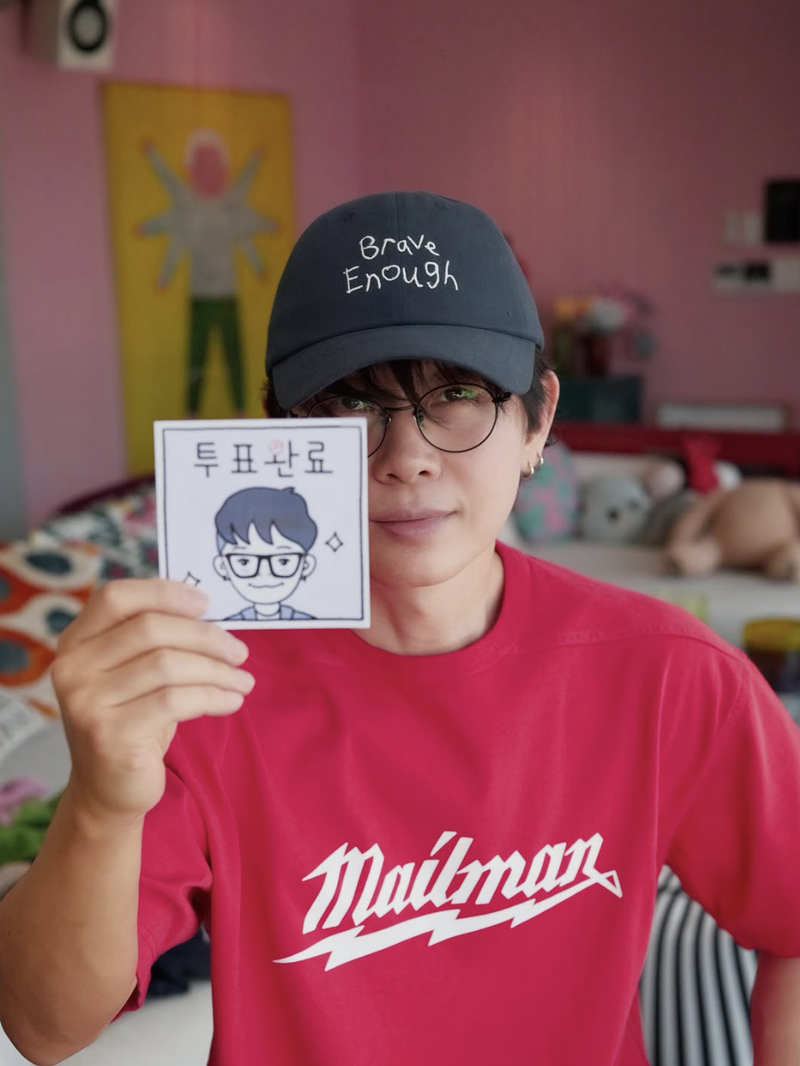
During the early voting period, Lee Seung-hwan posted a selfie on his social media account holding a "voting confirmation slip" stamped with a voting mark.
What drew attention was his outfit. He wore a black cap promoting the Korea Childhood Leukemia Foundation's "Brave Ball Cap" campaign and encouraging regular donations for children with pediatric cancer. He also wore a red T-shirt.
During election periods, red clothing can be interpreted as a symbol of a particular party, but no major controversy followed.
Instead, most of the comments were positive, such as, "No one would suspect this guy even if he wore red and posted proof," "It's a voting shot, and wearing red actually makes it stand out more," and "A T-shirt with ironic emphasis."
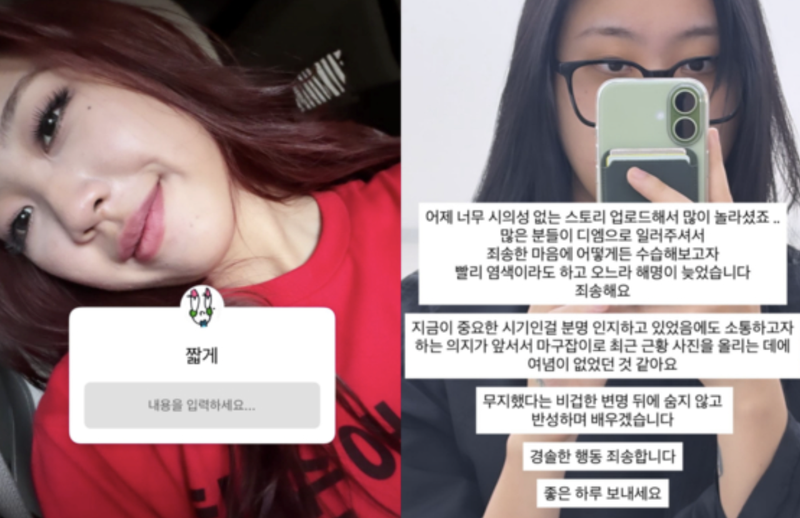
Lee Young Ji, by contrast, faced a very different reaction.
On the 30th of last month, she posted a casual photo on social media showing her red-dyed hair and a red T-shirt, but some users accused her of sending a political signal in support of a particular party. As criticism mounted, Lee Young Ji deleted the post and then uploaded an apology with a photo of her hair dyed black again.
Lee Young Ji bowed her head and said, "Many people let me know, and I felt sorry, so I tried to fix it as quickly as I could by dyeing my hair again. I knew it was an important time, but I was careless."
Although she does not appear to have intended any political message, her hairstyle and clothing color became controversial simply because it was election season.
However, the cases of Lee Seung-hwan and Lee Young Ji suggest that political-color controversies are not necessarily about color alone. Lee Seung-hwan has long been outspoken on political and social issues.
In his voting photo, he wore a red T-shirt, but he also took aim at Oh Se-hoon, the People Power Party candidate for Seoul Metropolitan City Mayor, with the message, "I want Seoul to be safe 12 months a year, not just a new landmark that people will look at a few times a year."
Oh has recently faced criticism over a "safety insensitivity" controversy following the Seosomun Overpass accident and missing rebar at the Great Train eXpress (GTX) project.
Lee Young Ji, on the other hand, is a young artist who has connected with the public more through music and variety shows than through political statements. In the end, critics say the standard for controversy may be shaped less by objective principles than by personal bias or political preference.
'Self-censorship' and 'neutralization'
As this shows, celebrities often get caught up in unintended political controversies during election season. Red and blue, which can evoke a particular party, as well as V signs and thumbs-up gestures that suggest numbers 1 and 2, have all become subjects of political interpretation.
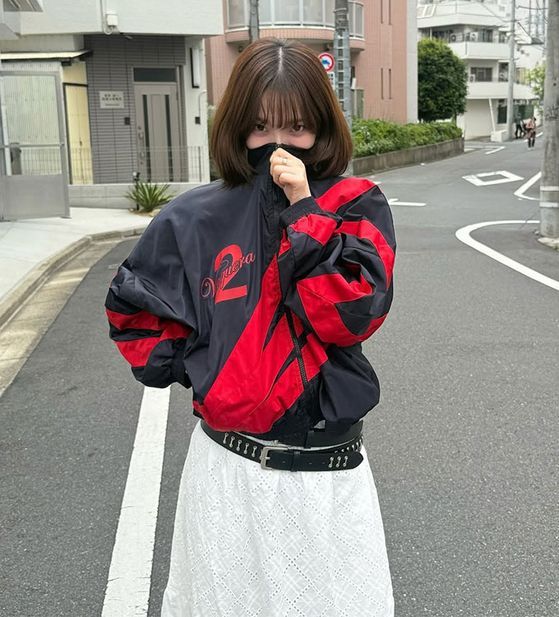
Even during last year's presidential election, Karina, a member of the girl group aespa, came under suspicion of revealing a political leaning after she posted a photo on her social media account wearing a jacket with the red number "2" on it.
At the time, Karina posted a photo on Instagram taken on a street in Japan, along with a red rose emoji. The problem was her outfit in the photo. She was wearing a jacket with a black base, red patterns, and the red number 2.
Broadcaster Hong Jin-kyung was heavily criticized after posting a photo on social media the day before the presidential election showing her wearing a red knit top in Sweden. Comedian Park Sung-kwang also posted a photo of a blue sky and a blue roof with the caption, "Now, who should I vote for?" After criticism followed, he re-uploaded the same photo with a black-and-white filter to settle the matter.
As a result, celebrities were sometimes placed under a kind of "alert" to monitor their clothing and behavior. When visiting polling stations, they wore neutral-colored clothes to avoid misunderstandings and used clenched fists instead of poses such as the V sign or thumbs-up. Some even applied black-and-white filters to their photos so that no color would stand out.
So-called "neutralized" versions of photos also appeared.
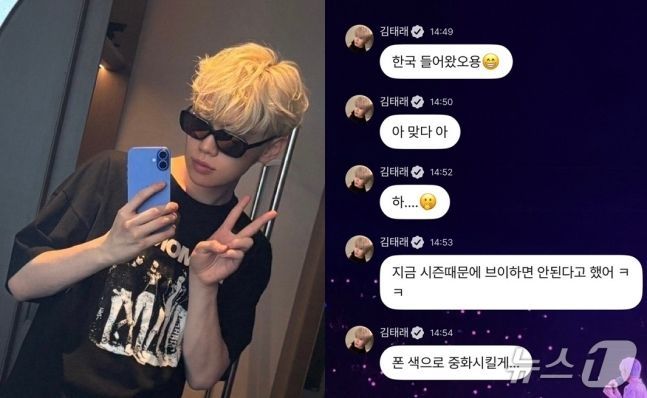
ZEROBASEONE's Kim Taerae posted a photo of himself making a V sign on a fan communication app, deleted it, and then uploaded another photo of himself making the same gesture while holding a blue phone.
At the time, Kim Taerae said, "Because of the presidential election season right now, they told me at the agency that I shouldn't do the V sign. I'll neutralize it with the color of my phone, which is blue."
Lee Chae-yeon, formerly of IZ*ONE, also took a photo holding red cherry tomatoes, taking into account that the wrist support she was wearing was blue.
There are also many voices saying that inferring or criticizing a particular political leaning based only on color, without confirming any political intent, is an excessive interpretation.
Experts say election fairness is important, but a culture that assigns political meaning even to colors and everyday photos could discourage freedom of expression.
[email protected] Seo Yoon-kyung Reporter