Starbucks Korea official refused to submit phone in 'Tank Day' case... police say "forced measures, including search and seizure, remain an option"
- Input
- 2026-06-02 06:51:41
- Updated
- 2026-06-02 06:51:41
[Financial News] Police investigating a defamation case involving the May 18 Gwangju Democratization Movement in connection with Starbucks Korea's 'Tank Day' event said that they are "keeping all possibilities open, including forced measures."
As it was confirmed that some key figures involved in planning the event refused to submit their mobile phones during an internal review, attention is now turning to the possibility of police searches and seizures or other compulsory measures.
At a regular press briefing on the 1st, Park Jeong-bo, commissioner of the Seoul Metropolitan Police Agency, said, "We have received multiple complaints and accusations related to the 'Tank Day' controversy and are conducting an investigation," adding, "We will carry out the probe strictly, as this is a matter of great public interest."
In particular, when asked whether compulsory measures such as search and seizure could begin, Park replied, "All possibilities are open." Police are reportedly reviewing the relevant laws and precedents while assessing whether charges can be applied.
What police are focusing on is the result of Shinsegae Group's own internal investigation.
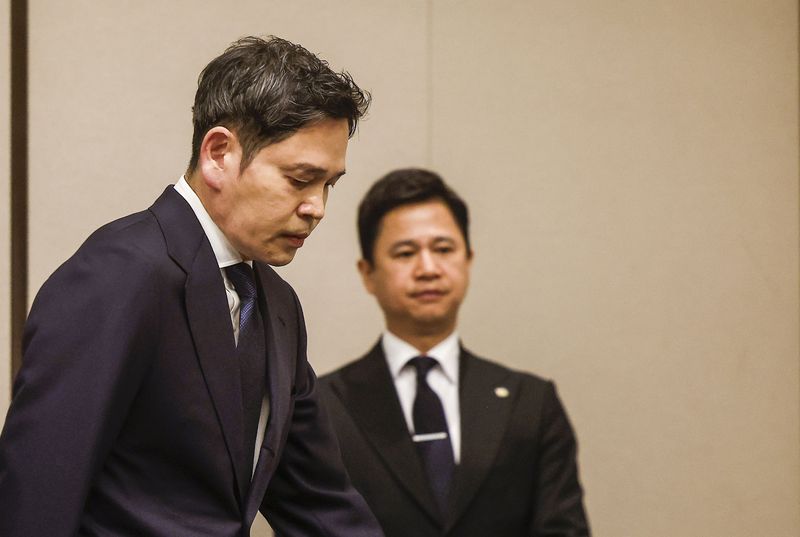
On the 26th of last month, Shinsegae Group held a press conference at Josun Palace Seoul Gangnam, a Luxury Collection Hotel, where Chairman Chung Yong-jin delivered a public apology. After he left the venue, the group also announced the findings of its internal fact-finding review. At the time, the company said it had found no evidence that the 'Tank Day' event had been intentionally planned to target the May 18 Gwangju Democratization Movement.
However, it disclosed that some officials involved in planning the event had refused to submit their phones during the investigation. Mobile phones are typically considered key evidence because they can reveal the decision-making process and planning through messages, emails, work messenger chats, and approval records.
As a result, police may ask those involved to voluntarily hand over their phones during the investigation, or, if necessary, obtain a warrant for a search and seizure to secure digital evidence.
Police are currently verifying basic facts through interviews with complainants and witnesses, and will decide whether and when to summon suspects depending on the results.
Earlier, on the 28th of last month, the May 18 Memorial Foundation and three civic groups — the Association of the Injured, the Association of Merit Recipients, and the May 18 Democratic Uprising Bereaved Families Association — filed a complaint with the Gwangju Western Police Station against Shinsegae Group Chairman Chung Yong-jin, former Starbucks Korea CEO Son Jeong-hyeon, and a marketing executive. They accused them of violating the Special Act Concerning the May 18 Democratization Movement and of defamation and insult under the Act on Promotion of Information and Communications Network Utilization and Information Protection.
Some May 18 activists and bereaved family members have also separately filed complaints against Chung and are calling for a search and seizure of Shinsegae Group as well as a travel ban on the chairman.
[email protected] Seo Yoon-kyung Reporter