[Editorial] Semiconductor Boom Drives Exports to Another Record, but the Benefits Must Spread More Widely
- Input
- 2026-06-01 18:27:56
- Updated
- 2026-06-01 18:27:56
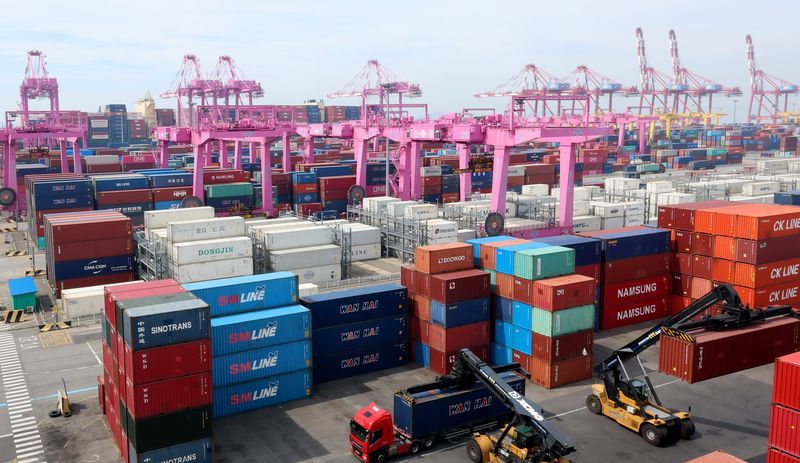
Of course, semiconductors are at the center of exports, growth and the trade surplus. Semiconductor exports alone jumped 170% last month, reaching $37.1 billion. For the first time ever, semiconductors accounted for more than 40% of total exports, rising to 42%. At this pace, it may not be long before semiconductors make up half of all exports. Riding the artificial intelligence (AI) boom, semiconductors are a core asset of the Korean economy. It is only natural that the country should expand its dominance and lead the market through bolder investment and advanced technology.
The problem is that a semiconductor-only boom could deepen market polarization and economic imbalance. It is encouraging that exports of 12 of the 20 major export items, including petrochemicals, increased last month. Exports excluding semiconductors posted double-digit growth. But that is far from enough. Employment and domestic demand depend far more heavily on non-semiconductor industries.
It is also painful that automobile exports, which had served as a twin engine alongside semiconductors, fell sharply. Korean automakers are facing production and logistics disruptions from tariffs and the fallout of war, while also being tested by China's low-cost onslaught. Without semiconductors, every industry is walking on thin ice. That is why the large bonuses now in the hands of semiconductor union members, after pushing their companies to the brink, feel even more burdensome.
Income polarization can become a serious social problem. According to the Ministry of Employment and Labor (MOEL), the average monthly wage for regular workers in the first quarter was 4.86 million won, while temporary and daily workers earned 1.76 million won. Pay for regular workers rose by nearly 4%, while temporary workers saw an increase of just 0.7%. Given the current pattern of labor disputes among regular worker unions, there is little chance the gap will narrow anytime soon. The stock market is also heating up day after day on the back of the semiconductor rally. On the 1st, Samsung Electronics' market capitalization briefly surpassed 2,000 trillion won during intraday trading, the first time any company has reached that level. SK hynix is closing in on Samsung Electronics. Together, the two companies account for more than half of KOSPI's total market capitalization. That is unprecedented even globally.
Now is the time to take a hard look at the economy beneath the semiconductor supercycle, export boom and stock market rally. Bad loans at banks have reached their highest level in seven years, driven by large-scale delinquencies among small and medium-sized businesses and self-employed workers. Bankruptcy filings by individuals and corporations are also surging. High interest rates and high prices are squeezing ordinary households. That is why people cannot fully celebrate even amid the export boom. A brief improvement in domestic demand is not enough to improve livelihoods. Structural reform must be accelerated so that the warmth of the economy can spread beyond semiconductors and reach every corner.