Netanyahu Orders Expanded Advance into Lebanon, Breaking Ceasefire Pledge...Strategic Stronghold Beaufort Castle Falls
- Input
- 2026-06-01 06:12:38
- Updated
- 2026-06-01 06:12:38
[Financial News] Just six weeks after Israel and the pro-Iranian armed group Hezbollah declared a ceasefire, the conflict is once again sliding toward full-scale war.
Two days after defense officials from Israel and Lebanon met in Washington, D.C. on the 29th of last month (local time) under U.S. mediation to discuss a peace plan, the Middle East was once again pulled into the vortex of war.
On the 31st, AFP and other foreign media reported that Israeli Prime Minister Benjamin Netanyahu formally ordered an expansion of ground operations on the southern Lebanon front. He said the goal was to "deepen and expand our control over areas that were under Hezbollah's control." The move came just 15 days after the United States and others mediated an agreement on May 15 to extend the ceasefire period by 45 days.
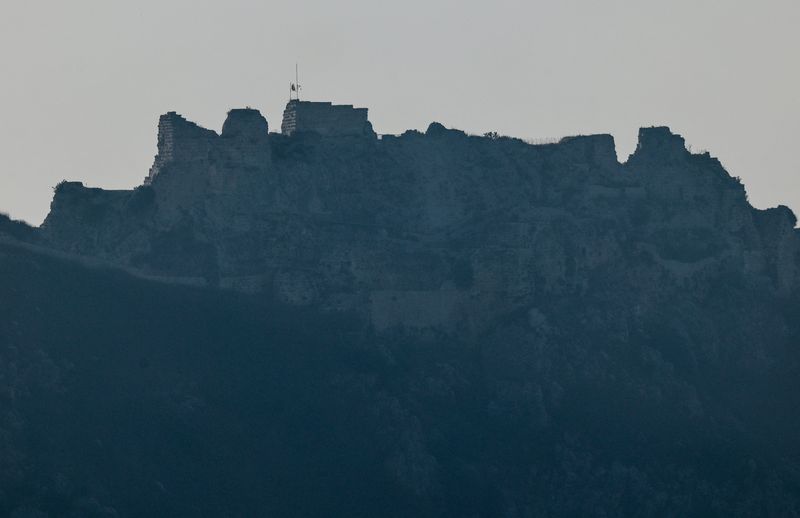
The IDF immediately launched a counterattack after Hezbollah fired a large-scale barrage of rockets and drones at northern Israel the previous day. In the process, the IDF seized Beaufort Castle, a strategic stronghold in southern Lebanon, along with nearby ridgelines. It is the first time in 26 years that Israel has taken control of the area, since withdrawing from southern Lebanon in May 2000.
Israeli Defense Minister Israel Katz shared a photo on social media showing the Israeli flag and the Golani Brigade flag flying over Beaufort Castle, declaring that "this operation is not over yet." He added that "we are determined to crush Hezbollah's capabilities," signaling that the castle will remain part of Israel's security zone.
Military experts say Beaufort Castle, perched on high ground overlooking all of southern Lebanon and northern Israel, gives the Israeli military a major advantage in future operations. The IDF has already secured control up to the Litani River and is now attempting to advance farther north to the Zahrani River, about 10 kilometers away. It is also conducting operations near Nabatieh, a key Hezbollah stronghold.
Even after the ceasefire declaration in mid-April, the two sides have continued sporadic clashes. Hezbollah, in particular, has used low-cost suicide drones that are difficult to intercept with air defense systems and easy to assemble, inflicting damage on the IDF. Political pressure inside Israel has also pushed Netanyahu toward a harder line. Former Prime Minister Naftali Bennett, seen as a leading contender for the next presidency, is pressuring Netanyahu by calling for stronger military action against Lebanon, including strikes on the outskirts of Beirut.
Civilian casualties from the fighting are spiraling toward disaster. The IDF has ordered residents south of the Zahrani River to evacuate and carried out more than 40 airstrikes in southern Lebanon alone on the 31st. According to the Lebanese government, the conflict has so far killed more than 3,370 people and forced more than 1.2 million Lebanese residents to flee. On the Israeli side, 24 soldiers and four civilians have been killed, while tens of thousands of residents in the north remain displaced.
As the situation escalated beyond control, the international community also began moving urgently. The Ministry for Europe and Foreign Affairs of France said it had requested an emergency meeting of the United Nations Security Council (UNSC) on the 1st, citing the rapid escalation of violence in Lebanon.
[email protected] Yoon Jae-jun Reporter