"The Red Sea Was the Same" Strait of Hormuz May Never Recover Even After Reopening
- Input
- 2026-05-31 03:36:22
- Updated
- 2026-05-31 03:36:22
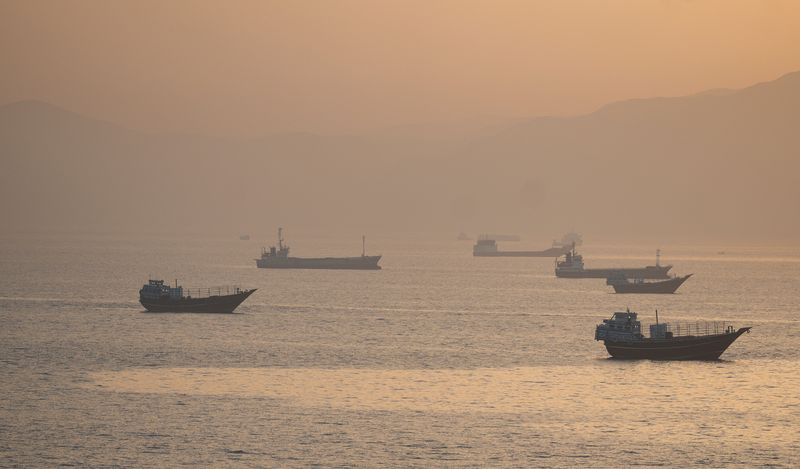
U.S. President Donald Trump has opened the gates of hell.
Experts are pessimistic that the Strait of Hormuz, which handles 20% of global oil and natural gas transport, will ever return to prewar levels in the foreseeable future.
No matter what kind of peace deal the United States and Iran reach, shipping companies are expected to reduce operations in the region as much as possible. They are worried not only that Iran could take control of the strait, but also that clashes could break out there at any time.
That pessimism is reinforced by the fact that the Red Sea shipping route has still not recovered to its previous level after the Iran-backed Houthi rebels in Yemen began attacking ships in the Red Sea, the gateway to the Suez Canal, in 2023.
The Strait of Hormuz Will Not Return to Prewar Levels
CNBC reported on May 30 local time, citing experts, that oil and natural gas transport through the Strait of Hormuz will not be able to return to prewar levels for quite some time, even as time passes.
Shipping companies are expected to avoid the route because they must factor in the risk of sudden clashes in the region even after the strait reopens. They also have to consider the possibility of violating U.S. sanctions if Iran, especially the Islamic Revolutionary Guard Corps (IRGC), effectively controls the strait.
That means the blockade of the Strait of Hormuz, which triggered the worst oil supply disruption on record, has led to a fundamental shift in supply chains over the medium term.
Amos Hochstein, who served as a senior energy and national security adviser to former President Joe Biden, told CNBC on the 28th that "whatever happens, Iran will control the Strait of Hormuz for the foreseeable future" and that "it does not matter what the peace agreement looks like."
Hochstein stressed that "everyone in the region believes that."
Helima Croft, head of global commodity strategy at RBC Capital Markets and a well-known oil analyst, also said tanker traffic through the Strait of Hormuz will not return to prewar levels in the "foreseeable future."
In a note to clients on the 28th, Croft warned that "any peace deal that allows Iran to exercise control over the strait will leave volumes at a sharply lower level than before the war."
Only Chinese Ships Pass Freely
Richard Meade, editor of Lloyd's List, the world's oldest shipping industry publication, also said in a briefing on the 21st that if Iran controls the strait, reopening would only restore 60% to 70% of prewar levels. Meade said ships linked to China would be able to pass through the strait freely, while Western vessels would likely need permission through bilateral talks with Iran.
He emphasized that this would not trigger the kind of "day of reckoning" recession that had once been feared, but it would make it difficult for cargo volumes to recover to prewar levels.
Meade warned that the shock would spread gradually, saying, "The Strait of Hormuz would become a permanently divided strait, where access is determined by political alignment rather than freedom of navigation."
The Red Sea Was the Same
The experience of the Red Sea, a key route for international maritime transport, adds to the pessimism that the Strait of Hormuz will follow the same path.
The Houthi rebels' attacks, which began with the seizure of a cargo ship on November 19, 2023, continued for the next two years. Using missile and drone attacks, the Yemen-based Houthi rebels effectively took control of the Bab-el-Mandeb Strait, which connects the Red Sea and the Gulf of Aden.
Daily traffic through the strait plunged by more than half, from 75 vessels on November 19, 2023, to 31 vessels on January 30, 2024. Even now, traffic has not returned to what was once considered normal.
Jack Kennedy, who heads Middle East country risk at S&P Global Market Intelligence, noted that although the Houthi rebels stopped their attacks late last year, that alone is not enough to bring traffic back to pre-2023 levels.
There Is No Good Alternative
The Red Sea has an alternative route, the detour around the Cape of Good Hope, but the Strait of Hormuz has no comparable option, at least in the short to medium term.
Both S&P's Kennedy and Tomer Ranen, a maritime risk analyst at Lloyd's List, are concerned about this.
Saudi Arabia and the United Arab Emirates (UAE) have been diverting millions of barrels of oil a day from the Persian Gulf to export terminals in the Red Sea and the Gulf of Oman through pipelines, but they still cannot fully replace the Strait of Hormuz.
However, with the war awakening Iran and prompting it to keep a tight grip on the strait, regional oil producers have no choice but to seek alternatives in some form.
The UAE is accelerating construction of a second pipeline that bypasses the Strait of Hormuz. The goal is to begin operations next year.
U.S. Secretary of Energy Chris Wright said the importance of the Strait of Hormuz will decline as more pipelines and other routes emerge, and that alternative paths for energy exports from the Persian Gulf will develop.
[email protected] Song Kyung-jae Reporter