Samsung Electronics Becomes First in Industry to Supply HBM4E 12-High Samples, Reinforcing Its Lead in HBM Technology (Full Story)
- Input
- 2026-05-29 14:26:21
- Updated
- 2026-05-29 14:26:21
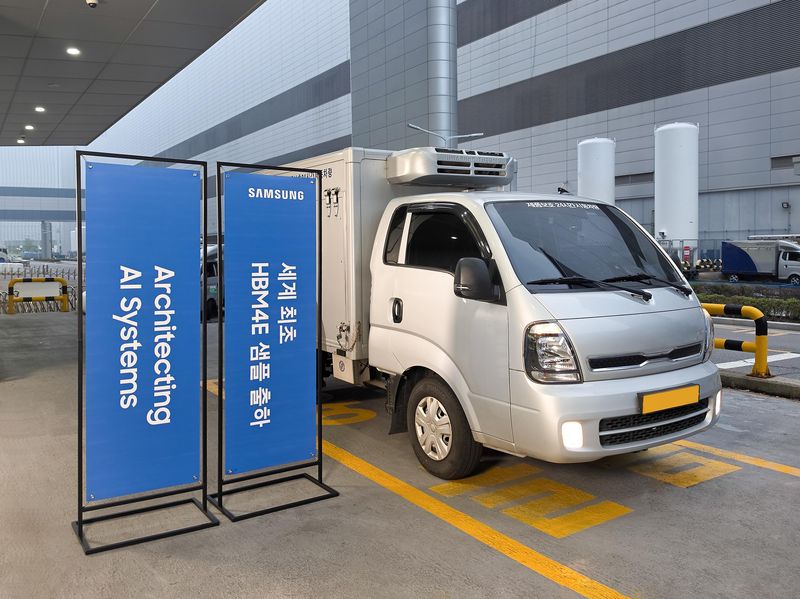
[Financial News] Samsung Electronics is accelerating its push into the next-generation artificial intelligence (AI) memory market, extending its record of being the first in the industry to supply both High Bandwidth Memory 4 (HBM4) and HBM4E sample products. Since beginning mass production and customer shipments of HBM4 in February, the company is expected to further solidify its technological leadership and supply competitiveness in the next-generation HBM market through this HBM4E sample supply.
HBM4E sample supply brought forward
Samsung Electronics announced on the 29th that it has become the first in the world to supply HBM4E 12-High samples, which will be a core component of next-generation AI accelerators, to global customers. The company said, "After setting a market milestone in February by successfully launching HBM4 mass production shipments at the industry's fastest pace, we have once again proven our absolute technological leadership in the HBM market by starting HBM4E supply just a few months later."
The supply came earlier than the HBM4E sample roadmap previously mentioned by Hwang Sang-jun, vice president in charge of development at Samsung Electronics Memory Business Division, at NVIDIA GTC 2026 in March, which had pointed to a July-to-September timeframe. Industry observers say Samsung Electronics is moving faster than expected in developing and validating next-generation HBM.
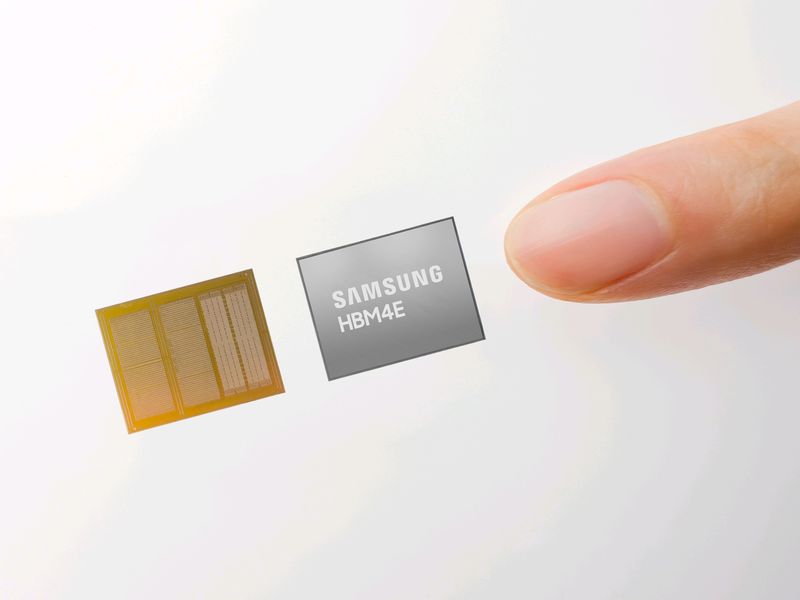
Samsung Electronics' HBM4E achieves standout specifications through design and process optimization. It supports operating speeds of 14Gbps per pin, up to 16Gbps, more than 20% higher than the previous HBM4. With a bandwidth of 3.6 terabytes per second per stack, it is also designed to maximize computing performance for large language models and next-generation AI systems.
In particular, the company applied 1c DRAM, based on the most advanced process already validated in HBM4, along with its in-house foundry 4nm logic die. The same process was used to build the logic die for HBM4E. Samsung said this maximizes the stability of ultra-fine processes while securing yield and mass production readiness, creating a formidable barrier to entry that rivals cannot easily match. By combining low-power design and packaging optimization technologies, the company improved energy efficiency by 16% and thermal resistance by more than 14% compared with the previous generation. Samsung Electronics' HBM4 also earned strong reviews after proving an industry-leading speed of 11.7Gbps in System-in-Package testing, the final certification stage, late last year.
HBM4E to move into mass production on customer schedules
The securities industry is also paying close attention to Samsung Electronics' HBM growth potential. UBS has raised its forecast for next year's HBM shipments, reflecting the company's aggressive expansion in investment. Major brokerages are also predicting a sharp improvement in Samsung Electronics' memory earnings as HBM4 and high-value-added AI memory shipments expand. Industry watchers say customer-specific design support and stable mass supply capabilities will become even more important starting with the HBM4 generation, and Samsung Electronics' strength in memory, foundry and packaging is expected to stand out even more.
Samsung Electronics plans to begin mass production shipments in line with customer schedules, starting with this sample supply. Vice President Hwang Sang-jun said, "By successfully completing HBM4 mass production and now delivering HBM4E samples without disruption, Samsung Electronics has firmly demonstrated its unmatched technological leadership to the market." He added, "Going forward, we will strongly lead the growth of the global AI memory market based on overwhelming technological superiority and proactive investment in production infrastructure."
[email protected] Lim Su-bin Reporter