"A 60-Day Ceasefire?" Who Would Win Under the Draft of U.S.-Iran Talks?
- Input
- 2026-05-29 11:50:35
- Updated
- 2026-05-29 11:50:35
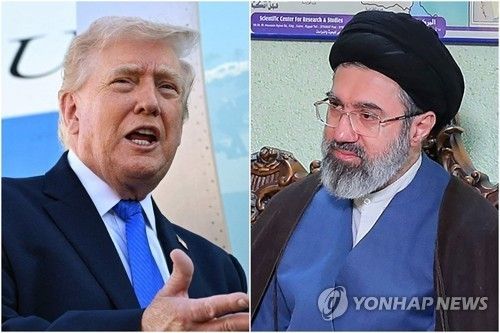
[Financial News] The United States and Iran are said to have come close to signing a memorandum of understanding (MOU) to end the war, signaling a major turning point in Middle East tensions. As Pakistan, the mediator in the talks, shuttled between Washington, D.C. and Tehran for last-minute coordination, Donald Trump reportedly shared the draft agreement with allies including Israel. Still, the deal is being viewed less as a peace treaty that would fully end the war than as a "60-day managed ceasefire." The Strait of Hormuz, a key issue that shapes global oil prices, appears to have been largely settled, but the nuclear weapons issue and highly enriched uranium have been pushed to follow-up negotiations. Some observers say the agreement is unstable, allowing both the United States and Iran to claim victory while leaving room for conflict to flare up again at any time.
Trump first focused on the "Strait of Hormuz"
Analysts say the United States placed greater importance on the Strait of Hormuz than on the nuclear issue in these talks.
According to a draft reported by The Guardian and Axios, Iran would have to remove mines from the strait within 30 days and restore ship traffic to prewar levels. It would also be barred from collecting transit fees or obstructing navigation. Most of the key conditions demanded by the United States are reflected in the draft.
The Strait of Hormuz is a strategic chokepoint through which about 20% of the world's seaborne crude oil and about 25% of liquefied natural gas shipments pass. Since the outbreak of war, markets have feared not Iran's nuclear program as much as an energy supply shock caused by a blockade of the strait. The International Energy Agency (IEA) recently warned that if a blockade of the Strait of Hormuz drags on, the global oil market could enter the "red zone" this summer.
For Trump, a sharp rise in oil prices would directly feed inflation in the United States and delay interest rate cuts. It would also burden Republicans ahead of the midterm elections. The top priority in these talks appears to have been stabilizing the international energy market rather than resolving Iran's nuclear issue.
The nuclear issue pushed back
By contrast, the nuclear issue was not resolved in this round of talks.
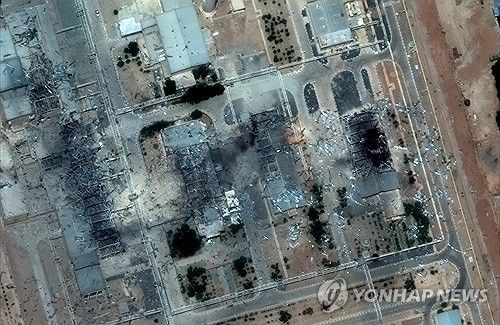
The draft reportedly includes a basic pledge from Iran that it will not pursue nuclear weapons. However, the handling of highly enriched uranium, the core issue, and whether further enrichment will be halted are to be discussed separately over the next 60 days.
Iran currently holds uranium enriched to 60%, a level close to weapons-grade enrichment. The United States has long demanded that enriched uranium be removed from the country or destroyed, but Iran has insisted on keeping it under domestic control.
The scope of inspections and verification methods by the International Atomic Energy Agency (IAEA) also remain unresolved. The MOU is seen as significant not because it solved the nuclear issue, but because it created a political framework for restarting nuclear talks. For that reason, many analysts say the success of the deal will depend on the outcome of the nuclear negotiations over the next 60 days.
What Iran gained was time to survive
On the other hand, Iran has secured some breathing room economically.
The draft is said to include provisions for the United States to lift maritime restrictions on Iran and allow access to as much as $12 billion in frozen assets. While this falls far short of a full sanctions rollback, it is still a meaningful concession for Iran.
The U.S. Treasury is pursuing a strategy of linking asset releases and sanctions relief to Iran's phased compliance, while Iran wants immediate economic benefits. Friction over the fund-disbursement mechanism appears inevitable.
Iran has recently been suffering from severe power shortages and a lack of foreign currency amid a prolonged war and U.S. sanctions. Even the U.S. Treasury recently claimed that "Iranian soldiers are not being paid and police officers are unable to work normally."
Inside Iran, small anti-government protests have continued amid blackouts and rising prices. The Trump administration's decision to maintain tough sanctions while allowing limited access to assets is interpreted as a move that prioritizes managing the negotiations over regime collapse.
Israel is the most dissatisfied party
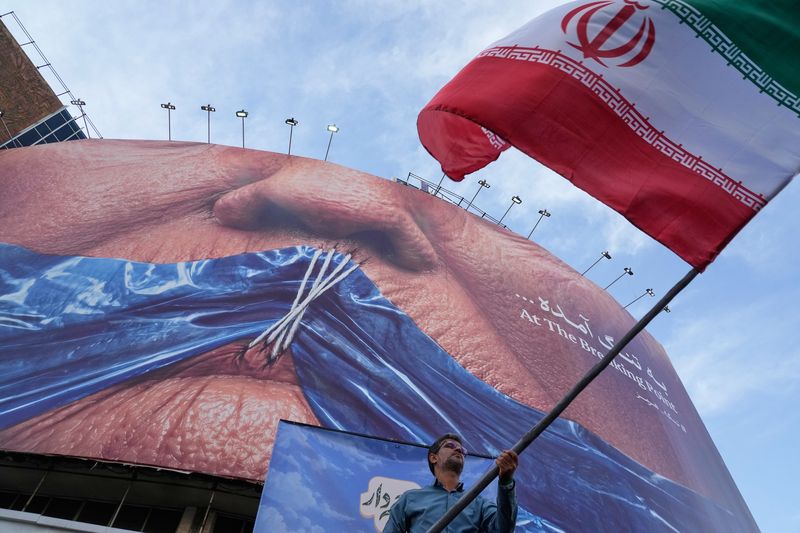
Israel is likely to be the country most dissatisfied with the draft agreement.
The Guardian reported that the draft "does not include specific Iranian steps to abandon its nuclear program, while it does include a ceasefire issue between Israel and Hezbollah, the pro-Iranian armed group in Lebanon." For Israel, this means the nuclear issue could be postponed while military action is the only thing being constrained.
Benjamin Netanyahu's government believes that stopping the fighting with Hezbollah before Iran's nuclear capabilities are fully dismantled would be a fatal security risk. As a result, as the U.S.-Iran ceasefire talks gained momentum, Israel intensified its offensive in southern Lebanon to secure its own military leverage. Trump's decision to share the draft with Israel before final approval is also being interpreted as an effort to manage such backlash in advance.
In U.S. diplomatic circles, some are even saying that "it is harder for Trump to persuade Netanyahu than to persuade Iran."
An unexpected winner: Pakistan
Another winner in the talks is Pakistan. That is because Pakistan has emerged as a key channel, replacing the Sultanate of Oman, which has long played a mediating role in the Middle East. The talks accelerated shortly after Asim Munir, Pakistan's army chief, visited Tehran on the 22nd and 23rd.
After that, the United States and Iran entered the wording-adjustment stage, and Mohammad Ishaq Dar, Pakistan's foreign minister, is set to meet Secretary of State Marco Rubio in Washington, D.C. on the 29th. According to CNN and other outlets, Pakistan's Foreign Ministry said in a statement on the 28th that Dar would meet Rubio to discuss bilateral relations as well as regional and international developments.
Pakistan's Foreign Ministry explained that "the discussions will focus on strengthening cooperation in key priority areas, as well as efforts to promote regional peace and stability through dialogue and diplomacy." Diplomats say this wording effectively refers to the U.S.-Iran ceasefire negotiations.
China is also publicly supporting Pakistan's mediation role. If the talks succeed, Pakistan is expected to be seen as more than just a South Asian country and as a major player in Middle East diplomacy.
The final variable is still Trump
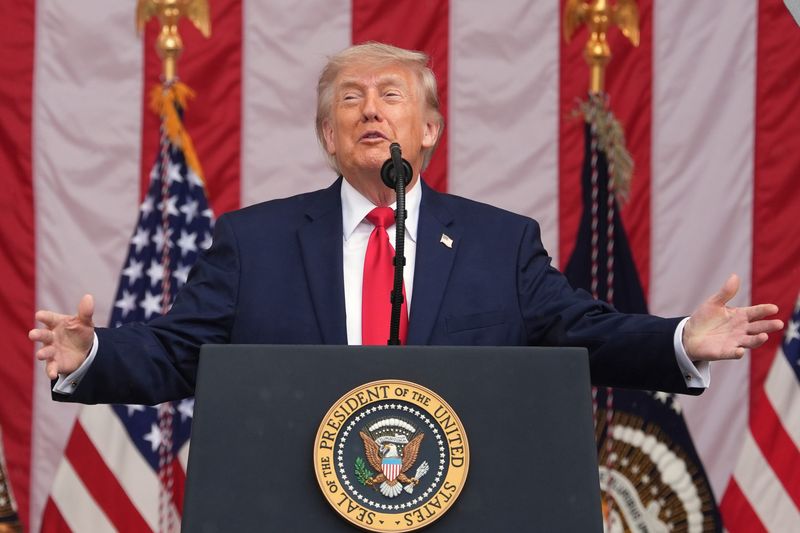
At present, the biggest variable is Trump himself.
According to Axios, the U.S. negotiating team has agreed on most of the terms, and Iran's leadership has also reportedly begun its internal approval process. However, Trump did not immediately approve the final draft after being briefed on it and reportedly said he needed "a few more days to think it over." Vice President J.D. Vance also said, "We view it quite positively, but nothing has been finalized yet."
Iranian state-run Tasnim News Agency and other domestic outlets said, "We have not yet informed the Pakistani side that the wording has been finalized," pushing back against Western media reports that a deal was imminent.
[email protected] Kim Kyung-min Reporter