Middle East War Shock Takes Hold: Production, Consumption, and Investment All Fall in April
- Input
- 2026-05-29 08:39:43
- Updated
- 2026-05-29 08:39:43
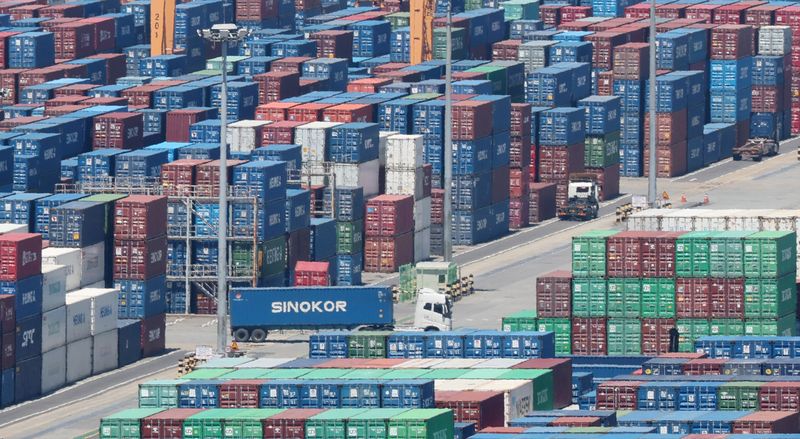
[Financial News] South Korea's domestic production, consumption, and investment all declined in April, marking a "triple drop." It was the first such reading in eight months, since August last year. The impact of the Middle East War, which broke out at the end of February, appears to have been fully reflected in April's real economy indicators.
According to the "Industrial Activity Trends for April" released on the 29th by the Ministry of Data and Statistics, the all-industry production index, adjusted for seasonality and excluding agriculture, forestry and fisheries, stood at 117.8 (2020=100), down 0.6% from the previous month. All-industry production had risen 2.1% in February and 0.4% in March, but turned downward after three months.
Mining and manufacturing production fell 0.7% from the previous month. In particular, petroleum refining output plunged 19.4%, the sharpest decline since May 1988, when it fell 22.1%. The drop is attributed to supply concerns over crude oil stemming from the Middle East War. Automobile production also decreased 10.0%, the largest decline in seven months since September last year, when it fell 15.3%. By contrast, semiconductor production, boosted by the supercycle, rose 3.1%.
Domestic demand indicators were also weak. The Retail Sales Index, which reflects goods consumption, fell 3.6% from the previous month, the steepest drop since February 2024, when it declined 3.7%. Service Industry Production Index, which shows service consumption, also decreased 1.0%.
Investment indicators also posted declines across the board. Facility Investment fell 3.6% from the previous month, while construction work completed, which measures domestic construction performance by builders, dropped 1.4%.
The coincident composite index cyclical variation, which shows the current state of the economy, rose 0.2 points from the previous month. The Composite Leading Index cyclical variation, which signals future economic conditions, also increased 0.6 points.
[email protected] Choi Yong-jun Reporter