Next is Cuba... Trump Conducts War Games
- Input
- 2026-05-29 06:09:25
- Updated
- 2026-05-29 06:09:25
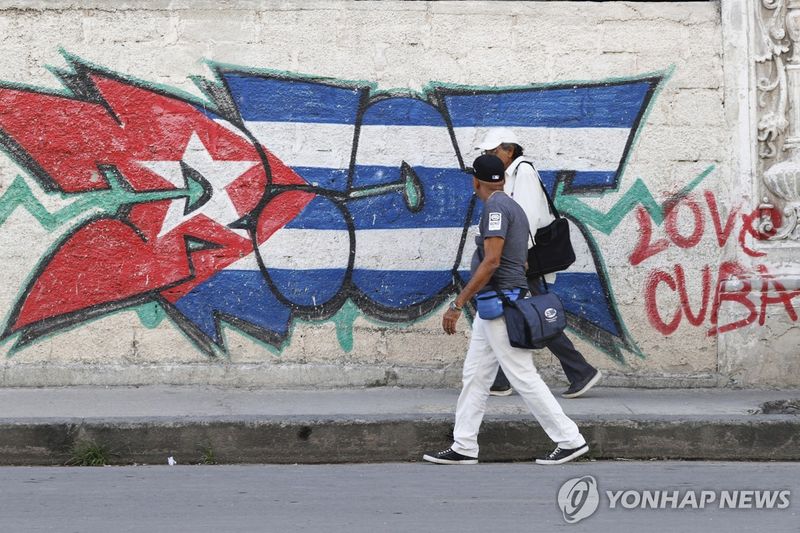
[Financial News] The Donald Trump administration is reportedly reviewing military response scenarios in preparation for the possible collapse of Cuba's regime. The United States has pushed the Cuban system to the brink through economic sanctions and energy pressure, and officials appear to believe that growing internal turmoil could lead to regime collapse.
Axios reported on the 28th local time, citing U.S. administration officials, that "the Trump administration is preparing for the possibility of Cuba's regime collapse as early as this summer and is also considering the possibility of military operations."
According to U.S. officials, Cuba is now facing its worst crisis in decades, with severe economic hardship, power shortages and deteriorating public security all hitting at once.
In particular, as the economy has been paralyzed by U.S. sanctions and external energy supplies from Venezuela and elsewhere have declined, analysts say the summer power shortage could trigger a sharp public backlash.
One source said, "The weather is getting hotter and people have no electricity," adding, "If food cannot be refrigerated, it spoils and people become angry. In the end, they could take to the streets."
The United States is watching for the possibility of a repeat of the large-scale anti-government protests that broke out in Cuba in July 2021. Recently, smaller protests have reportedly continued in Cuba over blackouts, shortages of basic goods and worsening public safety.
President Donald Trump and administration officials have recently continued to describe Cuba publicly as a "failed state" and have said it will "eventually collapse on its own."
The United States is also intensifying pressure on GAESA, the state-run military conglomerate that serves as a key source of funding for the Cuban regime.
Earlier this month, the U.S. Department of the Treasury designated foreign companies that do business with GAESA as targets for sanctions and arrested the sister of GAESA's top executive.
GAESA was established 30 years ago by former Communist Party of Cuba General Secretary Raúl Castro and is considered to control key sectors of the Cuban economy, including tourism, trade and finance.
Washington is also increasing pressure on Cuba's leadership as a whole, even raising the possibility of prosecuting Raúl Castro.
A former U.S. Treasury official who handled Cuba sanctions said that sanctions on GAESA are likely to lead to further withdrawals by Spanish, Mexican and Panamanian companies and financial institutions that remain in Cuba.
A Trump aide described the strategy as a classic Trump-style pressure tactic. The idea is to gradually increase the pressure until the enemy loses balance and starts to wobble, then watch the response and repeat the pressure.
However, Trump is currently focused on ceasefire negotiations with Iran, so Cuba is reportedly being handled through a phased pressure strategy that allows for slower escalation.
On the 20th, President Donald Trump also told reporters, "Cuba is collapsing and has lost control," hinting at additional measures against the country.
The United States is also said to have recently conducted a joint war game led by United States Southern Command, assuming the possibility of a popular uprising or large-scale unrest in Cuba.
A senior U.S. administration official said, "All options are on the table," adding, "There is no immediate invasion plan, but we are ready for anything if the president orders it."
On the 20th, United States Southern Command announced that an aircraft carrier strike group consisting of a Nimitz-class aircraft carrier, the USS Gridley and the supply ship Pettus had been deployed near Cuba.
Still, some observers in the United States say the likelihood of actual military intervention remains low. Unlike the operation earlier this year to arrest and transfer former Venezuelan President Nicolás Maduro Moros, there is no clear alternative force in Cuba capable of leading a pro-U.S. transitional government. Analysts also say that, given Cuba's current dispersed power structure, removing a single figure is unlikely to trigger a sudden shift to a pro-U.S. regime.
[email protected] Kim Kyung-min Reporter