Bessent Issues Public Warning to Oman: "No Strait of Hormuz Toll"
- Input
- 2026-05-29 01:13:16
- Updated
- 2026-05-29 01:13:16
On the 28th local time, the United States Department of the Treasury imposed sanctions on the Persian Gulf Strait Authority (PGSA), which Iran launched this month to control traffic through the Strait of Hormuz. The move is part of the Trump administration's Economic Fury Operation, an effort aimed at cutting off Iran's funding sources.
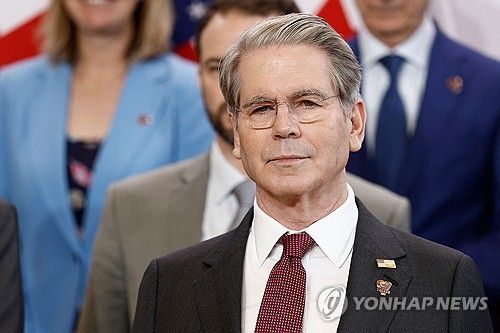
Bessent directly targeted Oman in a post on X, formerly Twitter, that day. He said, "Oman, in particular, should know that the U.S. Department of the Treasury will aggressively target any actor that directly or indirectly supports the imposition of a toll on the Strait of Hormuz," adding, "Partners who cooperate will also be punished."
Oman has recently been reported to have discussed a plan with Iran to charge vessels passing through the Strait of Hormuz. The United States is strongly opposing the idea, viewing it as a de facto attempt to tax the strait.
President Donald Trump also warned at a Cabinet meeting the previous day, saying, "The Strait of Hormuz must remain open to free passage," and "Oman must act like other countries, or we will have no choice but to blow it up."
The U.S. military also disclosed Iranian military activity that day. According to the U.S. Department of Defense and United States Central Command (CENTCOM), Iran fired a ballistic missile toward Kuwait the previous night, and the Kuwaiti military successfully intercepted it.
CENTCOM described the incident as a "serious violation of the ceasefire." It also said Iranian forces launched five suicide attack drones near the Strait of Hormuz, all of which were intercepted by the U.S. military. A sixth drone that was preparing to take off from a ground control facility in Bandar Abbas was also blocked, it added.
The United States and Iran are nominally maintaining a ceasefire, but the continued use of military force by both sides is undermining its stability. In particular, if the risk of clashes near the Strait of Hormuz rises, concerns over global oil prices and supply chain disruptions could intensify again.
[email protected] Reporter Lee Byung-chul Reporter