Exchange rate fails to fall below the 1,500-won level despite verbal intervention
- Input
- 2026-05-28 16:14:34
- Updated
- 2026-05-28 16:14:34
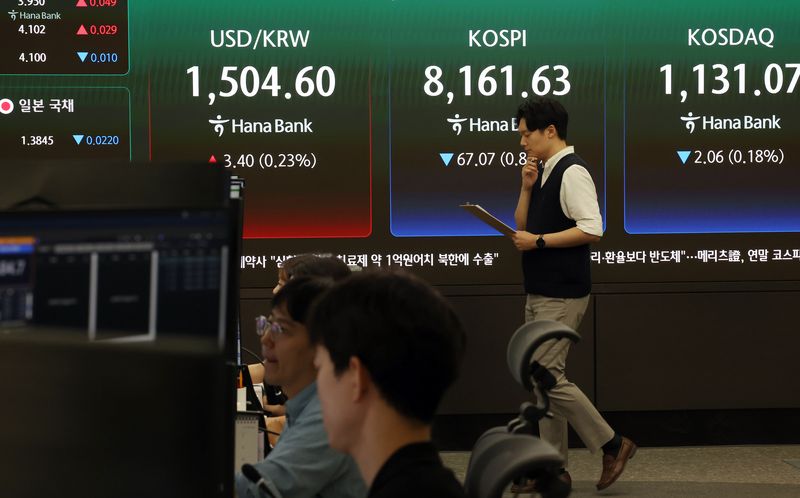
[Financial News] Despite remarks from Hyun-Song Shin, governor of the Bank of Korea (BOK), that were seen as verbal intervention, the won-dollar exchange rate struggled to move down from the 1,500-won range. With geopolitical risks in the Middle East and a widening net selling position by foreign investors, pressure on the won remained strong.
According to the Seoul foreign exchange market on the 28th, the dollar-won rate closed afternoon trading at 1,502.8 won, up 1.6 won from the previous session's 3:30 p.m. closing level. Although Shin warned during the day against excessive exchange-rate movements, the rate continued to fluctuate in the low 1,500-won range.
At a press briefing that day, Shin said, "I will never tolerate excessive exchange-rate movements," adding, "We have the means, the will and a range of tools at our disposal."
Still, the exchange rate failed to extend its decline from the 1,500-won range.
A stronger dollar also weighed on the won. The U.S. Dollar Index (DXY), which measures the greenback against six major currencies, rose 0.05 percent to 99.35.
Rising tensions in the Middle East and renewed conflict between the United States and Iran also boosted demand for safe-haven assets. The Trump administration is continuing talks with Iran, but differences over the nuclear program and control of the Strait of Hormuz remain unresolved.
Iran has maintained a hard-line stance, calling control of the Strait of Hormuz and its right to enrich uranium its "red lines."
Large-scale net selling by foreign investors also added to the upward pressure on the exchange rate. Foreign investors were net sellers of 2.8963 trillion won in the Korea Composite Stock Price Index (KOSPI) market on the day.
Market watchers say geopolitical risks and capital outflows by foreign investors could keep a floor under the exchange rate for the time being.
[email protected] Hong Ye-ji Reporter