"Deal Imminent" Mood Shattered by Military Clash as Tensions Rise Again in the Strait of Hormuz
- Input
- 2026-05-28 14:05:17
- Updated
- 2026-05-28 14:05:17
[The Financial News] As final talks between the United States and Iran reached a critical late-stage hurdle, military clashes between U.S. and Iranian forces broke out again in the Strait of Hormuz. Even as the two sides continue negotiations over a draft final memorandum of understanding (MOU), U.S. airstrikes and Iranian retaliatory attacks are fueling fears that the situation in the Middle East could slide back into full-scale confrontation.
"Just before a deal" — Iranian retaliation follows U.S. airstrikes
According to major foreign media outlets on the 28th local time, the war between the United States and Iran entered its third month on this day. The two sides had maintained an uneasy ceasefire since the 8th of last month, and until recently there had been momentum to speed up talks on a draft final MOU. But with military clashes resuming in the Strait of Hormuz, the situation is deteriorating rapidly once again.
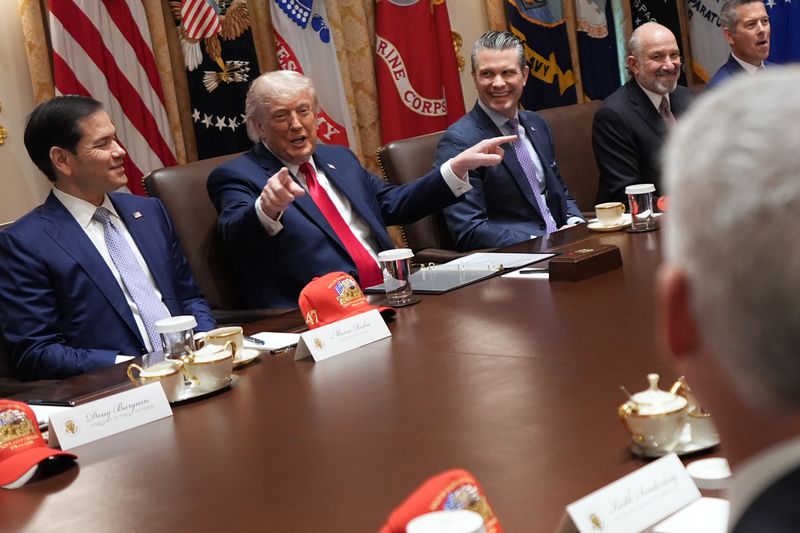
Donald Trump had recently been sending the message that "a deal is close," but he soon shifted gears, saying he had instructed others not to rush into an agreement. He also stressed that it would either be "a great and meaningful deal or no deal." At a White House Cabinet meeting on the same day, Trump warned, "If there is no deal, we will just have to finish the job."
The U.S. military said it carried out additional airstrikes on an Iranian military facility near the Strait of Hormuz on the same day. It also announced that it had shot down four Iranian attack drones. The move came two days after a smaller-scale strike on the 25th. The Office of Foreign Assets Control (OFAC) of the U.S. Department of the Treasury also stepped up sanctions pressure by adding Iran's Persian Gulf Strait Authority (PGSA) and related entities to the Specially Designated Nationals and Blocked Persons (SDN List).
Iran's Islamic Revolutionary Guard Corps (IRGC) immediately retaliated. According to Iranian state media, the IRGC announced that it launched a missile attack on a U.S. Air Force base at around 4:50 a.m. that day. The Guard said the strike was "in response to the U.S. carrying out additional airstrikes targeting Bandar Abbas" and warned that "if the aggression is repeated, a more decisive response will follow."
Although the target base was not disclosed, missile and drone activity detected in Kuwaiti airspace has raised the possibility that the Ali Al Salem Air Base was the target.
Iran says the Strait of Hormuz is the guarantee; the U.S. says there will be no sanctions relief
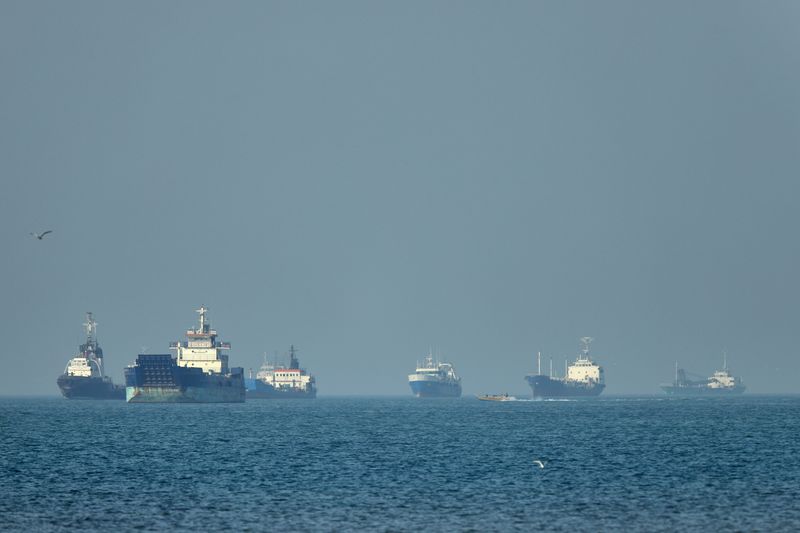
Iranian state broadcaster Press TV claimed the previous day that it had obtained an unofficial draft MOU under discussion with the United States. It said the draft included provisions for the United States to withdraw forces from around Iran and lift a maritime blockade. In return, Iran said it would restore traffic through the Strait of Hormuz to prewar levels within one month of signing the MOU. However, it added that Iran would retain authority over route designation and vessel management, with Oman cooperating under those terms.
Ali Akbar Velayati, senior adviser to the Supreme Leader on international affairs, argued that "the real guarantee of any agreement is the Strait of Hormuz itself." Ali Bagheri Kani, deputy secretary-general of the Supreme National Security Council (SNSC), also said that "the procedures and conditions for passage through the Strait of Hormuz will be completely different from before the war," adding that Iran is "discussing a new transit system with Oman."
The United States, however, denied Iran's claims. Trump said, "The Strait of Hormuz is an international waterway and no one can control it," adding, "We will monitor it." In an interview with PBS, he also said there would be no sanctions relief for simply giving up highly enriched uranium, demanding a broader long-term abandonment of Iran's nuclear program. On the issue of handling Iran's highly enriched uranium, Trump said of possible involvement by China or Russia, "That would make me uncomfortable." He appeared to show some flexibility toward disposal under international supervision inside Iran or in a third country, but not toward a structure involving Chinese or Russian participation. He also rejected Iran's demand for the return of frozen assets, saying, "The money we control will remain under our control."
Still, U.S. Secretary of State Marco Rubio said that "diplomacy is always the first option" and that the United States would watch to see whether there is any progress in the talks over the next few hours or days.
[email protected] Kim Kyung-min Reporter