Trump warns Oman of 'blowing it up' if it jointly imposes transit fees with Iran in the Strait of Hormuz
- Input
- 2026-05-28 14:10:04
- Updated
- 2026-05-28 14:10:04
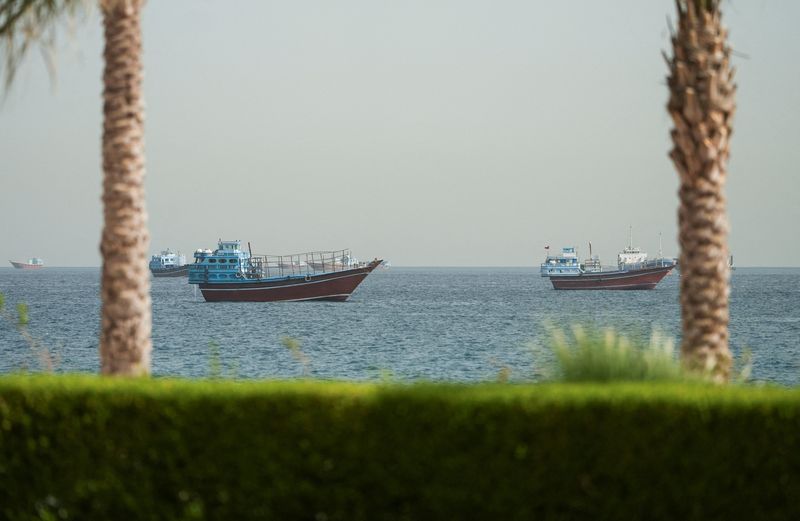
[The Financial News] President of the United States Donald Trump lashed out after reports said Iran and Oman were discussing the imposition of transit fees on ships passing through the Strait of Hormuz.
On the 27th local time, foreign media including Gulf News reported that Trump made a harsh remark toward Oman, saying, "If you don't behave properly, we'll blow you up."
The comment was unusual, as Oman has long served as a trusted mediator between the United States and Iran.
Some outlets initially speculated that Trump may have misspoken and meant "Iran" instead of "Oman." However, the State Department later shared the remark on social media along with an official document, confirming that it was a deliberate warning aimed at Oman.
At a White House Cabinet meeting, Trump was asked whether Iran and Oman would accept a short-term arrangement to control the Strait of Hormuz. He firmly rejected the idea, saying, "No. The Strait of Hormuz must be open to everyone." He added, "It is international waters. No one can control it, and we will be watching."
Diplomatic circles are paying close attention to the fact that Trump's hard-line remarks came shortly after reports that Iran and Oman were discussing a plan to charge some kind of maritime service fee for vessels transiting the strait.
Some media outlets, including The New York Times (NYT), reported that Iranian authorities had been discussing with Oman a system to charge ships passing through the Strait of Hormuz for maritime services, navigation support, and traffic management.
Mohammad Amin-Nejad, Iran's ambassador to France, formalized the idea, saying, "Iran and Oman must mobilize all resources to provide navigation management and security services in the strait, and that comes at a cost."
Iran argues that this is not a legally controversial "transit fee," but a legitimate "service charge."
The NYT quoted a maritime law expert as saying the move was effectively no different from extortion.
Neighboring Gulf states are also strongly pushing back against Iran's move. In a speech at the UN last week, Mohammed Abushahab, the UAE's Deputy Permanent Representative to the United Nations, directly criticized the effort, saying, "International waters should not become a target for extortion."
Gulf states fear that Iran could use temporary wartime maritime disruptions as a pretext to permanently seize control over transit rights and security coordination in the Strait of Hormuz, then turn that into political and economic leverage.
Gulf News reported that Trump's remarks were interpreted as more than a simple diplomatic incident. They were seen as exposing a major power struggle between the United States and Iran over who will shape the future of the Strait of Hormuz, a waterway scarred by war and maritime blockades.
The outlet added that Trump's warning to Oman signaled a red line: Washington wants to prevent an Iran-centered regional management system from taking hold while excluding U.S. influence from the postwar order in the strait.
[email protected] Yoon Jae-jun Reporter