"I'm Afraid I'll End Up Like That Department Head"... Why People in Their 20s and 30s Are Leaving Their 'Dream Jobs' [Kim Department Head vs. Lee Associate]
- Input
- 2026-05-30 12:00:00
- Updated
- 2026-05-30 12:00:00
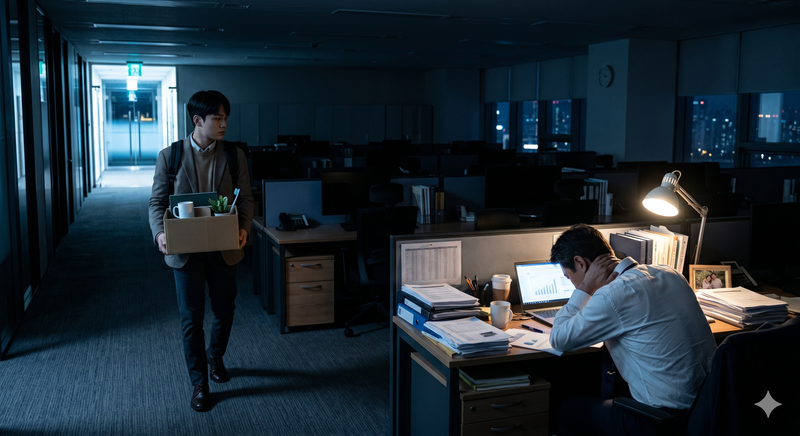
[Financial News] "Have you already lined up another job? Are they offering you a higher salary?" Kim, a 49-year-old sales department head, asks with concern as Lee, a 29-year-old marketing associate, hands in his resignation letter. It is a major conglomerate job that hundreds of applicants competed for. But Lee's answer struck Kim to the core.
"No, I just want to take a break for a while. I mean... if I keep grinding it out here, I’m afraid I’ll end up like you, sir."
That one line is more than a simple generational clash. It captures the reality of Korean offices, where the decline of older workers who gave their youth to the company meets the sorrow of younger workers who have chosen to survive on their own in workplaces without role models.
◇ "My life belongs to the company"... Kim's 20 years, only to be cast aside
Kim's past 20 years were entirely centered on the company. He spent weekends on overtime and client entertainment, without ever properly kicking a soccer ball around with his youngest son, who is seven.
Thanks to that all-out effort, he was able to cover his child's expensive English kindergarten tuition and repay his loans, serving as a solid buffer for his family.
But the bill he has received in return is harsh. According to Statistics Korea's Economically Active Population Survey, the average age at which Korean workers leave their 'main job,' the position they have held the longest, is just 49.4.
For Kim, who was left out of promotion to executive, the cold wind of restructuring under the name of 'voluntary retirement' is slowly approaching. The myth of a 'job for life,' where loyalty was rewarded with retirement and old age security, is over. What remains is only the bitter back view of middle-aged workers who have lost their health and are standing on the edge.
◇ "Working hard makes you a fool"... The real reason Lee quit
Lee is not quitting because he is selfish or lacks perseverance. If anything, it is the result of the most cold-blooded calculation of his situation.
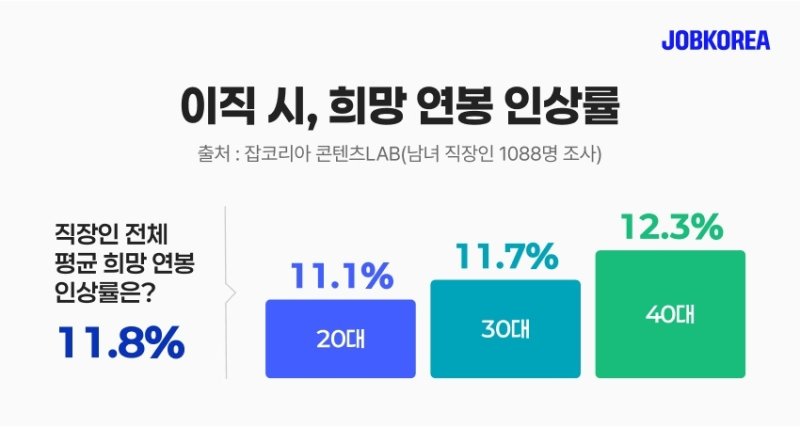
According to a survey by Korea Enterprises Federation (KEF), more than 30% of new employees from the MZ generation quit within their first year. The biggest reason they leave is not the workload, but the lack of a vision for the future.
To Lee, Kim's life is not something to admire, but a 'wrong-answer notebook' to avoid. He sacrificed his daily life with his family and gave everything to the company, only to end up packing his bags before even turning 50. Lee realized one thing.
"This ship, this company, will not carry me to the end of my life." In the end, quitting is not irresponsible escape for Lee, but a rational survival strategy — like grabbing his life jacket and jumping off the sinking RMS Titanic.
◇ A workplace without mentors... Who can blame them?
We often click our tongues at Lee, saying, "Young people these days have it too easy," and point fingers at Kim, calling him an old-school boss who does not understand that times have changed.
But in this office tragedy, neither of them is the one who should be blamed.
The 40s and 50s generation gave their youth to drive Korea's economic miracle, only to be cast aside. And the 20s and 30s generation watched that downfall in real time and lost trust in the company system itself.
Both generations are simply victims of the structural forces created by Korean capitalism as it entered a low-growth era.
Even today, some people quietly clock in to survive, while others hand back their employee badges in order to live.
In a crazy workplace where the right answer has disappeared, we send deep solidarity and comfort to the tired shoulders of all office workers who are bearing the weight of life in their own way.
[email protected] Jeon Sang-il Reporter