Inflation Fears Mount as Hawkish Tone Emerges at the Monetary Policy Board [Full Text of the Monetary Policy Direction Statement]
- Input
- 2026-05-28 11:00:02
- Updated
- 2026-05-28 11:00:02
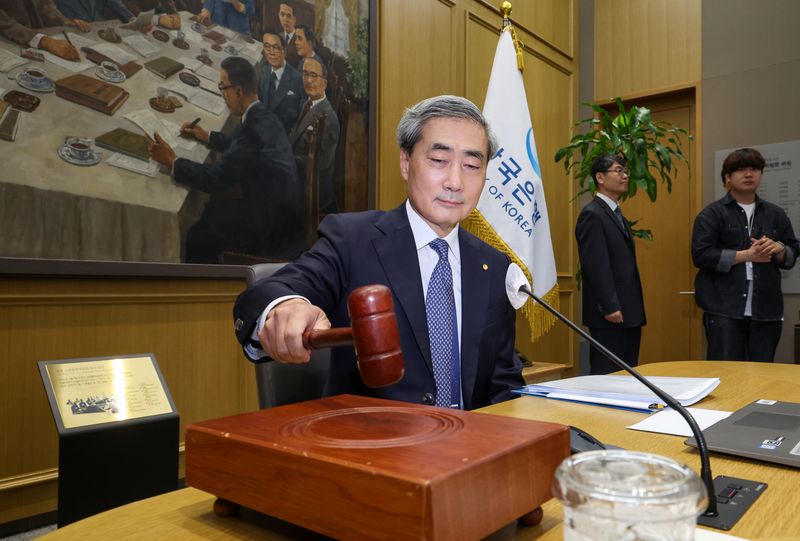
After its monetary policy direction meeting on the 28th, the Monetary Policy Board said, "Despite expanded investment in artificial intelligence (AI), the global economy is expected to slow as energy and raw material prices rise and supply disruptions deepen due to the Arab-Israeli conflict, while inflationary pressure will increase significantly."
It added, "In the international financial market, delays in negotiations between the United States and Iran, as well as the possibility of policy shifts in major economies, pushed government bond yields sharply higher and strengthened the U.S. dollar." In effect, the environment has become one that calls for tightening.
The board also expressed concern about inflation in the domestic economy. It said, "Consumer price inflation in April rose to 2.6% as petroleum product prices climbed sharply, while core inflation, which excludes food and energy, remained at 2.2%." It added, "Price increases are likely to widen further as the pass-through from higher international oil prices expands and demand-side pressure from income growth gradually increases."
In fact, the forecast for consumer price inflation this year was announced at 2.7% on the day. That is 0.4 percentage points higher than the February forecast of 2.2%. Core inflation was also raised, from 2.1% to 2.4%.
The board also noted, "Korean Treasury Bond yields rose on concerns about inflation at home and abroad, as well as changes in expectations for monetary policy." It added, "The won–dollar exchange rate also climbed back to around 1,500 won, driven by a stronger U.S. dollar and continued net selling of stocks by foreign investors."
At the meeting, the board kept the benchmark rate at 2.50% for the eighth consecutive time, but Yoo Sang-dae and Jang Yong-seong dissented, saying a 2.75% rate hike was necessary. Five members, including Governor Hyun-Song Shin, supported the freeze.
Most notably, 19 of the 21 dots in the dot plot pointed to a hike, excluding only two that indicated no change. Seven dots were placed at 2.75%, 10 at 3.00%, and two at 3.25%. Since the dot plot is a conditional six-month rate outlook, this suggests the board sees room for up to three hikes this year, assuming each move is 0.25 percentage points. There were no dots pointing to a cut. The dot plot is released alongside the economic outlook in February, May, August and November.
The Monetary Policy Board said it would "decide on the timing of any benchmark rate hike while assessing the extent of rising inflationary pressure, the pace of economic improvement and financial stability conditions."
The following is the full text of the monetary policy direction statement released on May 28.
□The Monetary Policy Board decided to keep the Bank of Korea's benchmark rate at the current level of 2.50% until the next monetary policy direction decision. Although inflationary pressure has increased due to the Arab-Israeli conflict, growth has expanded more than expected thanks to strong exports, and risks to financial stability remain, the board judged that uncertainty over the course of the Middle East situation and its spillover effects is still high. It therefore found it appropriate to maintain the current benchmark rate and monitor developments and their impact on growth and inflation more closely.
□Despite expanded investment in AI, the global economy is expected to slow as energy and raw material prices rise and supply disruptions deepen due to the Arab-Israeli conflict, while inflationary pressure is likely to increase significantly. In the international financial market, delays in negotiations between the United States and Iran, as well as the possibility of policy shifts in major economies, pushed government bond yields sharply higher and strengthened the U.S. dollar. Stock prices rose sharply, reflecting expectations of stronger AI-related investment demand and solid corporate earnings. Going forward, the global economy and international financial markets are expected to be affected by the course of the Middle East situation, AI investment trends, and changes in monetary, fiscal and trade policies in major countries.
□The domestic economy saw growth expand significantly, supported by strong exports centered on semiconductors, increased investment and solid consumption. Employment continued to rise in terms of the number of people employed, though the pace of increase slowed, especially in the service sector. Looking ahead, the domestic economy is expected to maintain its improvement, though the impact of higher raw material prices and supply disruptions will increase somewhat. It is also expected to be supported by the semiconductor cycle and a supplementary budget. As a result, growth this year is projected to reach 2.6%, well above the February forecast of 2.0%. This growth path still carries significant upside and downside risks related to the extent of the semiconductor upcycle, spillover effects on domestic demand, developments in the Middle East situation and changes in the trade environment.
□Looking at domestic inflation, consumer price inflation in April rose sharply to 2.6% as petroleum product prices climbed significantly, while core inflation, which excludes food and energy, remained at 2.2%. Short-term expected inflation among the general public stood in the upper 2% range. Price increases are expected to widen further as the pass-through from higher international oil prices expands and demand-side pressure from income growth gradually increases. Accordingly, consumer price inflation and core inflation for this year are projected at 2.7% and 2.4%, respectively, both well above the February forecasts of 2.2% and 2.1%. The future inflation path is seen as highly uncertain, given movements in international oil prices and exchange rates, the extent of cost pass-through, and the effectiveness of government measures to stabilize prices.
□In the financial and foreign exchange markets, volatility remained high across key price variables. Korean Treasury Bond yields rose sharply on concerns about inflation at home and abroad, as well as changes in expectations for monetary policy. The won–dollar exchange rate, which had eased somewhat, climbed back to around 1,500 won as the U.S. dollar strengthened and foreign investors continued to sell stocks on a net basis. Stock prices fluctuated sharply amid developments in the Middle East, but they maintained a steep upward trend on expectations of improved corporate earnings. Housing prices in the Seoul metropolitan area resumed a stronger rise, and expectations of further gains also increased. Household lending continued to grow only modestly, though the increase in housing-related loans widened somewhat.
□The Monetary Policy Board will continue to conduct monetary policy in a way that supports price stability at the medium-term target while monitoring growth and paying attention to financial stability. The domestic economy is expected to keep improving steadily, driven by the strong semiconductor cycle, even though inflation is likely to remain above target for some time and the Arab-Israeli conflict will weigh on growth. On the financial stability side, the board must continue to watch high exchange-rate volatility, the Seoul Metropolitan Area housing market and household debt. Therefore, future monetary policy will determine the timing of any benchmark rate hike while assessing the extent of rising inflationary pressure, the pace of economic improvement and financial stability conditions.
□Five Monetary Policy Board members supported the benchmark rate decision this time, while Jang Yong-seong and Yoo Sang-dae said it would be preferable to raise the benchmark rate to 2.75%.
□Despite expanded investment in AI, the global economy is expected to slow as energy and raw material prices rise and supply disruptions deepen due to the Arab-Israeli conflict, while inflationary pressure is likely to increase significantly. In the international financial market, delays in negotiations between the United States and Iran, as well as the possibility of policy shifts in major economies, pushed government bond yields sharply higher and strengthened the U.S. dollar. Stock prices rose sharply, reflecting expectations of stronger AI-related investment demand and solid corporate earnings. Going forward, the global economy and international financial markets are expected to be affected by the course of the Middle East situation, AI investment trends, and changes in monetary, fiscal and trade policies in major countries.
□The domestic economy saw growth expand significantly, supported by strong exports centered on semiconductors, increased investment and solid consumption. Employment continued to rise in terms of the number of people employed, though the pace of increase slowed, especially in the service sector. Looking ahead, the domestic economy is expected to maintain its improvement, though the impact of higher raw material prices and supply disruptions will increase somewhat. It is also expected to be supported by the semiconductor cycle and a supplementary budget. As a result, growth this year is projected to reach 2.6%, well above the February forecast of 2.0%. This growth path still carries significant upside and downside risks related to the extent of the semiconductor upcycle, spillover effects on domestic demand, developments in the Middle East situation and changes in the trade environment.
□Looking at domestic inflation, consumer price inflation in April rose sharply to 2.6% as petroleum product prices climbed significantly, while core inflation, which excludes food and energy, remained at 2.2%. Short-term expected inflation among the general public stood in the upper 2% range. Price increases are expected to widen further as the pass-through from higher international oil prices expands and demand-side pressure from income growth gradually increases. Accordingly, consumer price inflation and core inflation for this year are projected at 2.7% and 2.4%, respectively, both well above the February forecasts of 2.2% and 2.1%. The future inflation path is seen as highly uncertain, given movements in international oil prices and exchange rates, the extent of cost pass-through, and the effectiveness of government measures to stabilize prices.
□In the financial and foreign exchange markets, volatility remained high across key price variables. Korean Treasury Bond yields rose sharply on concerns about inflation at home and abroad, as well as changes in expectations for monetary policy. The won–dollar exchange rate, which had eased somewhat, climbed back to around 1,500 won as the U.S. dollar strengthened and foreign investors continued to sell stocks on a net basis. Stock prices fluctuated sharply amid developments in the Middle East, but they maintained a steep upward trend on expectations of improved corporate earnings. Housing prices in the Seoul metropolitan area resumed a stronger rise, and expectations of further gains also increased. Household lending continued to grow only modestly, though the increase in housing-related loans widened somewhat.
□The Monetary Policy Board will continue to conduct monetary policy in a way that supports price stability at the medium-term target while monitoring growth and paying attention to financial stability. The domestic economy is expected to keep improving steadily, driven by the strong semiconductor cycle, even though inflation is likely to remain above target for some time and the Arab-Israeli conflict will weigh on growth. On the financial stability side, the board must continue to watch high exchange-rate volatility, the Seoul Metropolitan Area housing market and household debt. Therefore, future monetary policy will determine the timing of any benchmark rate hike while assessing the extent of rising inflationary pressure, the pace of economic improvement and financial stability conditions.
□Five Monetary Policy Board members supported the benchmark rate decision this time, while Jang Yong-seong and Yoo Sang-dae said it would be preferable to raise the benchmark rate to 2.75%.
[email protected] Kim Tae-il Reporter